Custom Motorcycle Patches for Riders, Clubs & MCs
Bespoke biker patches designed, digitised, stitched and dispatched in the UK.
Custom motorcycle patches are personalised embroidered, woven, or PVC badges for biker jackets, leather cuts, denim waistcoats, and saddlebags. We design, digitise, and stitch back patches, rockers, name strips, and memorial badges in the UK with free artwork proofs and tracked delivery.
- UK Made & Dispatched
- Free Design & Proof
- Heavy-Duty Stitching
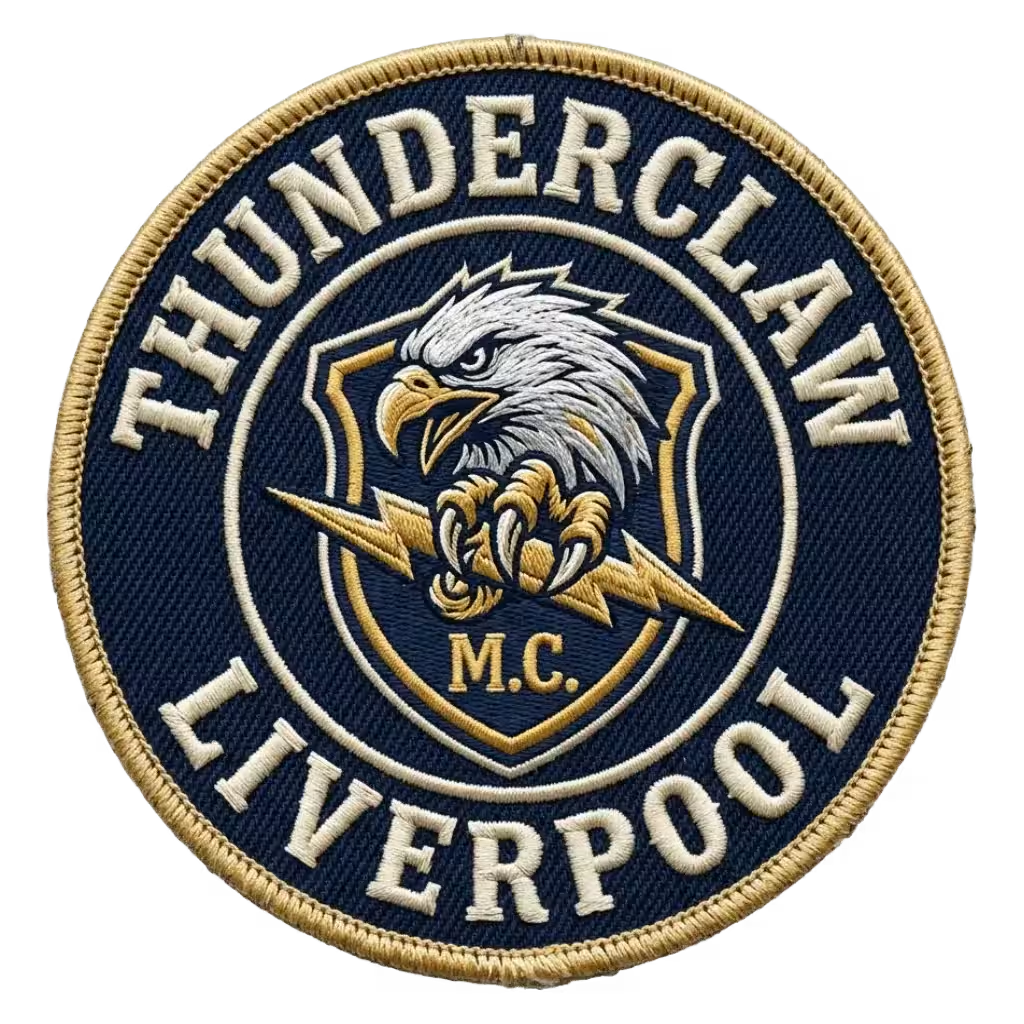
SetsMade in the UK
What Are Custom Motorcycle Patches?
Custom motorcycle patches are personalised cloth, thread, or PVC badges designed for biker jackets, leather cuts, denim waistcoats, and saddlebags. Each patch carries a bespoke design, a club logo, rider name, ride number, memorial tribute, or chapter emblem, produced from artwork supplied by the customer. UK motorcycle clubs (MCs), riding clubs (MCCs), veterans’ rider associations, and solo bikers order custom motorcycle patches to mark identity, signal club affiliation, and personalise their kit.
Custom motorcycle patches differ from standard clothing patches in three measurable ways. Motorcycle patches use a higher stitch density of around 1,500 stitches per square inch, which prevents fraying under wind exposure and frequent washing. Motorcycle patches are produced at larger sizes, back patches commonly reach 250-300 mm across, to fill the full back panel of a leather cut. Motorcycle patches favour sew-on backing because iron-on adhesive does not bond to leather, the dominant material in biker outerwear.
Bikers wear custom patches for four core reasons: club identity, hierarchy, achievement, and memorial. Club identity is signalled through the centre logo and rockers. Hierarchy is marked by chest patches that display rank, President, Vice President, Road Captain, Sergeant-at-Arms, or Member. Achievement patches commemorate completed rides, rallies, and mileage milestones. Memorial patches honour fallen riders, stitched onto the cut as a permanent tribute. Each function is communicated through the patch type, its placement, and its construction, the three variables this guide explains in full.
The custom motorcycle patch market in the UK divides cleanly into two specification axes: construction (how the patch is made) and purpose (where it sits on the cut). The next two sections cover each axis in turn.
Types of Custom Motorcycle Patches by Construction
Custom motorcycle patches are produced in six main constructions. Each construction uses a different surface technique, supports different design complexities, and suits different riding conditions. The choice between them depends on the design detail, the colour count, the texture preferred, and the riding environment the patch will face.
Embroidered Motorcycle Patches
Embroidered motorcycle patches are stitched with polyester thread onto a heavy twill base. The thread sits raised above the fabric, which gives the patch a textured, premium finish, the classic biker patch look. Embroidered patches handle bold club logos, lettering, and crests with under 9 thread colours. Stitch density reaches 1,500 stitches per square inch on our standard production, which prevents edge fraying through long mileage, weather exposure, and repeated washing. Embroidered patches suit MC three-piece sets, rocker patches, and traditional back patches on leather cuts.
MCs · Back Patches · RockersWoven Motorcycle Patches
Woven motorcycle patches are produced on a Jacquard loom using fine polyester thread. The thread is thinner than embroidery thread, which allows woven patches to capture small text, fine lines, gradients, and intricate logos that embroidery cannot reproduce. Woven patches lie flat against the leather with a smooth, silky surface. They suit ride patches, rally commemorations, sponsor logos, and detailed memorial designs that need legibility at small sizes.
Ride Patches · Rallies · SponsorsPVC Motorcycle Patches
PVC motorcycle patches are moulded from polyvinyl chloride into raised 3D designs with sharp edges and weatherproof surfaces. PVC resists rain, mud, road spray, and exhaust heat better than any embroidered fabric. PVC patches suit adventure riders, dual-sport riders, and touring groups who face wet weather and off-road conditions. The material wipes clean with a damp cloth, which keeps club logos legible after long touring miles. PVC patches are typically Velcro-backed for use on modular textile riding jackets.
Adventure · Dual-Sport · TouringChenille Motorcycle Patches
Chenille motorcycle patches use a tufted yarn surface that produces a soft, fuzzy texture similar to varsity letterman jackets. Chenille suits large back patches with simple, bold designs, single-letter chapter marks, retro club emblems, and vintage-style numerals. The yarn is thicker than embroidery thread, which gives chenille patches their distinctive raised, plush appearance. Chenille patches suit retro riding clubs, classic motorcycle restoration groups, and vintage-style cuts that draw on 1960s and 1970s biker aesthetics.
Vintage · Classic · Retro ClubsLeather Motorcycle Patches
Leather motorcycle patches are produced on a genuine or PU leather base, with the design embossed, debossed, laser-etched, or stitched onto the surface. Leather patches match the material of the cut itself, which produces a premium, unified look on jackets and waistcoats. The leather surface ages alongside the jacket, develops a patina with mileage, and suits MC club sets that prioritise heritage aesthetics. Leather motorcycle patches are sew-on by default, since stitching is the only durable attachment for leather-on-leather.
MC Sets · Premium · HeritagePrinted Motorcycle Patches
Printed motorcycle patches are produced by dye-sublimation or UV print onto a polyester base. The print method reproduces full-colour photographs, gradients, and unlimited colour counts with photographic accuracy. Printed patches feel flat and smooth to the touch. They suit memorial patches that carry a photograph of the rider, rally event patches with complex artwork, and tribute designs that exceed the 9-colour limit of embroidery. Printed patches pair best with a stitched border for durability on a moving garment.
Memorial · Rally · PhotographicThe six constructions cover every design brief a UK rider, MC, or riding group brings to the workshop. Construction defines how the patch is made, the next axis defines where it sits on the cut.
Motorcycle Patch Types by Purpose & Placement
Custom motorcycle patches divide into six purpose-based categories, each with a fixed traditional placement on the leather cut or denim waistcoat. The placement carries meaning in UK biker culture: a back patch signals club, a chest patch signals rank, a sleeve patch signals achievement. Riders order patches by purpose first, then specify construction afterwards.
Back Patches
Back patches are the largest custom patches on a motorcycle cut, sized 250-300 mm across to fill the full back panel. The back patch carries the club’s central emblem, the visual core of the cut. Back patches are embroidered on twill, sewn onto leather with a heavy-duty thread, and reinforced at the corners against wind lift at motorway speeds. Solo riders and informal riding clubs commonly wear a single centre back patch; formal MCs surround it with rockers to form a three-piece set.
Centre · Largest · Club EmblemTop Rocker Patches
Top rocker patches sit above the centre back patch in a curved arc, typically measuring 280 mm × 75 mm across the curve. The top rocker traditionally carries the club name. The curve radius matches the natural shoulder line of the cut, which keeps the lettering legible from behind on a moving motorcycle. Top rockers are embroidered with bold sans-serif lettering, finished with a merrow border for durability, and stitched on with reinforced thread to handle the constant flex of the upper back panel.
Club Name · Curved · Upper BackBottom Rocker Patches
Bottom rocker patches mirror the top rocker, curving beneath the centre back patch at the same 280 mm × 75 mm dimensions. The bottom rocker traditionally carries the chapter location or club territory, a county, city, or region. The curve radius and lettering style match the top rocker exactly, which keeps the three-piece set visually balanced. Bottom rockers are commonly worn by formal MCs and patch-holding clubs; riding clubs and MCCs frequently omit the bottom rocker in favour of a one-piece or two-piece layout.
Chapter · Territory · Lower BackCentre Patch / Club Logo
The centre patch is the main emblem that sits between the top and bottom rockers, carrying the club’s primary visual identity, the logo, mascot, or symbol. Centre patches are produced at 200-250 mm sizes, embroidered or chenille, with the design built from the centre outwards to read clearly at a distance. The centre patch is the most heavily customised element of the cut, often produced with multiple thread colours, layered embroidery, and detailed shading. The centre patch defines the club visually; the rockers frame it.
Logo · Mascot · Visual IdentityName & Rank Patches
Name and rank patches are small chest patches that display the rider’s name, road name, and position within the club. Standard chest patch dimensions are 100 mm × 30 mm, embroidered or woven, sewn over the heart or above the breast pocket. Rank patches mark club hierarchy, President, Vice President, Road Captain, Sergeant-at-Arms, Treasurer, Secretary, or Member, and are positioned alongside the name patch. Riding clubs and informal groups frequently use only a name patch, while formal MCs display the full rank structure.
Chest · Rank · IdentityMemorial & Tribute Patches
Memorial patches honour fallen riders, stitched onto the cut as a permanent tribute. Memorial patches are produced at 75 mm shield or round shapes, typically positioned on the sleeve, chest, or beneath the bottom rocker. The design usually carries the rider’s name, dates, and a tribute symbol, wings, a road, or a club emblem in monochrome. Memorial patches are commonly embroidered for traditional weight, or printed when a photographic likeness of the rider is required. The patch remains on the cut for life.
Tribute · Wings · PermanentThe six purpose-based patches cover every position on a UK biker’s cut, from the full back panel to the chest, sleeve, and rocker arcs. Construction and purpose together define the patch, but the way they assemble into a coordinated set is governed by a third variable: the three-piece layout.
 The Three-Piece Patch Set
The Three-Piece Patch Set Explained
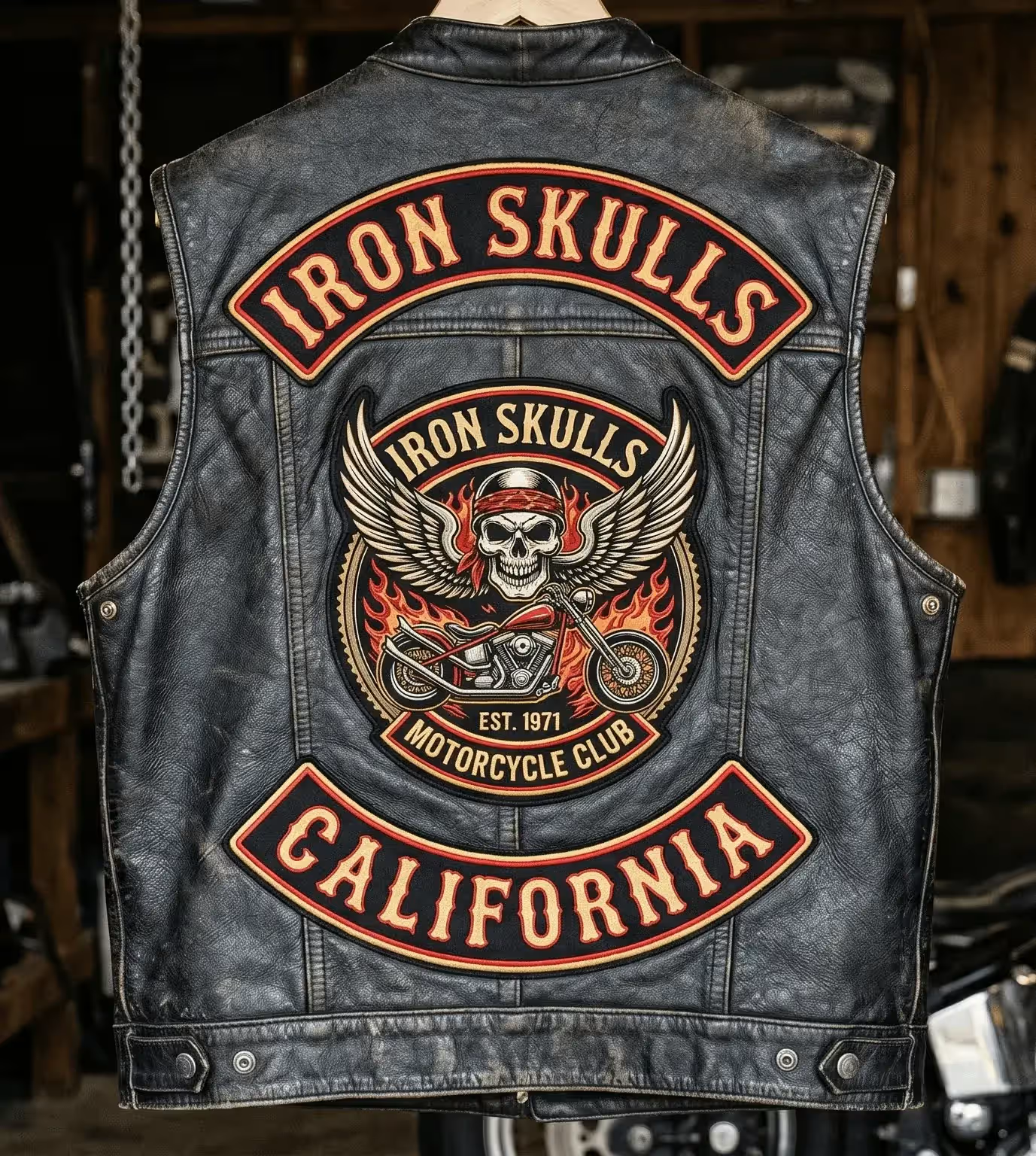
The three-piece patch set is the traditional layout for formal motorcycle club cuts in the UK, composed of a top rocker, a centre patch, and a bottom rocker arranged across the full back panel. The top rocker carries the club name, the centre patch carries the club logo or mascot, and the bottom rocker carries the chapter location or territory. The three pieces sit as separate patches, not as a single combined back patch, which allows individual elements to be replaced as the rider’s status, chapter, or location changes.
The geometry of a three-piece set is precise. The top rocker curves across the upper back at a radius matched to the shoulder line, the centre patch sits squarely between the rockers at 200-250 mm, and the bottom rocker mirrors the top rocker beneath it. The vertical spacing between each piece typically measures 10-15 mm, close enough to read as a unified set, but wide enough to allow each patch to flex independently as the rider moves. The total stack reaches around 350 mm from the top of the upper rocker to the base of the lower rocker, which fits a standard adult biker cut without crowding the shoulders or the lower hem.
UK biker culture distinguishes between three patch-holding tiers, each with its own traditional layout. Formal motorcycle clubs (MCs) wear the full three-piece set as a marker of patch-holding status. Motorcycle Clubs & Custom (MCCs) and riding clubs commonly wear a one-piece or two-piece layout, a single centre back patch, or a centre patch with a single top rocker carrying the club name. Solo riders and informal riding groups typically wear a single centre back patch with no rockers. These conventions are not universal, but they carry weight in established UK biker communities, riders new to patch-holding are advised to check local etiquette before adopting a full three-piece set.
The three-piece set defines the cut visually; sizing each piece correctly is what makes it work physically. The next section covers the standard dimensions every UK rider, MC, and riding club references when ordering custom motorcycle patches.
Sizing Custom Motorcycle Patches for Jackets, Vests & Cuts
Custom motorcycle patches are produced to standard UK sizes that match the proportions of adult biker cuts, leather jackets, and denim waistcoats. The sizing is anchored to two reference points: the back panel of the cut, and the chest area above the breast pocket. Every patch on a motorcycle cut sizes against one of these two references, the back panel sets back patch and rocker dimensions, the chest area sets name and rank patch dimensions.
| Patch Placement | Standard Size (UK) | Recommended Construction | Backing |
|---|---|---|---|
| Full back centre patch | 250-300 mm | Embroidered / Chenille / Leather | Sew-on |
| Top rocker | 280 mm × 75 mm (curved) | Embroidered | Sew-on |
| Bottom rocker | 280 mm × 75 mm (curved) | Embroidered | Sew-on |
| Centre logo (within 3-piece) | 200-250 mm | Embroidered / Chenille | Sew-on |
| Chest name patch | 100 mm × 30 mm | Embroidered / Woven | Sew-on |
| Chest rank patch | 75 mm × 30 mm | Embroidered / Woven | Sew-on |
| Sleeve patch | 75-100 mm | Embroidered / PVC | Sew-on / Velcro |
| Memorial patch | 75 mm round or shield | Embroidered / Printed | Sew-on |
| Side rocker | 200 mm × 50 mm | Embroidered | Sew-on |
Sizing custom motorcycle patches starts with measuring the back panel of the actual cut, not the jacket size on the label. Leather cuts vary in cut and shape, a XL waistcoat from one supplier carries a different back panel size from another. UK riders order patches more accurately when they lay the cut flat, measure the back panel from shoulder seam to lower hem, and report the figure with the order. The production team scales the three-piece set to fit the measured panel, which prevents the bottom rocker from running past the lower hem or the top rocker from crossing the shoulder seam.
Sizing also accounts for the curve of the rockers. A 280 mm rocker measured as a straight line sits flat across an arc of around 320 mm on the curve, the curve adds length the flat measurement does not show. Riders ordering rockers for a smaller cut, a women’s cut, or a teen rider cut frequently need a 240 mm rocker rather than the standard 280 mm. The production team confirms the rocker curve against the measured back panel before producing the patch, which prevents costly resizing after manufacture.
Once sizing is locked, the next decision is backing, the layer that determines how each patch attaches to the cut.
Backing Options for Motorcycle Patches
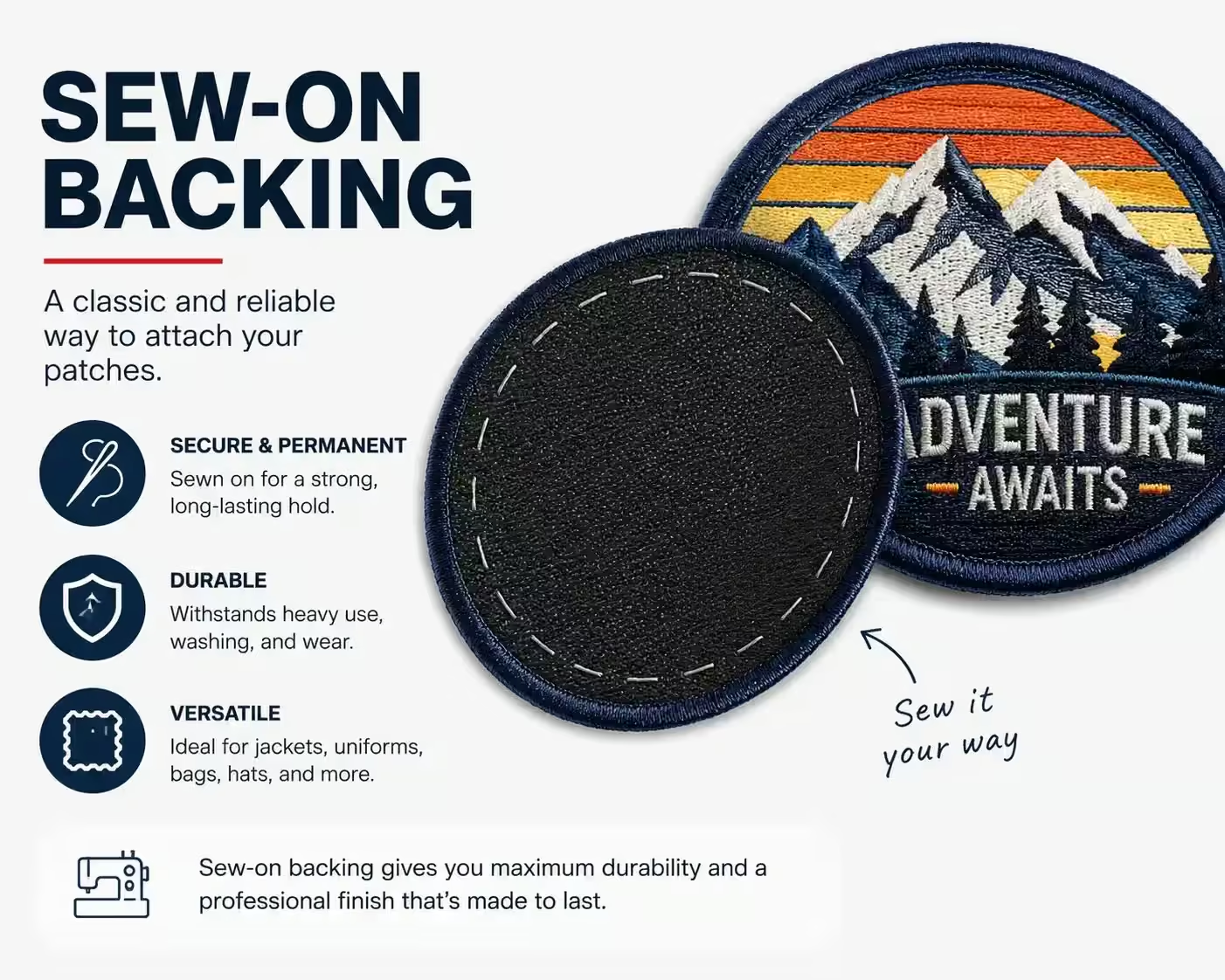
Sew-on backing is the standard for leather motorcycle cuts and denim waistcoats in the UK. Sew-on is the only backing that bonds permanently to leather, survives long mileage, and meets the durability expectations of patch-holding clubs. Iron-on backing does not bond to leather. Velcro backing serves textile riding jackets and modular gear but is rarely used on traditional cuts.
Sew-On Backing
Sew-on backing is the traditional and recommended choice for leather cuts and denim waistcoats. The patch is stitched onto the garment with a single line of thread around the perimeter, which creates a permanent bond that survives long mileage, weather exposure, and repeated washing. Sew-on backing is the only patch attachment method approved by formal MCs and patch-holding clubs in the UK. Hand-stitching or machine-stitching both work; reinforced thread at the corners protects the patch from wind lift at motorway speeds.
Leather · Denim · Permanent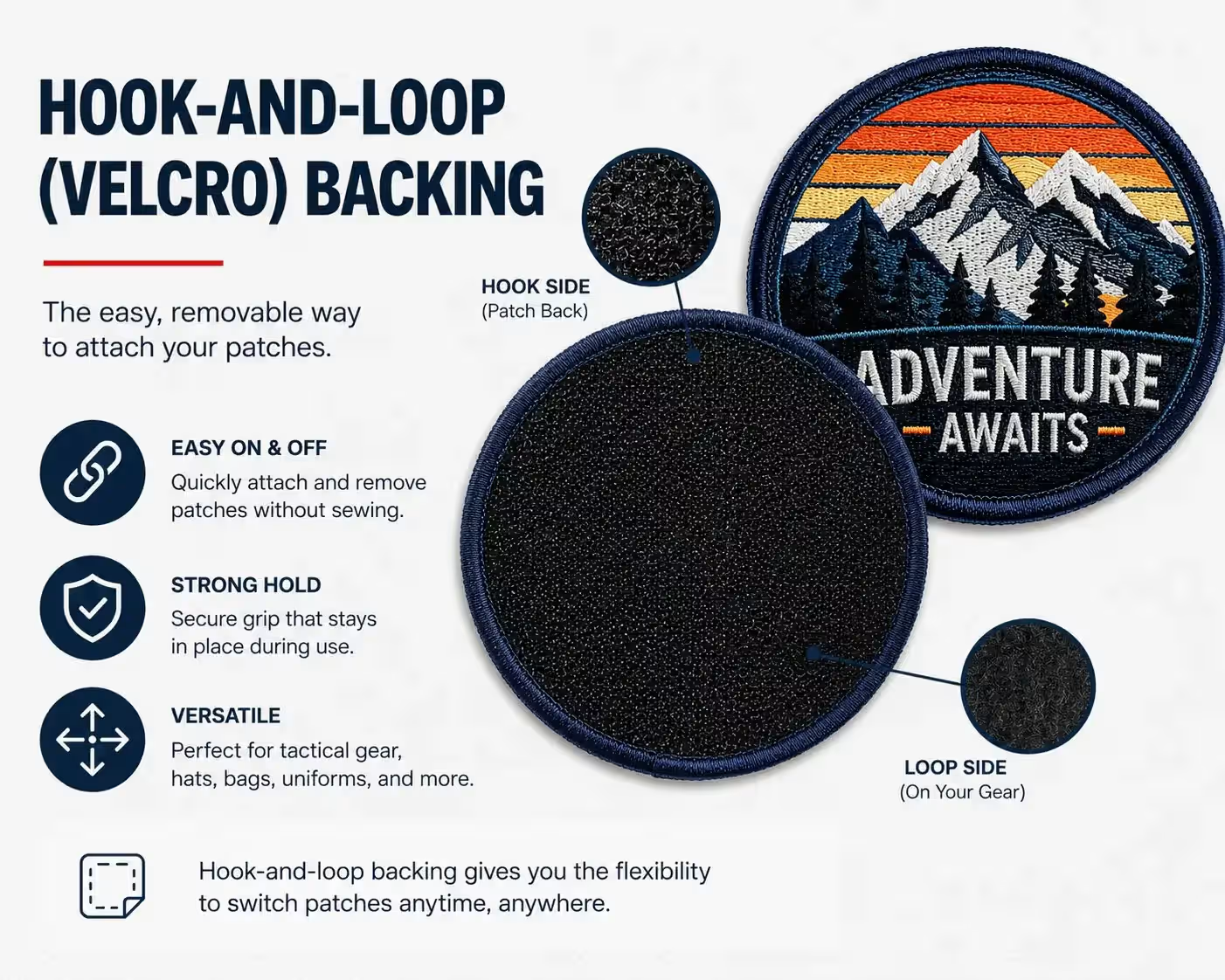
Hook-and-Loop (Velcro) Backing
Hook-and-loop backing pairs a Velcro loop sewn onto the jacket with a Velcro hook fused to the patch reverse. The system allows patches to be removed and swapped without damaging the garment. Velcro suits textile riding jackets, modular touring jackets, and adventure gear where riders rotate patches for different events, rallies, or trips. Velcro backing is rarely used on traditional leather cuts, the system requires a Velcro pad sewn onto the leather, which most MCs and riding clubs avoid for aesthetic and traditional reasons.
Textile Jackets · Removable · Modular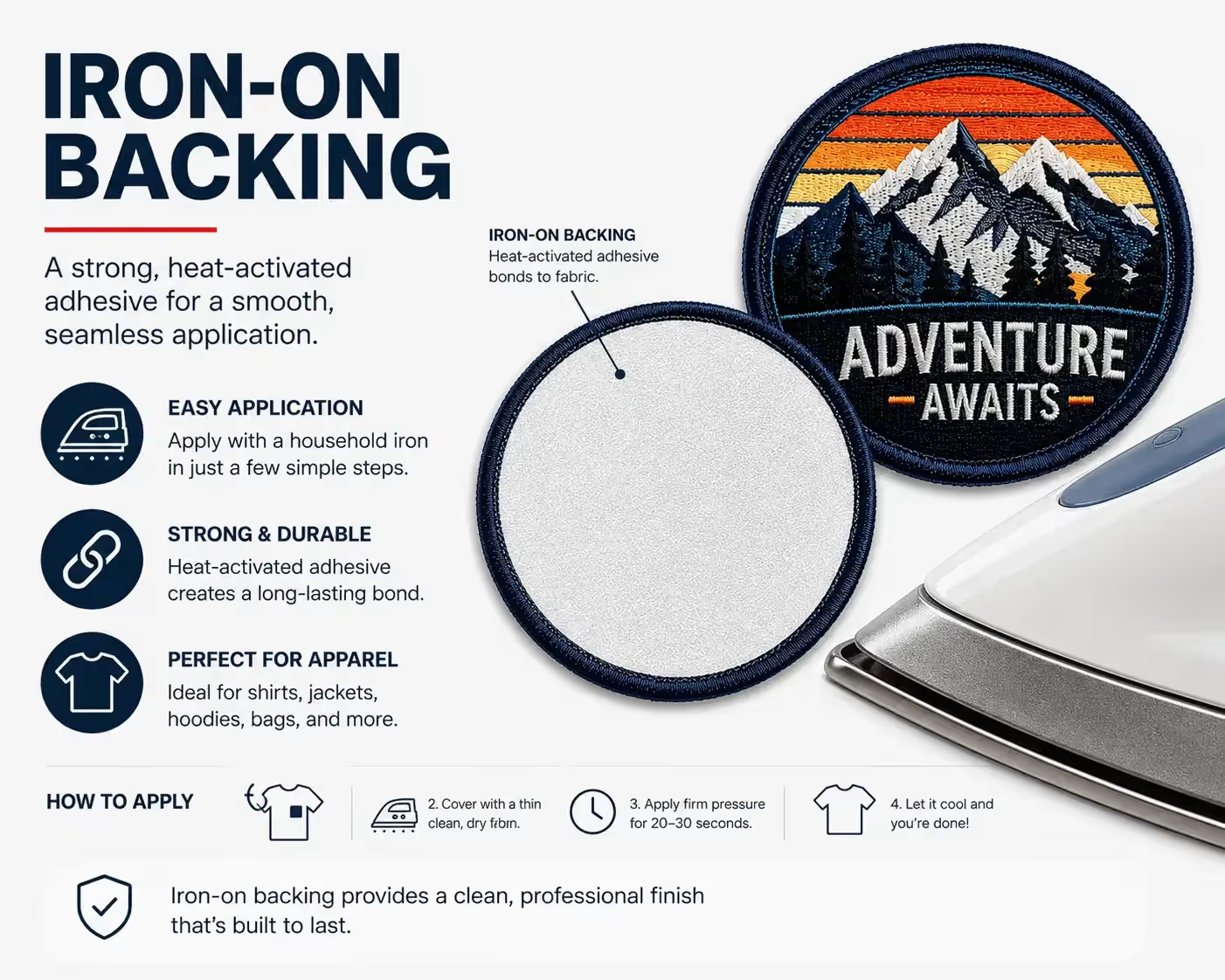
Iron-On Backing
Iron-on backing uses a heat-reactive adhesive film fused to the reverse of the patch. The adhesive activates between 130°C and 180°C and bonds the patch to garment fibres. Iron-on backing works on denim, cotton, and twill, fabrics found on casual riding gear, work-style waistcoats, and event merchandise. Iron-on backing does not bond to leather, nylon, or waxed cotton, and is not recommended for traditional biker cuts. Reinforcement stitching around the perimeter is advised on any iron-on patch worn during riding.
Denim · Cotton · Casual Gear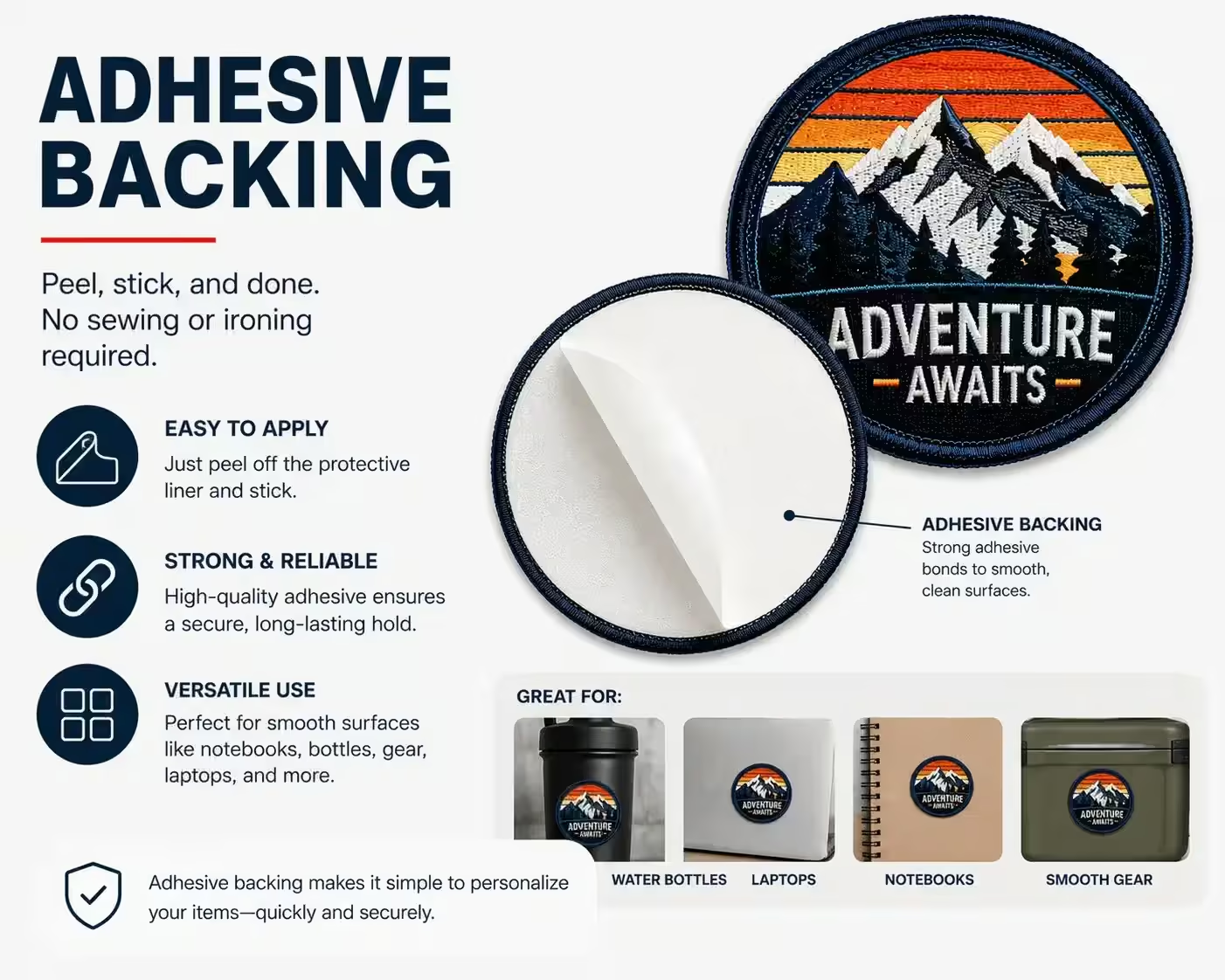
Adhesive Backing
Adhesive backing uses a peel-and-stick layer for temporary placement, suited to sampling new designs, event giveaways, and short-term branding. Adhesive backing is not durable enough for riding, vibration, wind, and heat lift the patch within hours of road use. Adhesive backing is used by clubs trialling new patch layouts before committing to a sew-on production run, and by event organisers distributing patches to attendees for one-day use on jackets and bags.
Sampling · Events · TemporaryBacking choice is dictated by the garment, not by the rider’s preference. Leather cuts demand sew-on. Textile jackets accept Velcro or sew-on. Denim waistcoats accept sew-on or iron-on. The production team confirms the garment material before recommending backing, which prevents the common ordering error of iron-on patches sent to a customer who intends to apply them to leather.
Materials & Durability for UK Riding Conditions
UK riding conditions place specific demands on custom motorcycle patches. The patch faces rain, road spray, exhaust heat, wind exposure at sustained motorway speeds, and abrasion from rider movement against the seat and tank. A patch produced to standard clothing-patch specifications will fade, lift, or fray within a season. A patch produced to motorcycle-grade specifications lasts the lifetime of the cut.
Stitch density is the first durability marker. Motorcycle patches are stitched at around 1,500 stitches per square inch on our standard production, which is denser than typical clothing patches. The dense stitch packing prevents the thread from fraying at the edges and stops the design from distorting under repeated flex. A merrow border, a raised, looped border produced on a dedicated Merrow sewing machine, is the industry standard finish for motorcycle patches, since the looped edge seals the patch perimeter against fraying. A hot-cut border is used for patches with intricate shapes or fine outlines that a merrow border cannot follow.
Weather resistance varies by construction. Embroidered motorcycle patches resist rain and road spray well, but the thread holds moisture and dries slowly. Woven patches dry faster than embroidered patches due to the thinner thread profile. PVC motorcycle patches are fully waterproof, the moulded plastic surface sheds water, wipes clean, and remains legible after wet rides. Printed motorcycle patches resist rain when sealed with a stitched border, but fade faster than embroidered patches under prolonged UV exposure. Adventure riders, dual-sport riders, and touring groups facing wet weather routinely select PVC over embroidered patches for the most exposed positions on the cut.
Wash durability matters for riders who wear their cuts year-round. Embroidered motorcycle patches with merrow borders survive industrial laundry cycles, hand-washing, and machine-washing at 30°C without thread degradation. PVC patches tolerate the same wash range. Chenille patches require gentler handling, hand-washing or a low-temperature delicate cycle preserves the tufted yarn texture. Memorial patches and heritage embroidered patches are best hand-washed regardless of construction, since these patches carry sentimental value the rider does not want to risk.
Heat and exhaust resistance is the final UK durability consideration. Patches positioned near the exhaust line, typically lower back patches on long cuts, or saddlebag patches, face elevated temperatures from radiant exhaust heat. Embroidered patches with polyester thread tolerate the heat without melting. PVC patches tolerate exhaust proximity well above standard road temperatures. Printed patches are the most vulnerable to heat, the dye-sublimation print fades faster near exhaust heat than the other constructions, which makes printed patches a poor choice for the lower edge of long cuts on touring motorcycles.
Material choice and construction together determine how a custom motorcycle patch performs across a UK riding season, and how many seasons it survives on the cut. With sizing, backing, and materials locked, the remaining decisions move from technical to procedural: how the patch is designed, what UK biker etiquette governs club layouts, and how the order moves through production.
Designing Your Custom Motorcycle Patch
Designing a custom motorcycle patch follows a five-step UK production process that moves the artwork from rough concept to finished patch in 7-14 working days. The process is built around free unlimited revisions, in-house digitising, and a full-colour proof at every stage, which means the rider, MC, or riding club approves every detail before the patch enters production.
-
01
Submit Your Artwork or Brief
Upload your club logo, rider portrait, hand-drawn sketch, or written description through the quote form. The studio accepts JPG, PNG, PDF, AI, EPS, and SVG files. Hand-drawn sketches and written briefs are equally welcome the in-house design team converts them into production-ready vector files at no extra cost.
-
02
Receive Your Free Digital Proof
Within 24 hours, the design team produces a full-colour digital proof showing patch dimensions, thread colours, border type (merrow or hot-cut), backing, and stitch direction. The proof is annotated with measurements and supplied by email.
-
03
Choose Construction & Specifications
Confirm the patch type, embroidered, woven, PVC, chenille, leather, or printed. Lock the size, border style, and backing. For three-piece club sets, the studio confirms the curve radius on the rockers and the spacing between each piece.
-
04
Approve the Proof for Production
Unlimited revisions are included free of charge. Adjust colours, resize the patch, change the border, or refine fine details until the proof matches the brief exactly. The patch enters UK production once the rider or club president signs off the final proof by email.
-
05
UK Production & Tracked Delivery
Standard production takes 5-10 working days from proof approval. Embroidered and woven patches run on the shorter end; PVC patches require longer due to moulding and finishing. Finished patches dispatch via Royal Mail Tracked and DPD courier with full tracking.
The design process is identical for a single name patch, a memorial tribute, or a full three-piece MC set. The studio handles each order with the same proof-and-approval workflow, which protects the customer from production errors and confirms every detail before the stitching begins.
UK Motorcycle Patch Etiquette: MC vs MCC vs Riding Club
UK biker culture distinguishes between three patch-holding tiers, each with its own conventions around patch layout, three-piece sets, and territorial markers. The distinction matters because patch layout signals club status to other riders on the road, at rallies, and at biker events, and because some traditional layouts carry weight in established UK biker communities that newer clubs are expected to recognise.
Motorcycle Clubs (MCs)
MCs are formal, patch-holding clubs with a structured hierarchy, a probationary membership process, and a constitution. MCs traditionally wear the full three-piece patch set, top rocker (club name), centre patch (club logo), bottom rocker (chapter or territory). Patch-holders within an MC earn the right to wear the full set after completing a prospect period. MC patches are typically embroidered on twill with a merrow border, sewn onto a leather cut with reinforced thread, and worn as a permanent marker of club membership.
Motorcycle Clubs & Custom (MCCs)
MCCs and riding clubs are less formal organisations focused on group riding, ride-outs, and social activities. MCC and riding club patches commonly use a one-piece or two-piece layout, a single centre back patch, or a centre patch with a single top rocker carrying the club name. MCCs typically omit the bottom rocker, which marks a clear visual distinction from formal MC patches at a distance. MCCs accept members without a probationary period, which suits riders who want club identity without the commitment of full MC membership.
Solo Riders & Informal Groups
Solo riders and informal riding groups wear a single centre back patch with no rockers, or a series of unrelated ride patches, rally patches, and memorial patches arranged across the cut. Solo riders are not bound by club etiquette and design their patch layouts as personal expressions of riding history. The single back patch is the most common solo rider layout in the UK, paired with chest patches, sleeve patches, and event commemorations as the rider accumulates miles.
A note on three-piece sets: Adopting a full three-piece patch set in a region where established MCs operate is a decision that benefits from local research first. The production studio supplies the patch set as ordered, the responsibility for understanding local conventions sits with the club itself. Newer UK clubs frequently start with a one-piece centre back patch and progress to a two-piece layout as the club matures, which avoids any unintended overlap with the conventions of existing patch-holding clubs in their area.
Custom Motorcycle Patch Pricing & No Minimum Order (UK)
Custom motorcycle patch pricing in the UK is determined by five variables: patch size, colour count, construction type, border finish, and order quantity. Larger patches, denser colour counts, and lower order quantities push the unit price up. Standard motorcycle club orders covering 10-50 patches sit in the most economical pricing tier, since the production setup cost spreads across enough units to deliver competitive per-patch rates.
No Minimum Order
Embroidered and woven motorcycle patches have no minimum order. Single patches suit new clubs ordering their first patch run, memorial patch sets, and small riding groups building a club identity, with better per-unit pricing at higher volumes. Per-unit pricing drops at the 25, 50, and 100-unit thresholds.
No Minimum Order
Chenille and leather motorcycle patches also have no minimum order. Both constructions involve higher material and finishing costs than embroidery, which places the per-unit price above embroidered patches at the same quantity. The open minimum keeps the format accessible to small clubs and individual riders.
No Minimum Order
Printed motorcycle patches have no minimum order. The dye-sublimation and UV print processes are available from a single patch upward. Printed patches deliver the lowest per-unit price at higher volumes, particularly above 100 units.
No Minimum Order
PVC motorcycle patches have no minimum order, even though mould tooling is required for production. The mould is produced once and reused for repeat orders, which makes PVC patches highly economical for clubs ordering 100, 250, or 500 units in subsequent runs. Adventure rider groups and touring clubs typically commission PVC patches at 50-100 unit volumes.
Sample orders for clubs evaluating construction before committing to a full run are available on request. The studio produces a single proof patch for review, particularly useful for three-piece sets, where the rider can physically check the curve, sizing, and colour balance on the actual cut before approving the larger production run.
UK Production & Delivery Timeframes
Custom motorcycle patch production in the UK runs to two standard timeframes: standard turnaround and express. Standard turnaround covers the majority of orders and matches the typical lead time required by clubs planning rallies, anniversary rides, and seasonal patch upgrades. Express turnaround serves urgent orders, memorial patches with a tight funeral or memorial ride deadline, replacement patches for upcoming events, and last-minute rally commemorations.
Standard Production
Standard production takes 7-14 working days from proof approval, which includes design finalisation, digitising, stitching or moulding, finishing, and Royal Mail Tracked dispatch. Embroidered and woven patches typically complete in 7-10 working days. PVC patches sit at the longer end due to the mould tooling stage. Three-piece club sets follow the same 7-14 day timeline since all three pieces produce in parallel.
Express Production
Express production takes 3-5 working days from proof approval for an additional fee. Express orders prioritise the production queue, run on accelerated digitising, and dispatch by courier rather than Royal Mail. Express is available on embroidered, woven, and chenille patches; PVC patches do not support express due to mould tooling requirements.
UK & International Dispatch
UK delivery uses Royal Mail Tracked 24 and Tracked 48 for standard orders, with DPD courier for bulk orders and three-piece club sets. International dispatch is available worldwide via tracked courier, UK clubs with overseas chapters routinely order patch sets for distribution to riders in Europe, North America, and Australia.
Industries & Riders We Make Motorcycle Patches For
From formal MCs ordering full three-piece sets to solo riders commissioning a single memorial patch, the studio produces custom motorcycle patches for every tier of the UK biking community.
Motorcycle Clubs (MCs)
Formal MCs across the UK order full three-piece patch sets, top rocker, centre patch, bottom rocker, produced on heavy embroidered twill with merrow borders and sew-on backing. The studio handles single-rider patch sets, prospect patches, full-member upgrades, and replacement patches for damaged or faded originals. Patch-holding clubs return repeatedly for new chapter rockers as the club expands across UK territories.
Riding Clubs & Touring Groups
UK riding clubs, ride-out groups, and touring groups order one-piece and two-piece patch layouts for organised group rides, charity rides, and seasonal touring events. Riding club patches commonly carry the club name, an emblem, and the founding year, embroidered or woven for clear legibility at distance. Touring groups frequently add commemorative patches for completed long-distance rides, Land’s End to John o’ Groats, the North Coast 500, and European tours.
Veterans’ & Forces Rider Associations
The Royal British Legion Riders Branch, regimental rider associations, blue-light rider groups, and veteran motorcycle clubs order custom patches that combine military, emergency service, or regimental heritage with biker patch conventions. Embroidered patches with regimental colours, cap badges, and remembrance symbols suit this segment, produced with the durability standards expected by ex-forces and serving members.
Solo Riders & Custom Builds
Solo riders across the UK order personalised name patches, road name patches, memorial tributes, and single centre back patches for leather cuts, denim waistcoats, and textile riding jackets. Custom build owners, classic restorations, café racers, choppers, bobbers, commission patches that match the motorcycle build, the rider’s identity, and the build’s heritage. Single-patch orders are welcome with no minimum order, with any surplus typically kept as spares or gifted to riding friends.
Our Customers’ Reviews
UK riders, MC chapters, and riding clubs share their experiences after receiving custom motorcycle patches from our workshop, from full three-piece sets to memorial tributes.
Ordered a full three-piece set for our chapter, top rocker, centre, and bottom rocker. The curve on the rockers matched the cut perfectly first time. Stitching is heavy-duty, exactly what we need on a leather cut that gets ridden daily. Service was straightforward, proof came back fast, and the patches arrived inside 10 days.– Dave M., MC Chapter Secretary, Yorkshire
I sent a hand-drawn sketch of a memorial design for a friend we lost last year. The team digitised it for free, sent back a proof in under a day, and the finished patch is exactly what I wanted. Stitch detail is incredible, every line came out clean. It now sits on my cut permanently.– Tom R., Solo Rider, Manchester
We ordered PVC patches for our adventure riding group ahead of a wet-weather European tour. The patches survived four countries, three weeks of rain, and constant mud. They wiped clean every night and looked unchanged at the end. Going back for chenille name patches next.– Sarah L., Riding Club Captain, Surrey
The Royal British Legion Riders Branch chapter ordered embroidered patches with our regimental colours. Quality is on par with anything I saw in service. Proof process was thorough, colour matching was spot-on, and the patches arrived ahead of our remembrance ride. Highly recommend for veterans’ groups.– Mark T., Veterans’ Rider Association, West Midlands
Frequently Asked Questions About Custom Motorcycle Patches
Can I put iron-on patches on a leather motorcycle jacket?
No. Iron-on adhesive does not bond to leather, nylon, vinyl, or waxed cotton. Leather motorcycle cuts and leather jackets require sew-on backing, which stitches the patch permanently to the garment. Velcro backing is the only alternative for leather, but requires a Velcro pad sewn onto the cut first, a setup most MCs and riding clubs avoid for traditional reasons.
What is the standard size for a motorcycle back patch in the UK?
Standard UK motorcycle back patches measure 250-300 mm across the back panel. The exact size depends on the cut, adult leather cuts typically take 280-300 mm back patches, women’s cuts and smaller frames take 250-280 mm, and teen rider cuts take 220-250 mm. Measure the back panel of the cut before ordering to confirm the correct size.
Do I need a minimum order for custom motorcycle club patches?
No. There is no minimum order for custom motorcycle club patches. Embroidered, woven, chenille, leather, printed, and PVC motorcycle patches can all be ordered from a single patch upward, with better per-unit pricing at higher volumes. Sample orders for clubs evaluating construction before a full run are available on request.
What is the difference between MC and MCC patches?
MC patches are typically three-piece sets, top rocker, centre patch, bottom rocker, worn by formal patch-holding motorcycle clubs with structured hierarchies. MCC and riding club patches are typically one-piece or two-piece layouts, a single centre back patch, or a centre patch with one top rocker. The layout signals the club’s tier within UK biker culture.
Are PVC motorcycle patches waterproof?
Yes. PVC motorcycle patches are fully waterproof. The moulded polyvinyl chloride surface sheds rain, road spray, and mud, and wipes clean with a damp cloth. PVC patches suit adventure riders, dual-sport riders, and touring groups facing wet weather and off-road conditions across the UK and Europe.
Can you produce three-piece patch sets for new clubs?
Yes. The studio produces full three-piece sets, coordinated top rocker, centre patch, and bottom rocker, with matched curves, lettering, and colours. New UK clubs ordering a three-piece set are advised to confirm local biker etiquette before adopting the layout, particularly in regions with established patch-holding clubs.
How long do custom motorcycle patches take to make in the UK?
Standard production takes 7-14 working days from proof approval, which includes design finalisation, stitching or moulding, and Royal Mail Tracked dispatch. Express production runs in 3-5 working days for an additional fee, available on embroidered, woven, and chenille patches.
Can I supply a hand-drawn sketch for my biker patch?
Yes. The design team accepts hand-drawn sketches on paper, photographs of sketches, written descriptions, and rough concepts. Sketches are digitised into production-ready vector files at no extra cost, with a full-colour proof returned within 24 hours for review and approval.
Custom Motorcycle Patches Built for UK Roads
Custom motorcycle patches built for UK roads, UK weather, and UK riders, produced in our UK workshop on heavy-duty twill, finished with merrow borders, and dispatched by tracked delivery. Whether you ride solo, run a chapter, or lead a riding club, the studio handles every order with the same care: free design, free proof, unlimited revisions, and patches built to last the lifetime of the cut.