Custom Chenille Patches in the UK
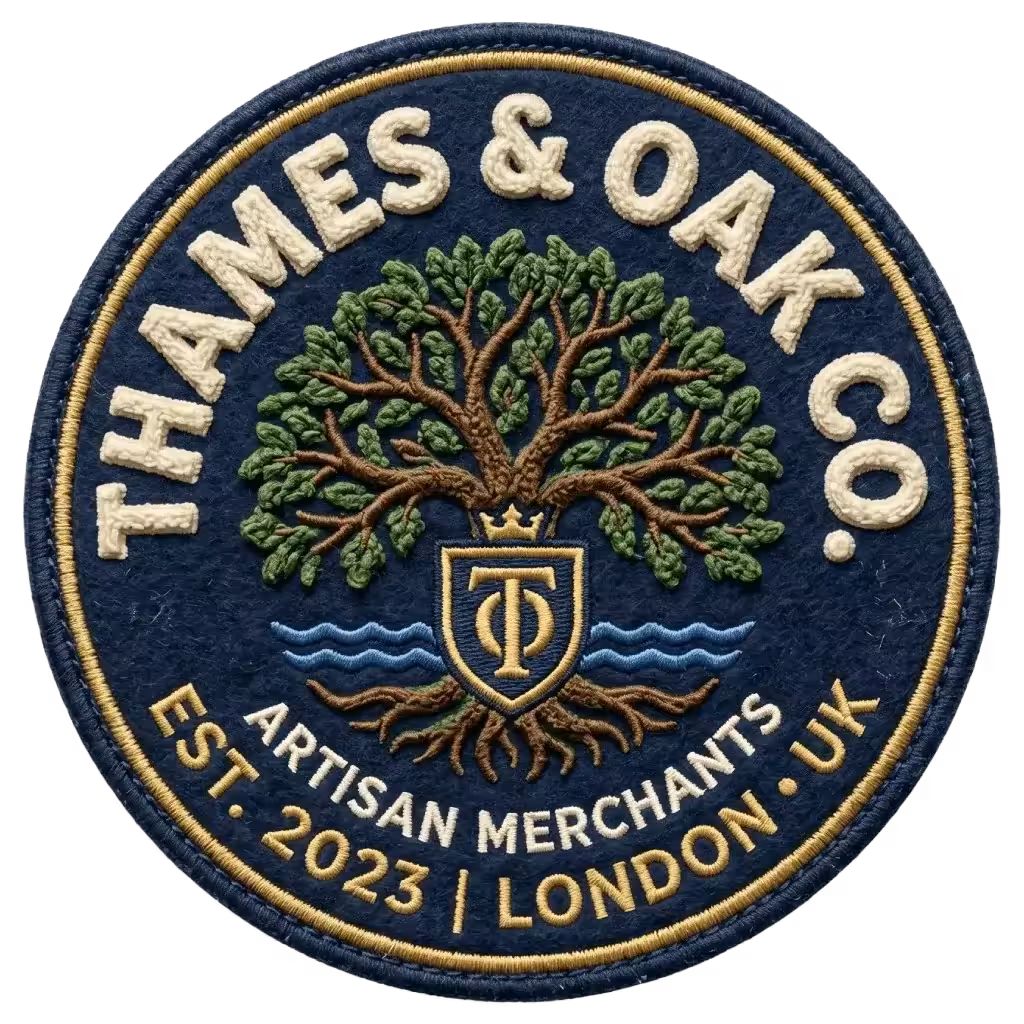
Chenille patches are textile badges made from looped chenille yarn tufted into a felt base, producing a plush, raised 3D texture that sits 3-5 mm above the surface. UK customers order custom chenille patches for varsity jackets, school blazers, sports club hoodies, and bespoke streetwear, where soft texture and bold lettering carry more visual weight than flat embroidery.
We manufacture bespoke chenille patches at our UK patch workshop with no minimum order, free digital proofs, and Royal Mail tracked delivery, the design starts with your artwork and ends with a finished patch in your hand within 7-10 working days.
- No minimum order
- Free digital proofs
- Royal Mail tracked
TextureLooped Yarn
What Are Custom Chenille Patches?
Chenille patches are textured fabric patches built from two materials: a felt base and chenille yarn. The felt base provides the patch shape and structural backing, while the chenille yarn delivers the signature fuzzy, towel-like surface. Manufacturers loop the yarn through the felt using a chain stitch process, locking each strand into place so the surface stays plush after repeated washing. A border, usually chain stitch or a merrow border, finishes the edge and prevents fraying.
The defining attribute of a chenille patch is its height. Where embroidered patches lie flat at roughly 1 mm thick, chenille patches stand 3-5 mm proud of the garment, which creates the tactile, raised look prized on letterman jackets and varsity sweaters. The yarn itself is acrylic-based, hard-wearing, and available in dozens of colours, allowing custom designs to match school colours, brand palettes, or club identities precisely.
How Chenille Patches Differ From Embroidered Patches
Chenille patches and embroidered patches share the same purpose, branding garments with a stitched logo or letter, but the construction differs significantly. Embroidered patches use fine polyester or rayon thread densely stitched onto a twill backing, which renders sharp logos, fine text, and detailed imagery. Chenille patches use thick, looped yarn on a felt base, which renders bold shapes, large letters, numbers, and simple mascots, but cannot reproduce fine detail.
The trade-off is texture for detail. A chenille patch delivers depth, softness, and a nostalgic varsity feel that embroidery cannot match. An embroidered patch delivers precision and small-scale legibility that chenille cannot match. UK customers typically choose chenille for jacket-back designs, large chest letters, and award patches, while embroidered patches suit name tags, small logos, and detailed company crests.
The Origin of Chenille Patches
Chenille patches originated at Harvard University in 1865, when the university's baseball team stitched the letter "H" onto their uniforms to signify achievement. The tradition spread through American high schools and colleges throughout the early 1900s, evolving into the letterman jacket convention still recognised today, students earn chenille letters for academic, athletic, or extracurricular accomplishment. The word "chenille" itself is French for "caterpillar," named for the fuzzy, soft appearance of the looped yarn that mimics the texture of the insect.
UK adoption followed a different route. British customers now use chenille patches less for academic awards and more for streetwear, sports clubs, university societies, and bespoke fashion brands that draw on the American varsity aesthetic. The visual language is the same, bold letters, plush yarn, layered felt, but the application sits closer to fashion and group identity than school tradition.
How Custom Chenille Patches Are Made
Custom chenille patches are made through a five-stage manufacturing process: design digitising, felt cutting, chenille yarn tufting, border application, and backing attachment. Each stage shapes a specific attribute of the finished patch, accuracy, shape, texture, edge finish, and application method, and skipping any stage compromises durability or design fidelity. We follow this exact sequence for every custom chenille patch we manufacture in the UK.
Step 1 - Design and Digitising
The process starts with your artwork. You submit a design file, a logo, a letter, a mascot, or a sketch, and our design team converts it into a digitised tufting pattern that the chenille machine can read. Digitising translates flat artwork into stitch coordinates, defining where the yarn loops sit, how dense the tufts are, and where colour changes occur. We send a free digital proof, called an e-draft, within 24 hours so you can approve the design before any material is cut.
Step 2 - Felt Base Cutting
Approved designs move to felt cutting. The felt base is the foundation of every chenille patch, providing the shape, the contrast border, and the structural strength to hold the chenille yarn. We use high-density wool-blend felt cut to your exact patch dimensions, with optional layered felt for depth, a common choice on varsity letters where a coloured outer felt frames an inner contrasting felt and the chenille yarn sits on top.
Step 3 - Chenille Yarn Tufting (Loop Stitch)
Tufting is the stage that creates the chenille texture. A chenille loom loops thick acrylic yarn through the felt base in a continuous loop stitch, also called a moss stitch, building up the raised 3-5 mm surface. The machine loops yarn through the felt at a consistent height, producing the uniform plush finish that defines the patch. Multiple yarn colours can be tufted into the same patch, allowing two-tone designs, contrast lettering, and mascot detailing within a single piece.
Step 4 - Border Application
The border locks the patch edge and prevents the chenille yarn from unravelling. Two border styles dominate UK chenille manufacturing: chain stitch and merrow border. Chain stitch borders use looped thread sewn directly onto the felt edge, creating a clean, traditional varsity finish that sits flush with the patch. Merrow borders use a thicker overlock stitch that wraps the edge, producing a raised, rope-like outline most commonly seen on military and outdoor patches. Chain stitch suits letters and varsity designs; merrow suits round, shield, and shaped patches.
Step 5 - Backing Attachment and Finishing
The final stage attaches your chosen backing, sew-on, iron-on, hook-and-loop (Velcro), or adhesive. Each backing serves a different application need, and we'll cover the differences in detail later in this guide. After backing is fixed, the patch is trimmed, quality-checked for yarn density, colour accuracy, and border integrity, then packed for Royal Mail tracked delivery anywhere in the UK.
Types of Custom Chenille Patches We Make in the UK
Chenille patches divide into five main types based on design content: letter patches, number patches, mascot and logo patches, varsity and letterman patches, and mixed chenille-embroidered patches. Each type serves a distinct purpose, and the choice depends on what your design needs to communicate, a single character, a numeric identifier, a brand mark, an award, or a layered composition. We manufacture all five types in the UK from the same base materials but adjust digitising, sizing, and border style to match the design intent.
Chenille Letter Patches
Chenille letter patches are individual letters, A through Z, tufted onto a felt base, sized between 2 and 12 inches tall. Schools, universities, sports clubs, and brand designers order chenille letter patches for chest placement on varsity jackets, hoodies, and bomber jackets, where a single bold letter signifies team affiliation or institutional identity. Block fonts dominate this category because chenille yarn handles wide strokes far better than thin, serif typefaces. We offer over 30 yarn colours and 20 felt colours, allowing two-tone letter combinations such as gold-on-navy, white-on-red, or black-on-cream.
Chenille Number Patches
Chenille number patches use the same construction as letter patches but render digits, 0 through 9, for sports kit, year markers, and award designations. UK sports clubs commonly order chenille numbers for the back of training jackets and squad apparel, while university societies use year numbers (e.g., "24" or "25") to mark graduation cohorts. Stacked numbers, double-digit combinations, and contrasting outline borders are all standard customisation options on number patches.
Chenille Mascot and Logo Patches
Chenille mascot patches reproduce school mascots, club emblems, and brand logos in plush yarn, typically sized between 4 and 10 inches across. The chenille construction simplifies fine detail, sharp eyes, thin outlines, and small text get reduced or removed during digitising, so mascot patches work best with bold, graphic designs rather than illustrative ones. We often combine chenille mascots with embroidered detailing for the eyes, mouth, and outline, which preserves the plush body of the mascot while adding the precision embroidery delivers.
Chenille Varsity and Letterman Patches
Varsity and letterman patches are the original chenille application, dating back to the Harvard tradition. These patches typically combine a single large chenille letter with embroidered or chenille sub-text, the year, the sport, the achievement, or the wearer's name, built up on layered felt for depth. UK customers ordering varsity patches usually want full letterman jacket sets: a chest letter, a back design, and sleeve year markers, all manufactured to the same colourway and dispatched together for jacket assembly.
Mixed Chenille and Embroidered Patches
Mixed patches combine chenille yarn and embroidered thread on the same patch, using each material where it performs best. The chenille fills the bold, large-area design elements; the embroidery handles fine text, outlines, and small detail. This hybrid construction is the standard choice for complex designs that need both the plush varsity feel and crisp legibility, university crests, sports club logos with mottos, and award patches with names or dates.
Chenille Patch Customisation Options
Custom chenille patches offer four core customisation variables: yarn colour, felt colour, border style, and size. Each variable shapes how the finished patch looks, feels, and reads from a distance, and combining the four correctly turns a generic patch into a brand-aligned, jacket-ready design. We adjust each variable to your specification without changing the base price within standard size brackets.
Yarn Colours and Felt Colours
We stock over 30 chenille yarn colours and 20 felt base colours, covering the full spectrum from school primaries (red, navy, gold, royal blue) to streetwear neutrals (cream, charcoal, sage, burgundy). Two-colour designs are standard, one chenille colour on one felt base, while three- and four-colour designs add stitched detail or layered felt at a small additional cost. The yarn-felt contrast carries the visual impact: high-contrast pairings (white yarn on navy felt) read clearly from distance, while tonal pairings (cream yarn on tan felt) deliver a softer, vintage aesthetic.
Border Styles, Chain Stitch vs Merrow Border
Chain stitch and merrow borders finish the patch edge, but they produce different visual and structural results. Chain stitch borders sew a continuous looped thread directly onto the felt edge, creating a flat, traditional varsity outline that suits letters, numbers, and rectangular designs. Merrow borders wrap the edge in a thick overlock stitch, raising a rope-like rim around the patch, which suits round, shield, and irregular shapes. Chain stitch is the historically correct choice for varsity letterman applications; merrow is the durable, weatherproof choice for outdoor and military-style patches.
Sizes, Typical 2 to 12 Inches
Chenille patch sizes range from 2 inches up to 12 inches, measured from edge to edge of the chenille area excluding the felt border. The right size depends on the placement and the design content:
| Size | Common use | Placement |
|---|---|---|
| 2-3 inches | Small letters, numbers, simple icons | Cap fronts, sleeves, chest pockets |
| 4-6 inches | Standard varsity letters, club logos | Chest placement on jackets and hoodies |
| 7-9 inches | Large varsity letters, mascot designs | Full chest, jacket front |
| 10-12 inches | Back patches, full mascot crests | Jacket backs, bag panels |
Shapes, Letters, Custom Cut, Standard Shapes
Chenille patches are cut to any shape the design requires. Standard shapes include circles, squares, rectangles, shields, and ovals; custom shapes follow the contour of letters, mascots, or logos exactly. The felt base is laser-cut or die-cut to the chosen shape before tufting, which means the final patch outline matches the design without excess background felt.
Backing Types for Chenille Patches
Chenille patches accept four backing types: sew-on, iron-on, hook-and-loop (Velcro), and adhesive. The backing determines how the patch attaches to the garment, how long it stays in place, and whether it survives washing. We apply your chosen backing in the final manufacturing stage, and the choice depends entirely on the garment, the use case, and how often the patch needs to be removed.
Sew-On Backing, Best for Permanent Use
Sew-on backing is the original and most durable chenille patch attachment method. The patch is stitched directly to the garment around the felt border, locking it in place permanently and surviving repeated washing without lifting or peeling. Sew-on is the correct choice for varsity jackets, letterman jackets, and any garment that will be worn and washed regularly. The trade-off is application time, sew-on patches require either hand-stitching or an industrial sewing machine.
Iron-On Backing, Best for Quick Application
Iron-on backing applies a heat-seal adhesive layer to the back of the felt, allowing the patch to bond to fabric under household iron heat. Iron-on chenille patches attach in under 60 seconds with no sewing skill required, making them the convenient choice for hoodies, t-shirts, bags, and casual jackets. The adhesive holds well on cotton and cotton blends but performs less reliably on synthetic, waterproof, or heavily textured fabrics. We recommend a backup sew-around-the-edge for chenille patches over 4 inches because the patch weight challenges the adhesive bond on larger sizes.
Hook-and-Loop (Velcro) Backing, Best for Removable Use
Hook-and-loop backing splits the attachment into two parts: the hook side fixed to the patch, and the loop side sewn or adhered to the garment. This system makes the patch removable and interchangeable, which suits military-style apparel, tactical gear, uniforms with rotating insignia, and anyone who wants to swap patches across multiple garments. Velcro backing carries a small price premium over sew-on or iron-on but delivers the most flexible long-term use.
Adhesive Backing, Best for Temporary Display
Peel-and-stick adhesive backing fixes the patch to a smooth surface for short-term display, event lanyards, name boards, exhibition stands, or single-day uniforms. Adhesive backing is not designed to survive washing or extended wear, so it suits temporary applications only. Most UK orders for chenille patches choose sew-on or iron-on; adhesive backing is a niche option but available on request.
Common Uses for Custom Chenille Patches in the UK
UK customers order custom chenille patches for four primary applications: varsity and university apparel, sports clubs and team kit, school uniforms and awards, and streetwear and bespoke fashion. Each application uses chenille for the same reason, the plush, raised texture signals quality, identity, and tradition in a way that flat embroidery cannot. The design conventions differ slightly across these four categories, but the manufacturing process stays the same.
Varsity Jackets and University Apparel
Varsity jackets remain the most recognisable home for chenille patches. UK universities, student societies, and athletic unions order chenille letter patches and crest patches for jacket chests, sleeves, and backs, building the layered varsity look originally developed in American collegiate sport. The standard varsity jacket carries a single large chest letter (4-6 inches), a full-back mascot or team name (8-12 inches), and optional sleeve patches for year, sport, or position.
Sports Clubs and Team Hoodies
Sports clubs across the UK, rugby, football, hockey, rowing, cricket, use chenille patches on training hoodies, kit bags, and ceremonial blazers. Club crests, player numbers, and squad letters all translate well into chenille, and the soft texture handles the abuse of training kit far better than printed transfers. Chenille's wash durability is the key practical advantage for sports use, where kit gets washed frequently throughout the season.
School Uniforms and Awards
UK schools order chenille patches for blazer crests, house emblems, prefect badges, and academic award patches. The traditional, embroidered-style chenille construction matches the formal aesthetic of school uniform far better than printed or PVC alternatives, and the durability suits a garment that gets daily wear over multiple terms. Many schools combine chenille for the main crest with embroidered text for the school name and motto, using mixed construction to balance tradition with legibility.
Streetwear and Bespoke Fashion
Streetwear designers and bespoke fashion brands have driven the largest growth in UK chenille patch demand over the past decade. The varsity aesthetic, bold letters, plush yarn, layered felt, translates directly into modern streetwear collections, with brands using chenille patches on bomber jackets, oversized hoodies, denim, and headwear. Custom chenille patches give independent UK fashion labels a way to create textured, premium-feeling product without the cost of full custom embroidery on each garment.
Chenille Patches vs Embroidered Patches, Which Should You Choose?
Chenille patches and embroidered patches solve the same branding problem in different ways, and the right choice depends on design complexity, garment type, and the look you want to land. Chenille delivers texture, depth, and varsity character; embroidery delivers detail, precision, and small-scale legibility. For a flat printed alternative, explore our custom printed patches. The table below compares the two side by side across the variables that matter most for UK custom orders.
| Attribute | Chenille Patches | Embroidered Patches |
|---|---|---|
| Texture | Plush, raised, 3-5 mm tall | Flat, ~1 mm thick |
| Material | Looped acrylic yarn on felt base | Polyester or rayon thread on twill backing |
| Detail level | Bold shapes, large letters, simple mascots | Fine text, sharp logos, intricate designs |
| Minimum design size | 2 inches | 1 inch (or smaller for text) |
| Maximum design size | 12 inches | 12+ inches |
| Best garment use | Varsity jackets, hoodies, blazers, bomber jackets | Caps, polos, workwear, name tags, uniforms |
| Wash durability | Excellent (sew-on); good (iron-on) | Excellent across all backings |
| Cost per patch | Higher (more material, more labour) | Lower (faster machine production) |
| Visual signal | Premium, traditional, varsity, nostalgic | Professional, precise, corporate |
| Border options | Chain stitch or merrow | Merrow, hot-cut, or laser-cut |
| Common UK use case | Sports clubs, universities, streetwear | Workwear, schools, corporate uniforms |
The decision rule is simple: choose chenille when texture and presence matter more than fine detail; choose embroidery when the design contains small text, intricate lines, or a corporate logo that must reproduce exactly. For designs that need both, a school crest with a motto, a club logo with a tagline, combine the two using mixed chenille-and-embroidered construction.
How to Order Custom Chenille Patches From Us
Ordering custom chenille patches from us follows a three-step process: submit your design, approve the digital mockup, then receive UK delivery. Read our full how to order guide for more detail. The full timeline runs 8-12 working days from initial enquiry to patch in hand, with most of that time covering production rather than design, our digitising team turns mockups around inside 24 hours, so the bottleneck is always manufacturing and not approval.
-
Step 1 - Submit Your Design or Brief
Upload your artwork, send a sketch, or describe the design in writing, we accept any starting point. The clearer your input, the faster your mockup: vector files (AI, EPS, SVG) reproduce most accurately, but high-resolution PNG, JPG, and PDF files all work. Include the patch size, the yarn and felt colours you want, the border style (chain stitch or merrow), the backing type (sew-on, iron-on, Velcro, or adhesive), and the quantity. We send a price quote within the same working day.
-
Step 2 - Approve Your Free Digital Mockup
Our design team digitises your artwork into a chenille tufting pattern and sends a free e-draft within 24 hours. The e-draft shows the exact patch layout, yarn colours, felt base, border, sizing, and any embroidered detail so you can review every element before production starts. Request unlimited revisions until the mockup matches your vision exactly. Physical samples are also available — see our sample policy for details. Production begins only after your written approval, which protects you from any surprise on the finished patch.
-
Step 3 - Production and UK Delivery
Approved orders move to production, where the felt is cut, the chenille is tufted, the border is applied, and the backing is fixed. Production takes 7-10 working days for standard orders, with rush options available for time-sensitive projects. We dispatch all UK orders via Royal Mail tracked delivery, which adds 1-2 working days for arrival. You receive a tracking link as soon as the parcel leaves our facility.
Custom Chenille Patches Pricing in the UK
Custom chenille patches in the UK cost between £3 and £12 per patch, depending on size, quantity, and complexity. See our full pricing guide for a detailed breakdown. Pricing scales with materials and labour: larger patches use more yarn, more felt, and longer tufting time, while higher quantities reduce the per-unit setup cost. The price you pay reflects four core variables, size, quantity, colour count, and any mixed embroidery, and we quote every order individually rather than charging fixed catalogue prices.
What Affects the Price
Five factors shape the final price of a custom chenille patch:
- Size - patches between 2-4 inches sit at the lower end; 8-12 inch patches at the higher end.
- Quantity - orders of 50+ pieces unlock significant per-unit discounts.
- Number of colours - two-colour designs are standard; three or more colours add a small per-patch charge.
- Border style - chain stitch borders are standard; merrow borders carry a small premium.
- Backing type - sew-on and iron-on are standard; Velcro and adhesive add a small surcharge.
No Minimum Order
There is no minimum order quantity for custom chenille patches in the UK. Machine setup, digitising, and the tufting run are included at every order size, from a single patch upward. Larger orders scale efficiently, bulk orders of 100, 500, or 1,000+ pieces unlock progressively lower per-unit pricing, which is why sports clubs, schools, and fashion brands typically order in larger batches.
Frequently Asked Questions
Order Your Custom Chenille Patches Today
Bespoke chenille patches give your jacket, hoodie, or club kit the plush, raised, varsity character that flat embroidery and printed transfers cannot deliver. Whether you need a single chest letter for a letterman jacket, a full set of squad numbers for a sports club, or a custom mascot crest for a streetwear collection, our UK manufacturing process delivers chain-stitched, felt-backed, and yarn-tufted patches built to last the lifetime of the garment they sit on. See what our customers say about the finished results. Submit your design today, receive a free digital proof inside 24 hours, and have your finished chenille patches delivered by Royal Mail within two weeks. Request your free quote to start the process.