Custom Iron-On Hat Patches
Custom iron-on hat patches are fabric badges with a heat-seal adhesive backing that bonds permanently to a cap’s panel under heat of roughly 150°C. UK customers order these patches to add a logo, name patches, or design to baseball caps, beanies, and bucket hats without sewing.
Every patch is custom-made, from embroidery digitising to backing type, and produced to your exact artwork, colour, and size. The hat surface itself, however, changes the rules: a cap’s curved, structured panel behaves differently to a flat garment.
Curved PanelsHeat-Seal Backing
What Are Custom Iron-On Hat Patches?
Custom iron-on hat patches are bespoke patches finished with a heat-activated adhesive film that fuses to a hat’s fabric when pressed. The adhesive sits beneath a twill backing, melts under a hot iron or heat press, and creates a bond as it cools. This makes the patch semi-permanent on compatible fabrics and removes the need for hand-stitching.
The hat substrate is what separates this product from a standard garment patch. A jacket panel is flat, large, and washable at higher temperatures, so it tolerates direct pressing easily. A hat panel is small, often curved, and frequently built over a stiff buckram interlining that holds the cap’s shape. Heat applied to that curved surface must reach the adhesive evenly without scorching the surrounding fabric, which is why technique matters more on caps than on flat clothing.
Three attributes define a hat patch’s performance: the backing type, the patch thickness, and the host fabric. Iron-on backing works on cotton and cotton-blend twill, the fabric used on most cap front panels. Thinner woven and embroidered patches conform to a curved panel better than thick PVC or chenille patches. The host fabric must withstand an iron, and not every hat material does, which leads directly to the question of suitability.
Which Hats Work With Iron-On Patches?
Not every hat accepts an iron-on patch. The decisive factor is the panel fabric and its heat tolerance, not the hat style itself. Cotton-twill panels bond reliably; synthetic mesh, knitted acrylic, and waxed surfaces do not. The table below sets out where iron-on works and where sew-on is the safer method.
| Hat type | Iron-on suitable? | Reason |
|---|---|---|
| Cotton baseball cap | Yes | Flat-woven cotton-twill front panel bonds well |
| Snapback (structured) | Yes, front panel only | Stiff buckram holds shape; press the flat panel |
| Trucker cap | Front panel only | Mesh rear panels melt under heat |
| Acrylic beanie | No | Knitted acrylic distorts and scorches; use sew-on |
| Bucket hat (cotton) | Yes | Flat cotton crown and brim accept heat |
| Wool / felt hat | No | High heat damages natural fibres |
Baseball Caps, Truckers & Beanies
Types of Custom Hat Patches We Make
Custom hat patches come in four main constructions, and each suits a different hat fabric, thickness, and look. The construction — whether embroidered, woven, printed, or PVC — determines how well the patch conforms to a curved panel and how it survives wear. Embroidered and woven patches stay thin and flexible, while leather and PVC add a premium, raised finish. The table below compares the four types against the attributes that matter most on a hat.
| Patch type | Best hat | Thickness | Durability |
|---|---|---|---|
| Embroidered | Baseball cap, bucket hat | Medium | High, classic raised stitch finish |
| Woven | Snapback, fitted cap | Thin | High, fine detail, low profile |
| Leather | Trucker cap, dad cap | Medium | High, premium, ages well |
| PVC / rubber | Outdoor & tactical caps | Thick | Very high, waterproof, hard-wearing |
Embroidered, Woven, Leather & PVC
Embroidered Hat Patches
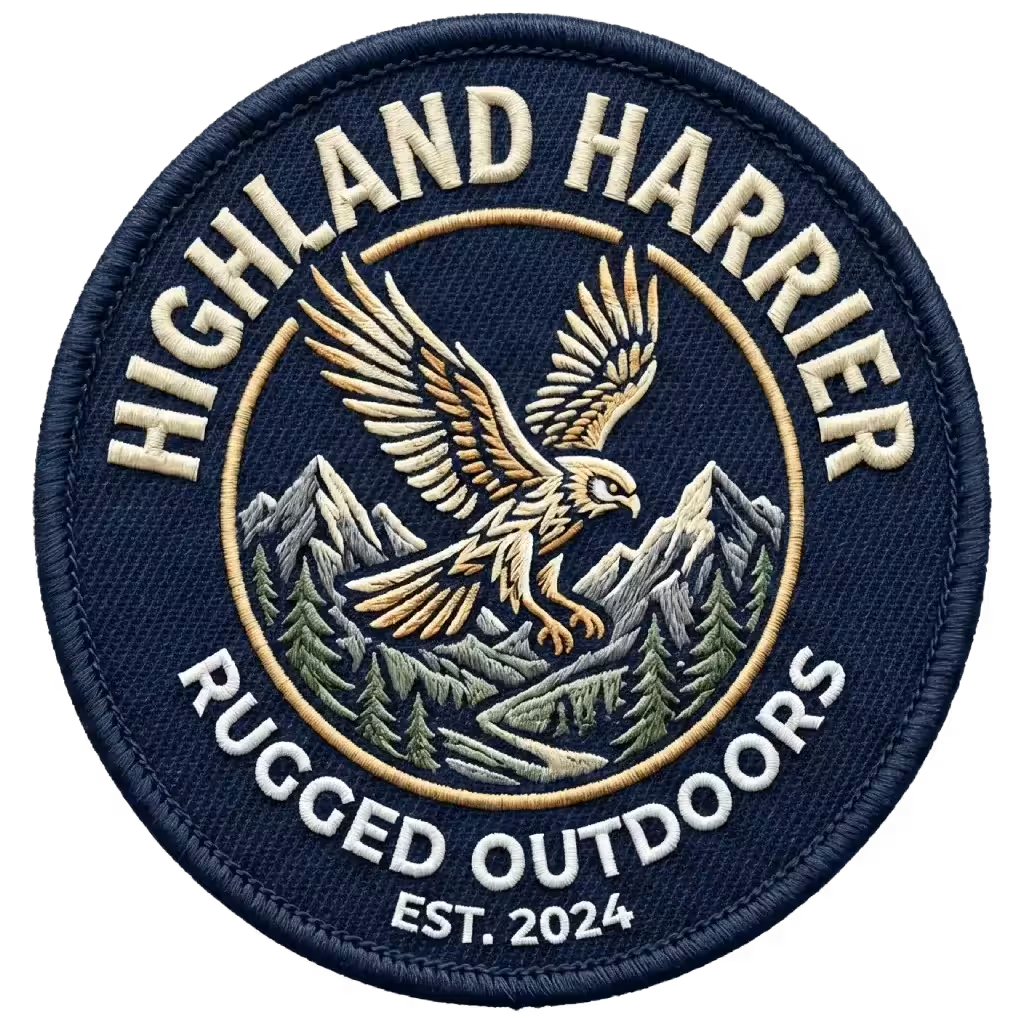
Embroidered hat patches are the most popular choice for caps in the UK. For a bolder raised finish, 3D puff patches add foam-backed height to the embroidery, though they suit flatter panels rather than curved caps. Polyester thread is stitched onto a twill backing, which creates a raised, textured logo with a classic finish. A merrow border seals the edge and stops fraying, while a minimum thread count of around 1,500 stitches keeps fine detail sharp. Embroidered patches stay flexible enough to follow a cap’s gentle front-panel curve, making them ideal for baseball caps, bucket hats, and structured snapbacks.
Woven Hat Patches
Woven hat patches use fine thread woven on a loom rather than stitched on top, which produces a thinner, smoother patch that holds small text and intricate detail. The low profile sits flat against a structured cap panel without bulk, so woven patches suit fitted caps and snapbacks where a slim, detailed logo is wanted. Woven construction reproduces small lettering and crisp lines that embroidery cannot match at the same scale.
Leather Hat Patches (Heat-Press Caution)
Leather hat patches deliver a premium, heritage look and are widely used on trucker caps and dad caps. Genuine or faux leather is laser-engraved or embossed with your logo, then finished with an iron-on or sew-on backing. Leather requires careful heat application: excessive temperature scorches and curls the material, so we recommend a lower iron setting and a protective cloth, or consider heat press patches for a more controlled application on thicker hides. The result is a durable patch that ages attractively with the cap.
PVC / Rubber Hat Patches
PVC hat patches are moulded from soft rubber, which makes them fully waterproof, colour-fast, and extremely hard-wearing. The raised 2D or 3D finish suits outdoor, tactical, and workwear caps that face rain and rough handling. PVC patches are thicker and less flexible than embroidered or woven types, so they sit best on flat or lightly curved panels. For caps used outdoors, PVC outperforms every other construction on weather resistance.
How to Iron a Patch Onto a Hat
Applying a patch to a hat differs from a flat garment because the panel is small, curved, and often built over a stiff interlining. The four steps below produce a strong bond on a cap without scorching the fabric. Follow them in order, and test the iron on an inside seam first.
Step 1 – Check the Hat’s Fabric & Heat Tolerance
Check the care label and identify the panel fabric before you reach for an iron. Cotton and cotton-blend twill tolerate the heat an iron-on patch needs; acrylic, mesh, and waxed coatings do not. Set the iron to the cotton setting with steam switched off, because moisture weakens the adhesive bond. Confirming heat tolerance first prevents the most common failure, a melted or scorched panel.
Step 2 – Position on the Curved Panel
Position the patch on the flat centre of the front panel, away from seams and curved edges. Place a firm, heat-safe object, a rolled towel or a folded cloth, inside the cap to flatten the panel and create a solid pressing surface. A flat panel lets the adhesive contact the fabric evenly across the whole patch, which a curved or unsupported surface cannot do.
Step 3 – Press in Short Bursts
Press the iron down firmly for 15 seconds, lift, then repeat, rather than holding it continuously. Cover the patch with a thin cotton cloth to protect both the patch and the cap surface. Apply steady downward pressure across the curved panel in short bursts, checking the edges after each press. Let the patch cool completely before testing the bond, because the adhesive sets as it cools.
Step 4 – Reinforce With a Stitch (Optional)
Reinforce the patch edge with a simple running stitch for caps that face heavy wear or frequent washing. The iron-on adhesive holds the patch in place during sewing, while the stitch border guarantees the patch never lifts at the corners. This dual method, heat-seal plus stitch, gives the most durable result on hard-working caps and is the technique we recommend for workwear, uniform, and military headwear.
Iron-On vs Sew-On Hat Patches, Which Is Better?
Sew-on patches are the more durable choice for hats overall, but iron-on patches are faster and easier to apply at home. Neither method is universally better, the right one depends on the hat fabric and how hard the cap will be worn. The table below compares the two methods against the factors that matter for headwear.
| Factor | Iron-On Hat Patches | Sew-On Hat Patches |
|---|---|---|
| Application | Heat press at home, fast | Hand or machine stitched |
| Best fabric | Cotton twill panels | Any fabric, including knit & mesh |
| Durability | High on compatible fabric | Highest, permanent |
| Beanies & mesh | Not suitable | Suitable |
| Washing | Good | Excellent |
When to Choose Iron-On vs Sew-On
Patch Placement & Sizing for Hats
Patch placement on a hat is governed by the panel size, far smaller than a jacket or bag. A correctly sized patch fits within a single panel without crossing a seam or curving over an edge. Front-panel placement is the most common and the most visible, while side and back placement suits smaller secondary logos.
How to Order Custom Iron-On Hat Patches in the UK
Ordering custom iron-on hat patches across the UK follows a simple three-stage process: submit artwork, approve a free proof, then receive UK-made patches by tracked delivery. There is no minimum order, which suits small sports clubs, startups, and one-off events as well as bulk or trade orders for uniform runs. Every stage is handled in the UK, from embroidery digitising to dispatch.
Submit Your Artwork & Logo
Submit your logo or design in any common format, a JPG, PNG, PDF, or vector file all work. Our team reviews the artwork, recommends the best patch type for your chosen hat, and matches your brand colours to Pantone references for accurate reproduction. Clear artwork produces the sharpest patch — follow our artwork guidelines for best results, though our designers redraw low-resolution logos at no extra cost.
Free Proof & Embroidery Digitising
Our team converts your artwork into a stitch-ready file through embroidery digitising, then sends a free digital proof for approval. The proof shows the exact size, colours, thread, and backing before production begins, so you confirm every detail in advance. Revisions are unlimited and free until the proof matches your design precisely.
UK Production & Tracked Delivery
Production takes place at our UK workshop once you approve the proof, with a standard turnaround of 7-14 working days. Finished patches are dispatched by tracked Royal Mail or DPD — see our delivery information for timescales and options — and prices are quoted in pounds with VAT itemised clearly — view our pricing page for a full breakdown. Express production is available for events and deadlines that need a faster turnaround.
Our Customers Reviews
Customers across the UK — from motorcycle clubs to businesses and events — rely on our custom iron-on hat patches. The reviews below reflect genuine feedback on patch quality, colour accuracy, and delivery. Read all customer reviews on our dedicated page.
Frequently Asked Questions
Custom Iron-On Hat Patches Summary
Custom iron-on hat patches turn a plain cap into branded headwear without sewing, provided the hat fabric tolerates heat. Cotton baseball caps, structured snapbacks, and cotton bucket hats bond reliably, while acrylic beanies and trucker mesh need a stitched alternative. The patch construction shapes the result, embroidered and woven types flex around a curved panel, leather adds a premium edge, and PVC withstands the outdoors. Correct application comes down to a flat, supported panel and short bursts of heat, with an optional stitch border for caps that work hard. From no minimum order to UK production and tracked delivery, ordering bespoke hat patches is straightforward — see our full ordering guide for complete details, and our team handles every step from artwork to dispatch.