Custom Iron On Patches
Bespoke heat-applied patches designed, made and dispatched in the UK.
Custom iron on patches are bespoke fabric badges with a heat-activated adhesive backing that bonds permanently to clothing under pressure from a household iron or heat press. We design, produce and dispatch custom iron-on patches across the UK in embroidered, woven, printed, PVC and chenille styles, with free artwork proofs and tracked Royal Mail delivery. Every patch is digitised in-house, stitched on premium twill fabric, and finished with a strong heat-seal glue that holds through repeated washing. From a single jacket badge to a 10,000-piece uniform run, our UK production team builds patches that last.
- UK Made & Dispatched
- Free Design & Proof
- No Minimum Order
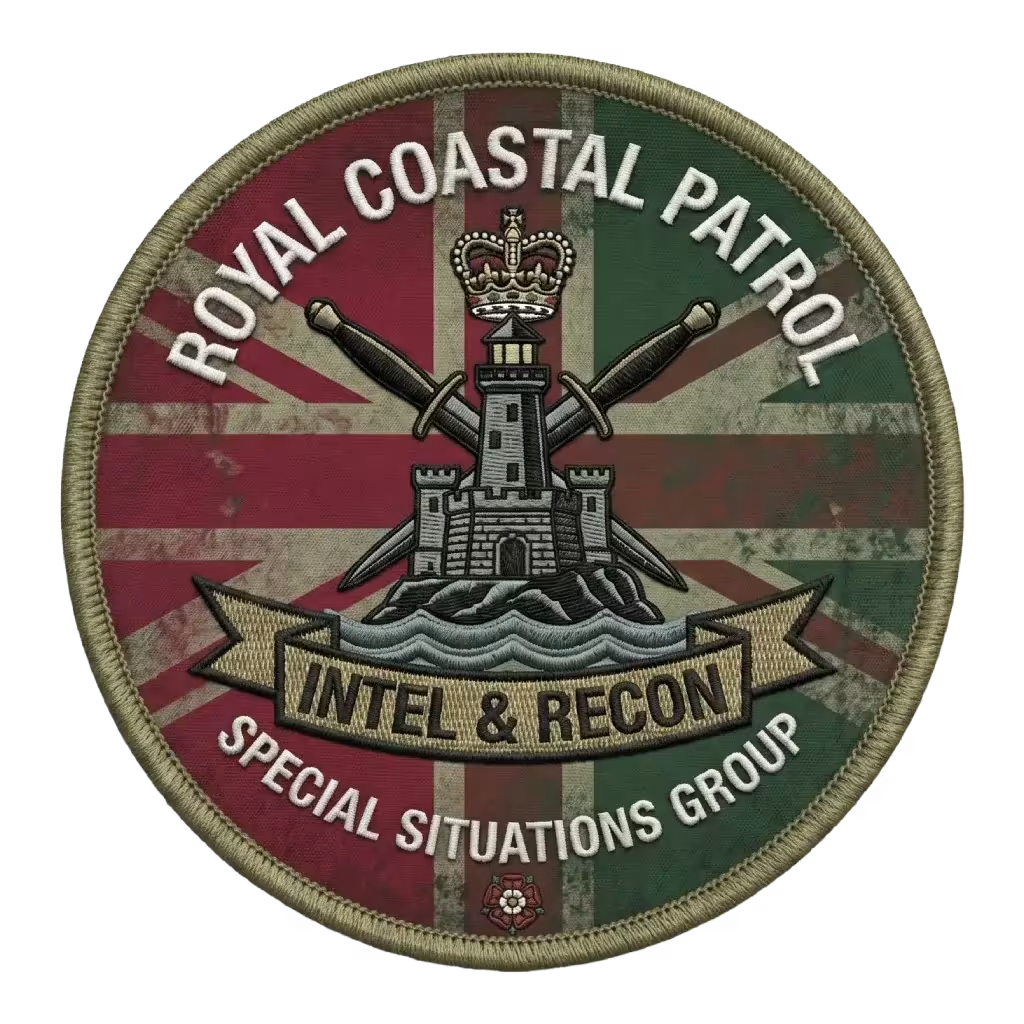
PatchesMade in the UK
What Are Custom Iron On Patches?
Custom iron on patches are personalised cloth or rubber badges with a heat-reactive adhesive layer fused to the reverse side. The adhesive activates between 130°C and 180°C, bonds the patch to the garment fibres, and sets permanently as it cools. Each patch carries a custom design, a logo, name, number, crest, or graphic, produced from your supplied artwork.
Iron-on patches differ from sew-on patches by their backing. Sew-on patches require needle and thread for attachment. Iron-on patches require only heat and pressure. The application takes around 30 seconds with a household iron, which makes iron-on patches the fastest method of adding a custom badge to clothing.
Iron-on patches suit cotton, polyester, denim, twill, and canvas garments. They bond to jackets, hoodies, polo shirts, caps, tote bags, aprons, and uniforms. UK businesses, schools, sports clubs, motorcycle clubs, military units, and fashion brands use custom iron-on patches to mark identity, brand uniforms, and personalise apparel.
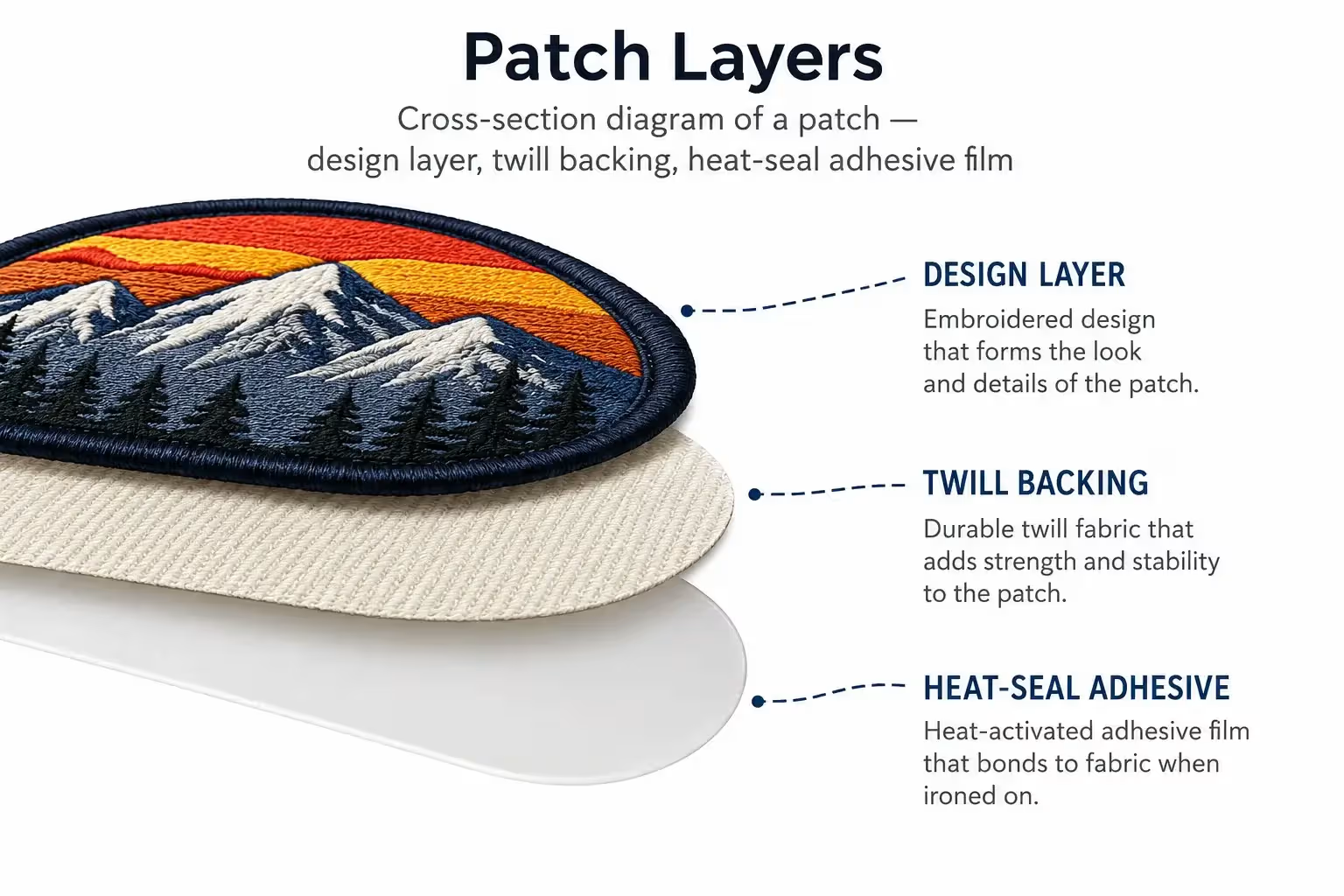
Every iron-on patch carries three core layers: a top design layer (embroidery, weaving, print, or PVC), a structural backing fabric (typically twill), and a heat-seal adhesive film on the reverse. The adhesive film is the defining feature, it converts a standard patch into an iron-on patch.
Types of Custom Iron On Patches We Make
Custom iron-on patches are produced in six main types. Each type uses a different surface technique, but all six share the same heat-seal backing. The right type depends on the design complexity, the colour count, the texture you want, and the garment the patch will sit on.
Embroidered Iron-On Patches
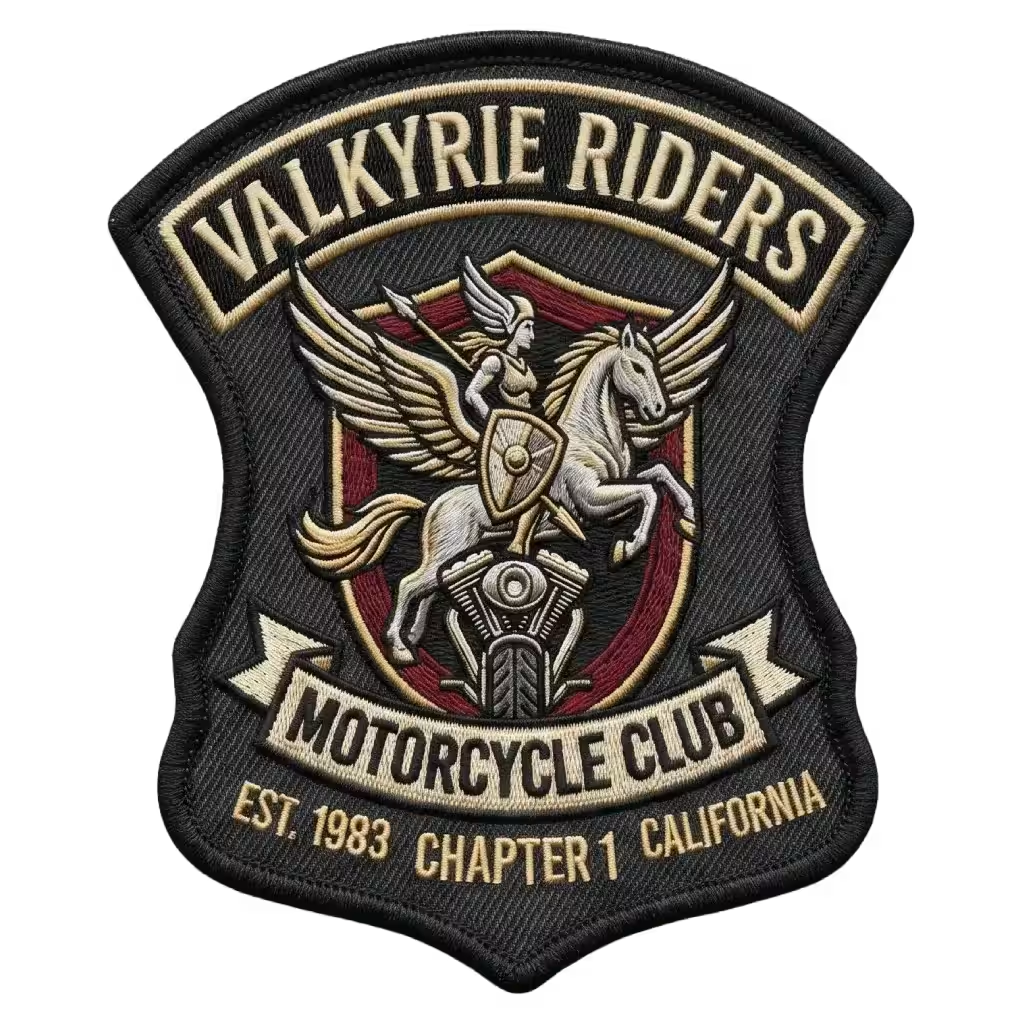
Embroidered iron-on patches are stitched with polyester thread onto a twill base fabric. The thread sits raised above the surface, which gives the patch a textured, premium feel. Embroidered patches handle bold logos, lettering, and crests with under 9 thread colours. Stitch density reaches 1,500 stitches per square inch on our standard production, which prevents fraying and protects the design through hundreds of wash cycles. Embroidered iron-on patches suit workwear, military uniforms, sports kit, and biker jackets.
Workwear · Military · Clubs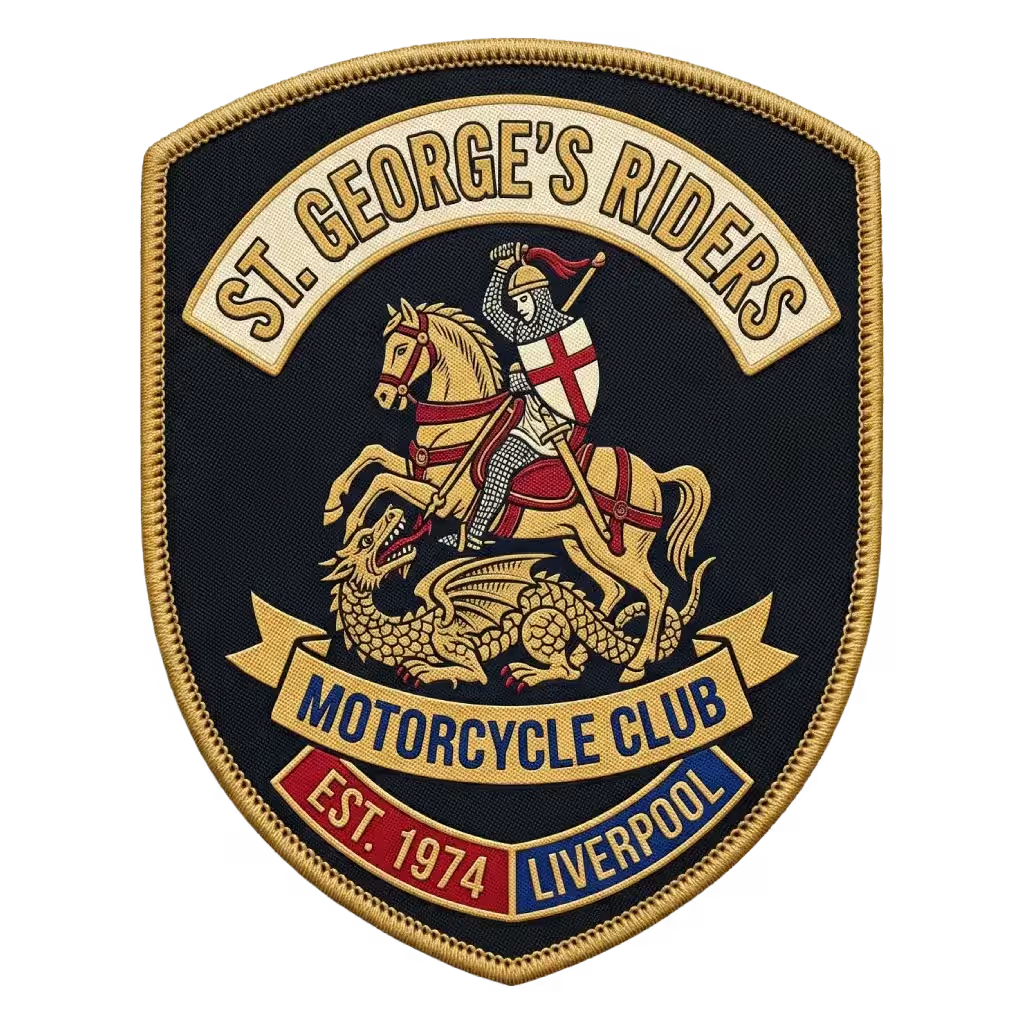
Woven Iron-On Patches
Woven iron-on patches are produced on a Jacquard loom using fine polyester thread. The thread is thinner than embroidery thread, which allows woven patches to capture small text, fine lines, gradients, and detailed logos that embroidery cannot reproduce. Woven patches lie flat against the garment with a smooth, silky finish. They suit fashion brands, streetwear, and corporate logos with intricate detail.
Fashion · Streetwear · Corporate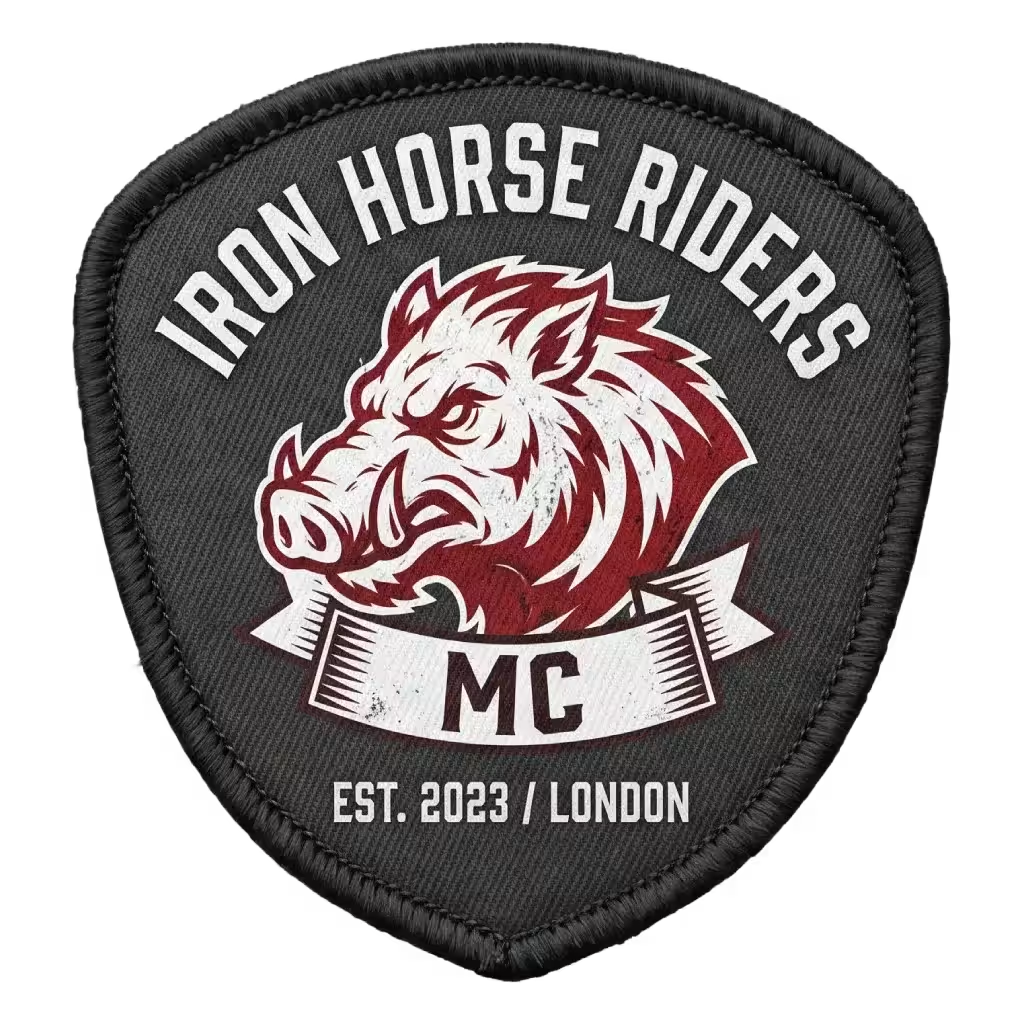
Printed Iron-On Patches
Printed iron-on patches are made by dye-sublimation or UV print onto a polyester base. The print method reproduces full-colour photographs, gradients, and unlimited colour counts with photographic accuracy. Printed patches feel flat and smooth to the touch. They suit promotional patches, festival merchandise, branded events, and any design that contains complex colour blends or photographic content.
Photo · Gradients · Events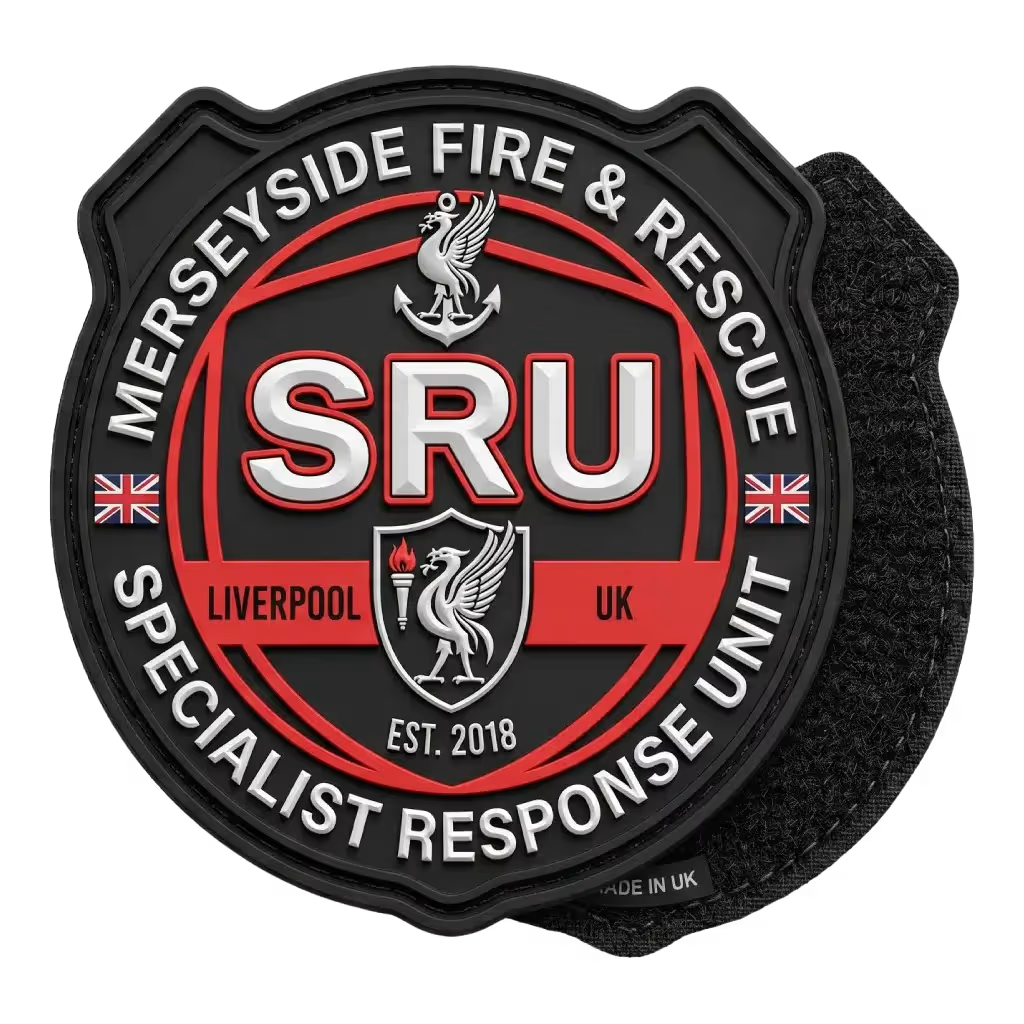
PVC Iron-On Patches
PVC iron-on patches are moulded from soft, flexible rubber and bonded to a heat-activated backing. PVC delivers raised 3D detail, sharp edges, and full waterproofing, which makes it the most durable patch type for outdoor use. PVC patches resist water, oil, dirt, and UV exposure. They suit tactical gear, motorcycle jackets, outdoor brands, and military morale patches.
Outdoor · Tactical · Military
Chenille Iron-On Patches
Chenille iron-on patches are made from soft, fuzzy yarn loops stitched onto a felt or twill base. The yarn produces a thick, plush texture associated with American varsity jackets and letterman patches. Chenille patches suit large monogram letters, school crests, and fashion-led varsity designs. They are best applied to heavy fabrics such as wool, denim, or thick cotton.
Varsity · Monograms · Heritage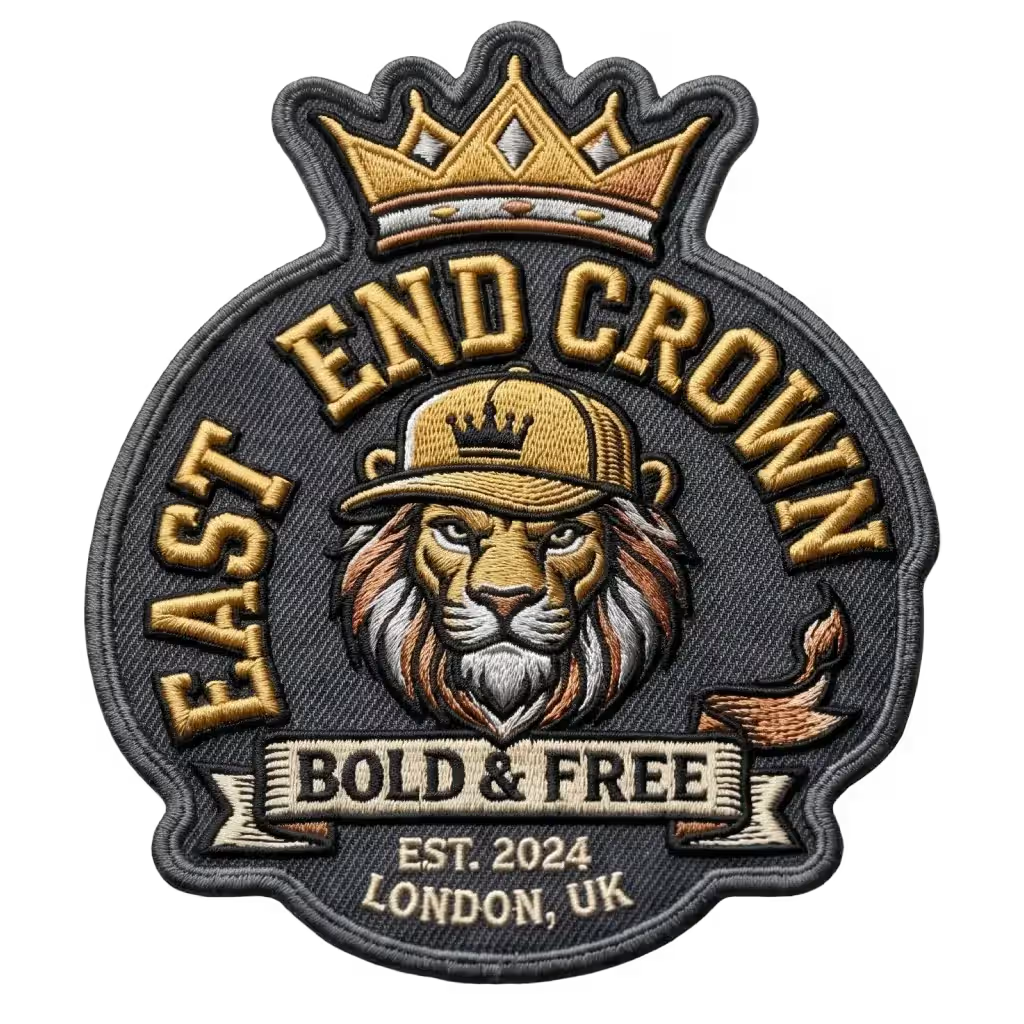
3D Puff Iron-On Patches
3D puff iron-on patches use a layer of foam beneath the embroidery thread, which lifts the design 2-3 millimetres above the patch surface. The raised surface creates bold, sculpted lettering and shapes that catch the light. 3D puff patches suit caps, hoodies, and streetwear where the design needs to stand out at a glance.
Caps · Bold Lettering · Streetwear| Patch Type | Best For | Texture | Colour Count | Detail Level |
|---|---|---|---|---|
| Embroidered | Workwear, uniforms, clubs | Raised, textured | Under 9 colours | Medium-high |
| Woven | Fashion, fine logos | Flat, smooth | Under 8 colours | Very high |
| Printed | Photo designs, gradients | Flat, smooth | Unlimited | Very high |
| PVC | Outdoor, tactical | Raised, rubbery | Multi-layer | High |
| Chenille | Varsity, monograms | Fuzzy, plush | 1-4 colours | Low |
| 3D Puff | Caps, bold lettering | Raised foam | Up to 6 colours | Low-medium |
The right patch type depends on your design and your garment. Our design team recommends the correct option once you submit your artwork, which protects your investment and guarantees the finished patch matches your brief.
How to Apply an Iron-On Patch
Iron-on patches are applied with heat and firm pressure. The full process takes under two minutes per patch. Follow the six steps below for a permanent bond on cotton, polyester, denim, and canvas garments. Our full guide on how to apply iron-on patches covers fabric-specific temperatures and troubleshooting.
Pre-heat the iron to 150°C (302°F)
Set your household iron to the cotton setting. Switch off the steam function, moisture weakens the adhesive bond.
Position the patch on the garment
Place the patch face-up on the chosen spot. Press the garment flat first to remove creases that would distort the patch during application.
Cover the patch with a thin pressing cloth
A cotton tea towel or muslin cloth works well. The pressing cloth protects the patch surface from direct iron contact, which prevents thread scorching and adhesive overflow.
Press firmly for 20-30 seconds
Apply steady downward pressure with both hands. Do not slide the iron. Hold it in position so the heat penetrates the adhesive layer evenly.
Flip the garment and press the reverse for 10 seconds
Pressing from the inside of the garment activates the adhesive from beneath the fabric, which creates a stronger bond and seals the patch edges.
Allow the patch to cool fully before checking
The adhesive sets as it cools. Wait 5-10 minutes, then test the bond by lifting one corner gently. If the patch lifts, repeat steps 4 and 5 with an extra 10 seconds of pressure.
Iron-on patches bond differently to different fabrics. Cotton, denim, and canvas absorb heat efficiently and form the strongest bond. Polyester and polycotton blends require a lower iron temperature (130°C) to avoid melting. Nylon, leather, vinyl, and waterproof technical fabrics do not accept iron-on adhesive, these require a sew-on or Velcro backing instead.
Heavier fabrics such as wool, fleece, and quilted jackets benefit from a longer press time of 40 seconds and an extra 15 seconds on the reverse. Always test a hidden area first if the fabric is unfamiliar.
When to Use a Heat Press Instead
A heat press delivers higher temperature, even pressure, and consistent results across large orders. Heat presses suit production runs over 50 patches, thick fabric stacks, and commercial uniform programmes. A domestic iron suits one-off jobs and small batches up to 20 patches. We supply application instructions with every UK order, and our team advises on heat press settings on request.
Materials & Construction
Custom iron-on patches are built from four core materials: a backing fabric, the surface design medium, a heat-seal adhesive film, and an edge finish. Each material decides how the patch looks, how it feels, and how long it lasts on a garment. We source every component from UK and European suppliers to maintain consistent quality across every order.
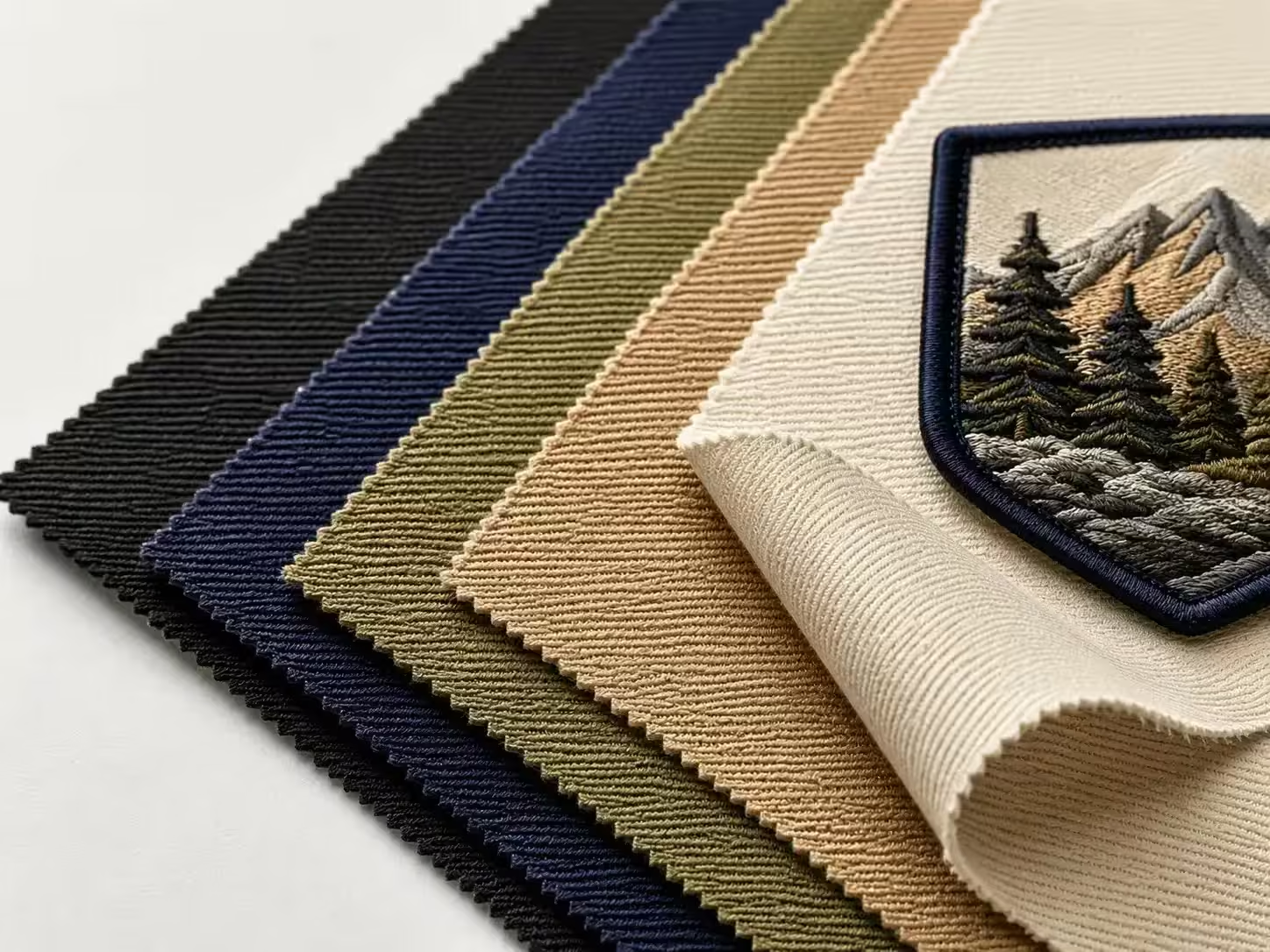
Twill Backing Fabric
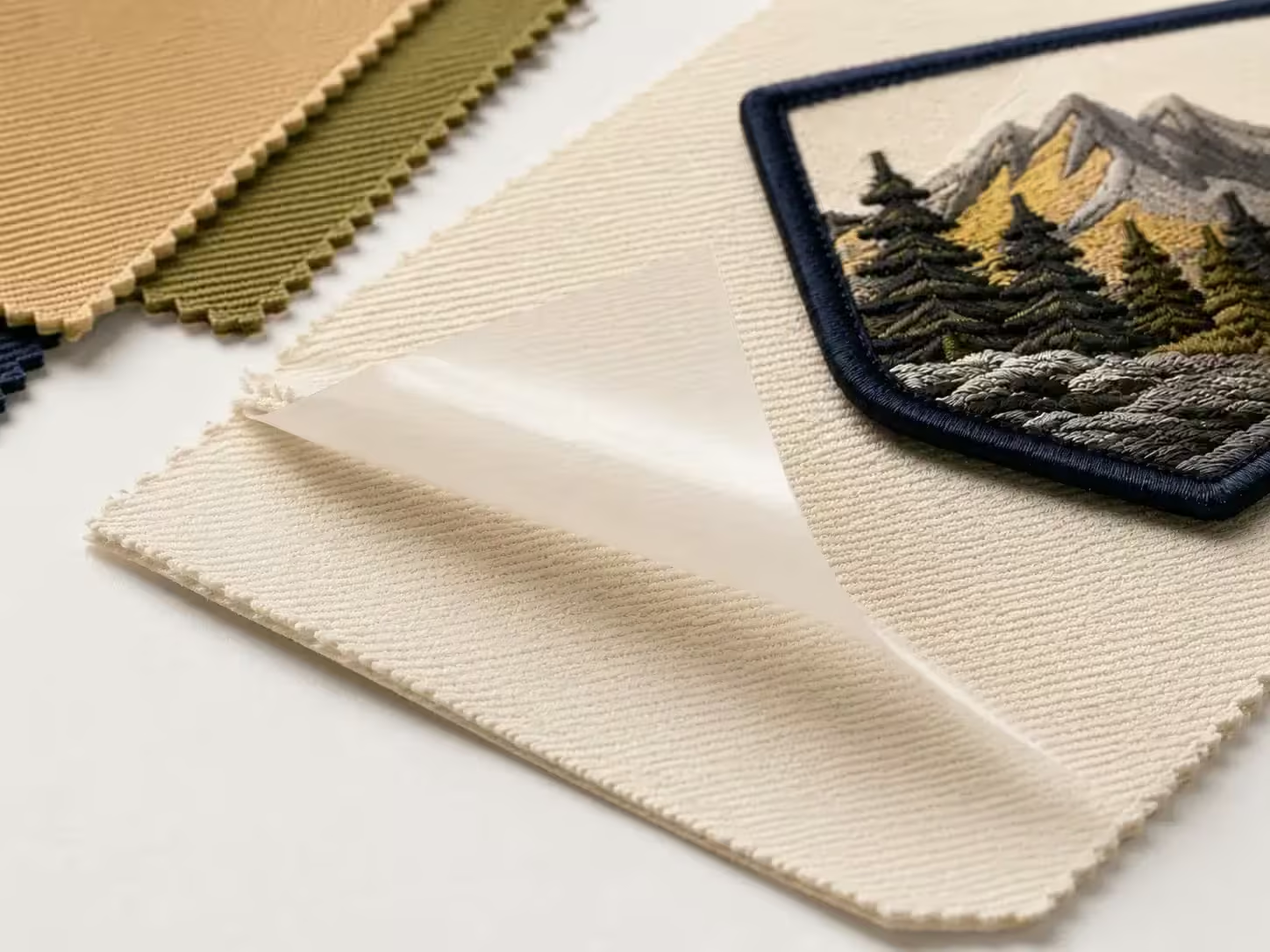
Twill is the standard backing fabric for embroidered and woven iron-on patches. Twill is a tightly woven cotton-polyester blend with a diagonal weave pattern, which gives the patch dimensional stability and prevents the design from puckering during stitching. Our standard twill weighs 220 GSM, which is heavy enough to hold dense embroidery without distortion and light enough to sit flat against soft garments. Twill accepts thread cleanly, holds its shape through washing, and resists fraying at the edges. We stock twill in 12 colours, which lets the backing fabric act as part of the design rather than just a base.
Heat-Seal Adhesive Film
Heat-seal adhesive is the layer that converts a standard patch into an iron-on patch. The adhesive is a thermoplastic film bonded to the back of the twill during finishing. Activation begins at 130°C, full bond strength reaches at 150°C, and the adhesive cures permanently as it cools. Our heat-seal film holds through 50+ wash cycles at 30°C on cotton garments. The adhesive does not yellow with age, does not crack in cold storage, and does not bleed through the patch face during application. Heat-seal adhesive bonds to natural fibres faster than synthetic fibres because cotton and wool absorb heat more efficiently than polyester. Learn more in our heat seal patch guide and how iron-on patch backing works.
Thread & Stitching
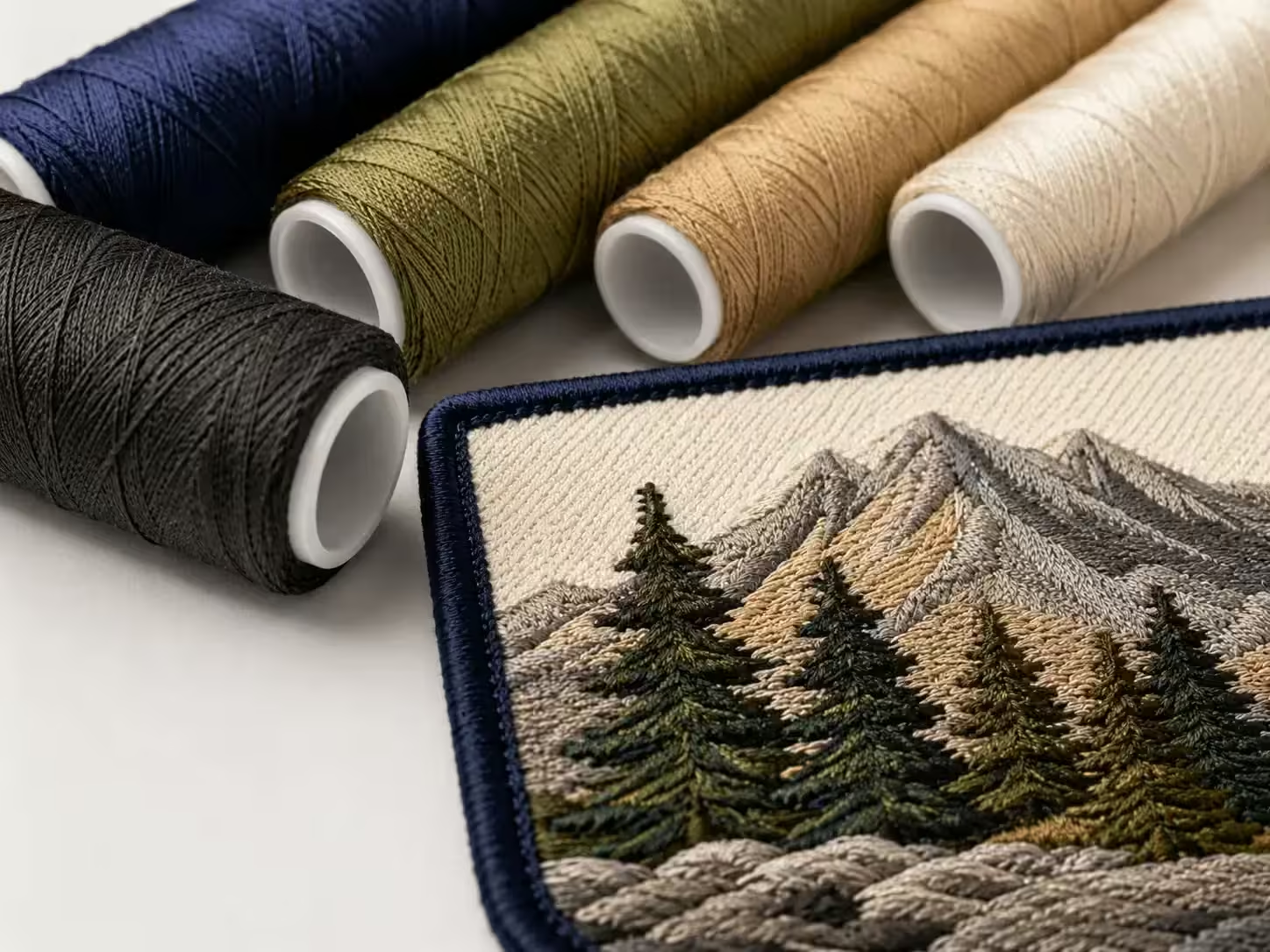
Embroidered and chenille iron-on patches rely on thread quality. Our standard thread is 100% polyester, rated colourfast to 60°C, and tested against UV fade for outdoor use. Polyester thread resists abrasion, repels moisture, and holds vivid colour through hundreds of wash cycles. Stitch density on our embroidered patches reaches 1,500 stitches per square inch, which produces a fully filled surface with no visible gaps between stitches. High stitch density protects the design from fraying and gives the patch a solid, premium feel. We match thread colours to Pantone references on request, which keeps brand colours consistent across every patch in the run.
Border Finishes
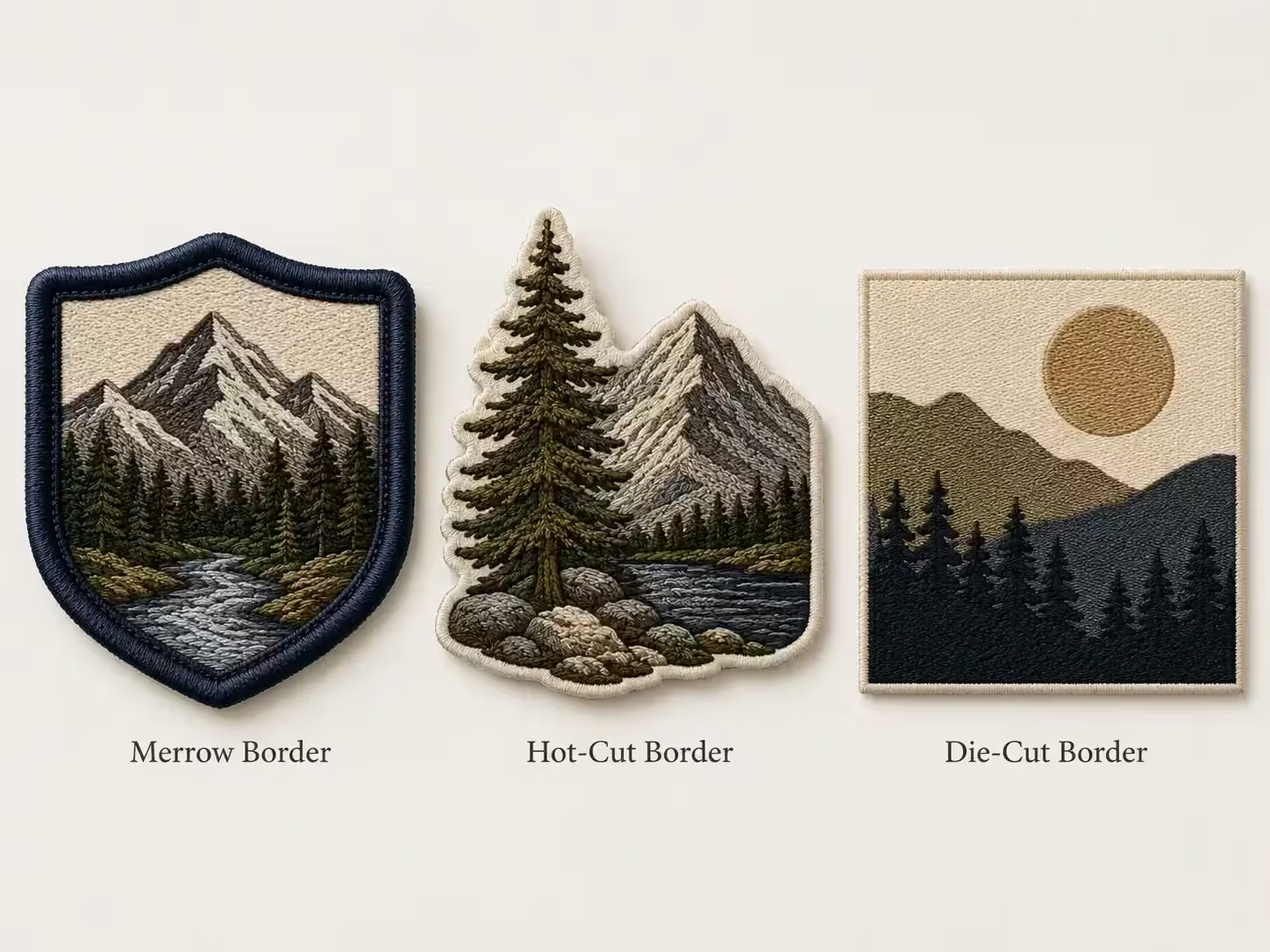
The border defines the outline of the patch and prevents the edge from unravelling. We produce three border types in-house, each bonded with the heat-seal backing during finishing.
- Merrow borderThick raised overlock stitch, classic, traditional look. Suits circular, oval, and shield shapes.
- Hot-cut borderHeat-sealed edge cut by laser or hot blade. Suits complex shapes and irregular outlines.
- Die-cut borderPrecision-cut edge for woven and printed patches. Sits flat, modern finish for fashion brands.
What Fabrics Work With Iron-On Patches?
Iron-on patches bond best with cotton, polyester, denim, twill, and canvas. Iron-on patches do not bond reliably with nylon, leather, waterproof technical fabrics, or heat-sensitive synthetics. The fabric decides whether the adhesive cures correctly, whether the heat damages the garment, and whether the patch survives long-term wear.
Recommended Fabrics
- Cotton The ideal fabric for iron-on patches. Cotton absorbs heat evenly, accepts the adhesive at full strength, and tolerates the 150°C application temperature without scorching. T-shirts, hoodies, tote bags, aprons, and chef whites all bond cleanly.
- Denim The strongest pairing for heavy-duty iron-on patches. A cotton twill with a tight weave that gives the adhesive a solid surface to grip. Denim jackets, jeans, and workwear hold patches through industrial washing.
- Polyester & Polyester Blends Bond well at a reduced temperature of 130°C. Polyester is heat-sensitive, apply the iron at the cotton setting and the fabric will glaze or melt. Always use a pressing cloth and reduce press time to 15 seconds with a 10-second reverse press.
- Canvas Holds iron-on patches reliably. Canvas tote bags, workwear jackets, and tool aprons all accept patches with a standard 30-second press at 150°C.
- Twill Garments Chinos, work trousers, and field jackets accept iron-on patches without any adjustment to the standard application process.
Fabrics to Avoid
- Nylon Melts at low temperatures and rejects heat-seal adhesive. Sports jerseys, windbreakers, and lightweight jackets often contain nylon. Use a Velcro backing or sew-on patch.
- Leather & Faux Leather Scorch under iron heat and will not accept the adhesive. Use a sew-on backing, or contact us for adhesive-backed patches designed for leather.
- Vinyl, PVC Garments & Waterproof Shells Repel adhesive and degrade under heat. Velcro patches are the correct solution for these fabrics.
- Silk, Rayon & Acetate Scorch easily and do not bond reliably. We recommend sew-on patches for delicate fabrics.
- Coated Garments Garments with waterproof or stain-resistant coatings form a barrier that prevents the adhesive from reaching the fibre. The patch will appear bonded after application but will lift after the first wash.
Not Sure About Your Fabric? Send us a sample or a photograph with your enquiry. Our team confirms compatibility before production starts, which protects your order against application failure.
Industries & Use Cases
UK businesses, organisations, and individuals order custom iron-on patches for branding, identity, and uniform application. The same patch product serves dozens of sectors, but the design specification, quantity, and backing choice change based on the use case.
Workwear & Uniforms
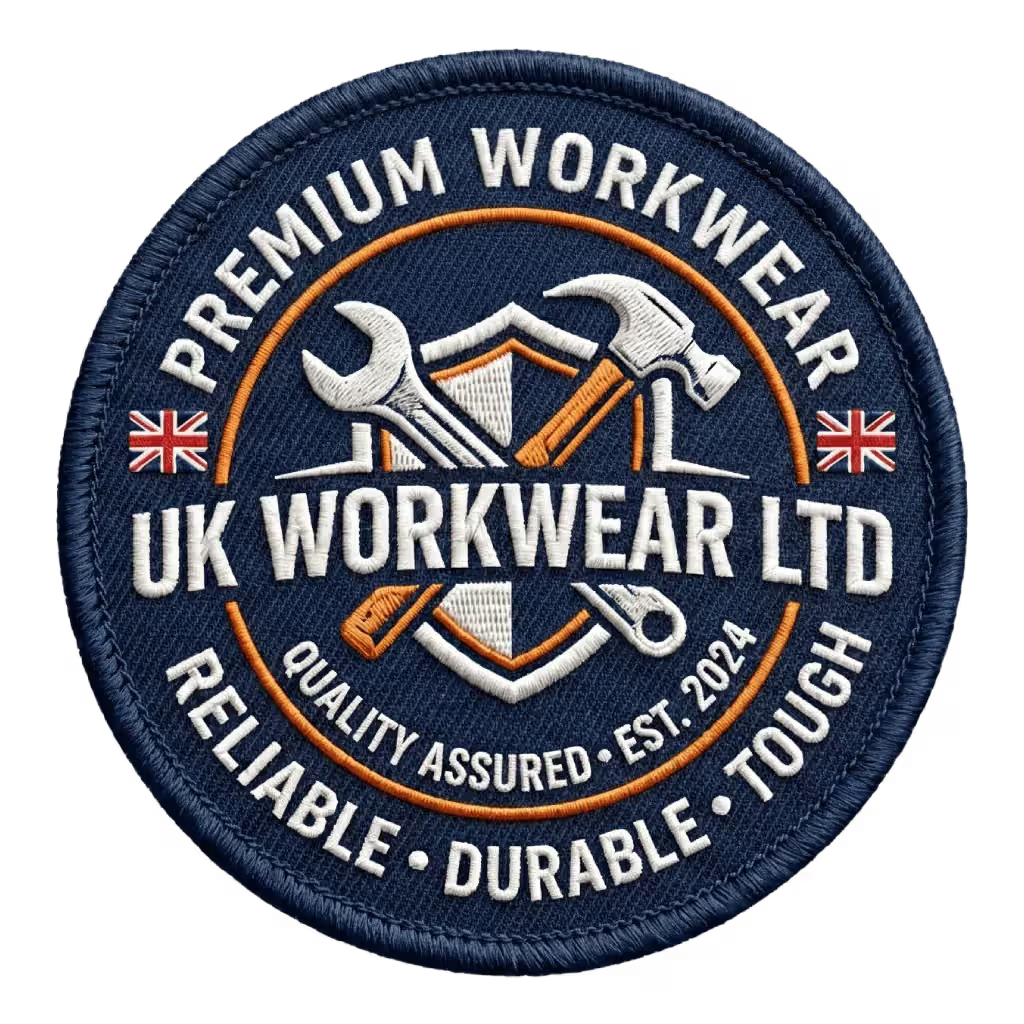
Workwear patches identify employees, mark roles, and build brand recognition across a workforce. UK construction firms, security companies, hospitality groups, and manufacturing plants order embroidered iron-on patches for hi-vis vests, polo shirts, fleeces, and softshell jackets. A custom workwear patch carries the company logo, employee name, role title, or compliance marking. Iron-on application allows uniform managers to attach patches in-house without sending garments to a tailor, which reduces lead time and cost.

Schools & Universities
UK schools order custom iron-on patches for blazers, sports kit, and house identification. Embroidered patches with school crests bond cleanly to wool blazers and cotton polos. Universities order patches for sports clubs, societies, and academic departments. Iron-on backing suits parent-led application, which means schools issue patches to families for at-home attachment rather than outsourcing to a uniform supplier.
Sports Clubs & Teams
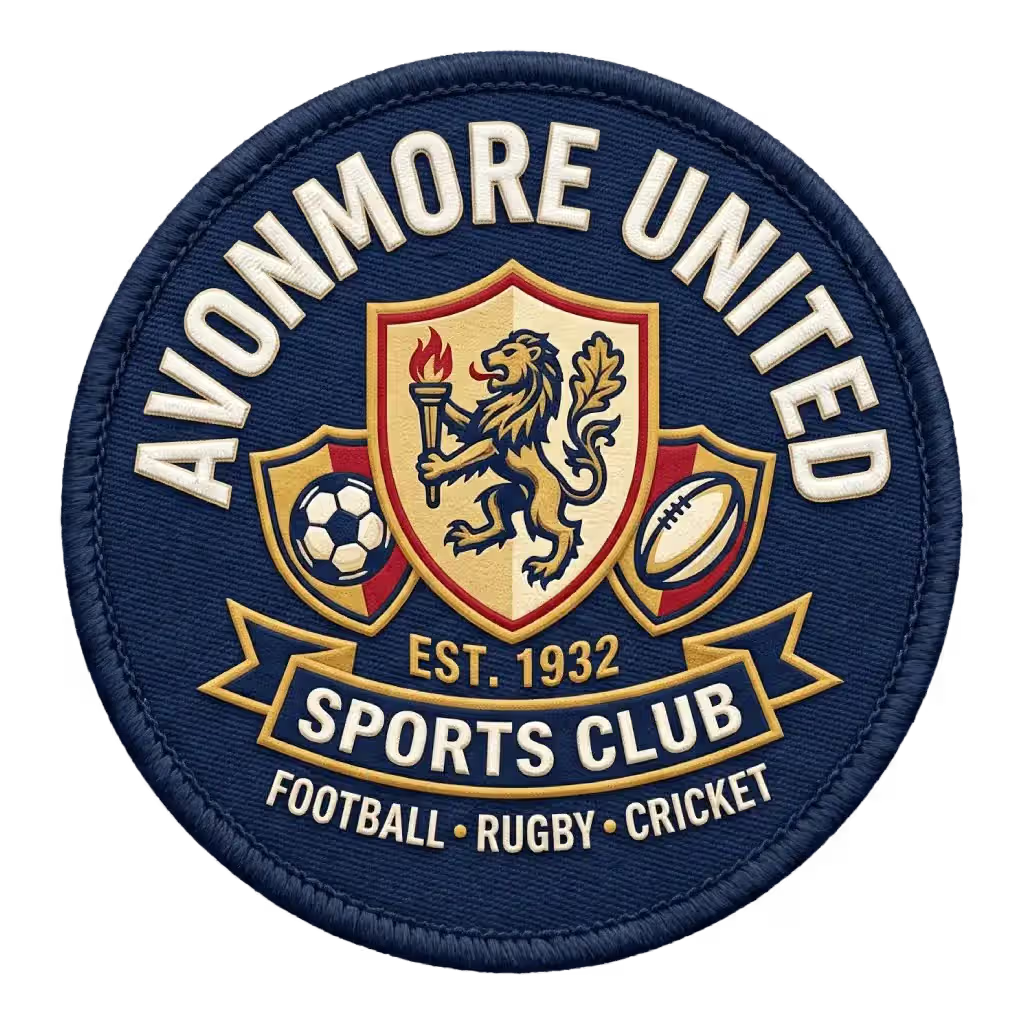
Football clubs, rugby clubs, cricket teams, and motorsport teams across the UK order custom iron-on patches for kit, training wear, tracksuits, and supporter merchandise. Embroidered patches handle club crests with multiple thread colours, woven patches reproduce sponsor logos with fine detail, and printed patches deliver photographic designs for commemorative kit. We produce patches for grassroots clubs, semi-professional teams, and academy programmes.
Fashion Brands & Streetwear
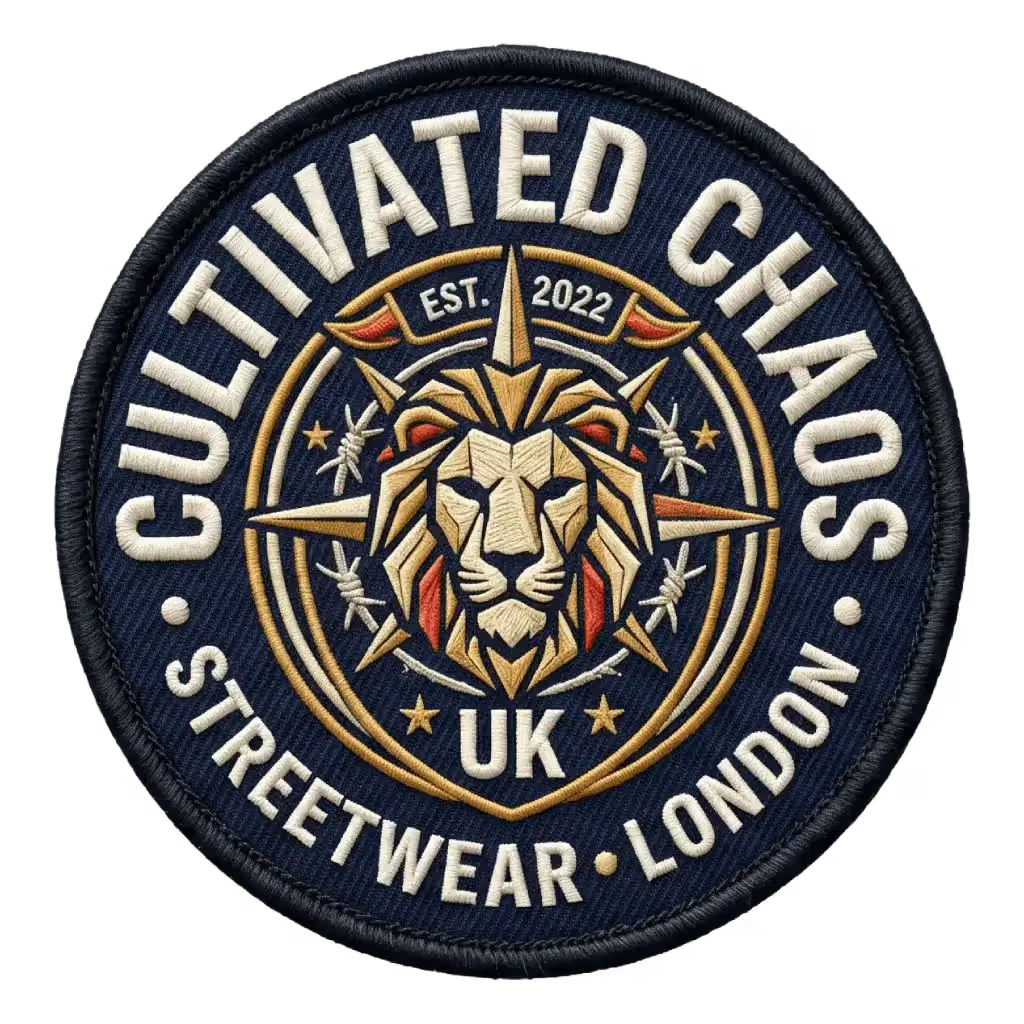
Independent fashion brands and streetwear labels use custom iron-on patches as a core branding tool. Patches sit on the chest, sleeve, or back of denim jackets, hoodies, work shirts, and bomber jackets. Woven patches and printed patches give fashion designers the fine detail and gradient control needed for graphic-led collections. Low minimum order quantities suit small UK fashion brands launching capsule collections without committing to bulk garment customisation.
Military, Cadets & Emergency Services
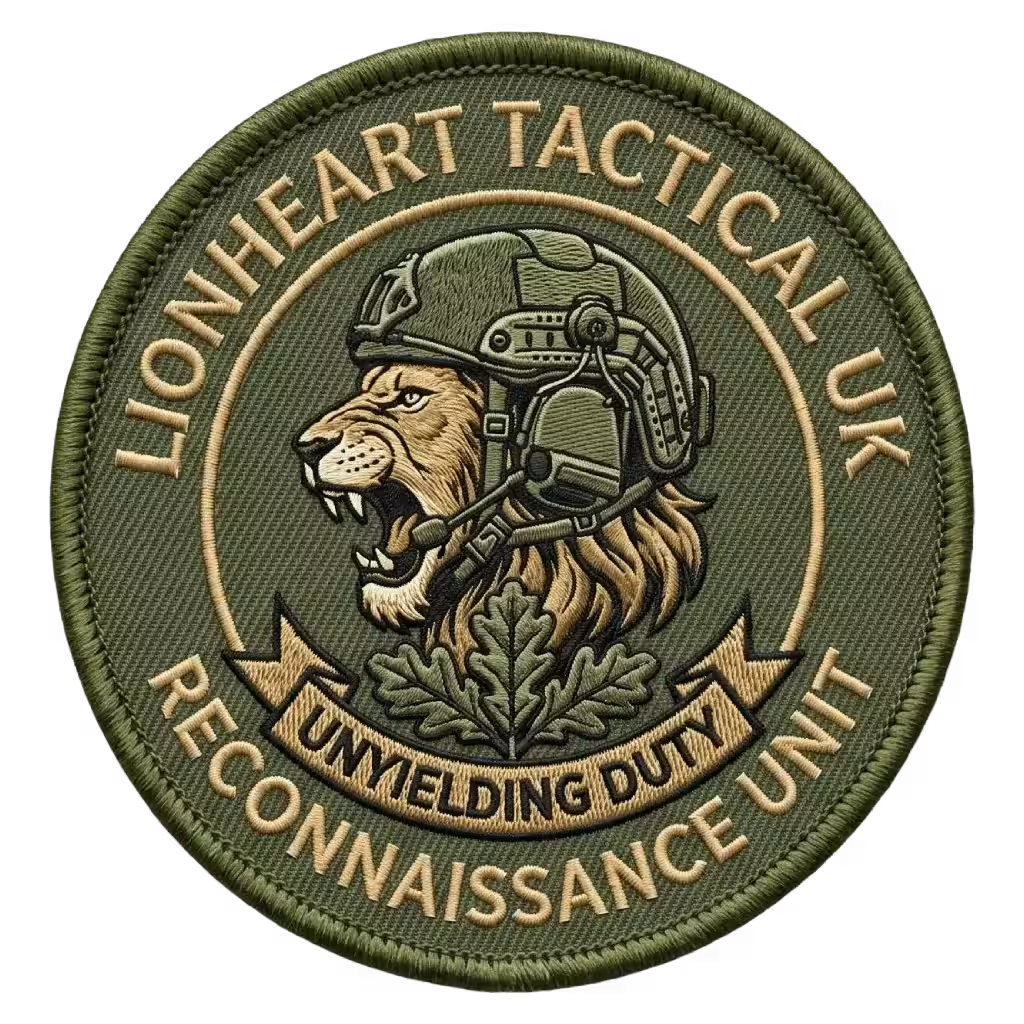
Military regiments, Air Cadets, Sea Cadets, Army Cadets, and emergency service units order custom iron-on patches for unit identification, rank, and morale. PVC iron-on patches dominate this category, PVC resists weather, mud, and abrasion better than embroidered fabric. Embroidered patches with merrow borders handle traditional regimental designs, formal uniform applications, and ceremonial wear.

Events & Promotions
Festivals, brand activations, conferences, and product launches use custom iron-on patches as branded merchandise and giveaway items. Printed iron-on patches deliver the photographic complexity and unlimited colour count needed for festival artwork and event branding. UK event organisers order patches in volumes from 100 to 10,000 units with turnaround times that match event deadlines.
Motorcycle Clubs & Riders
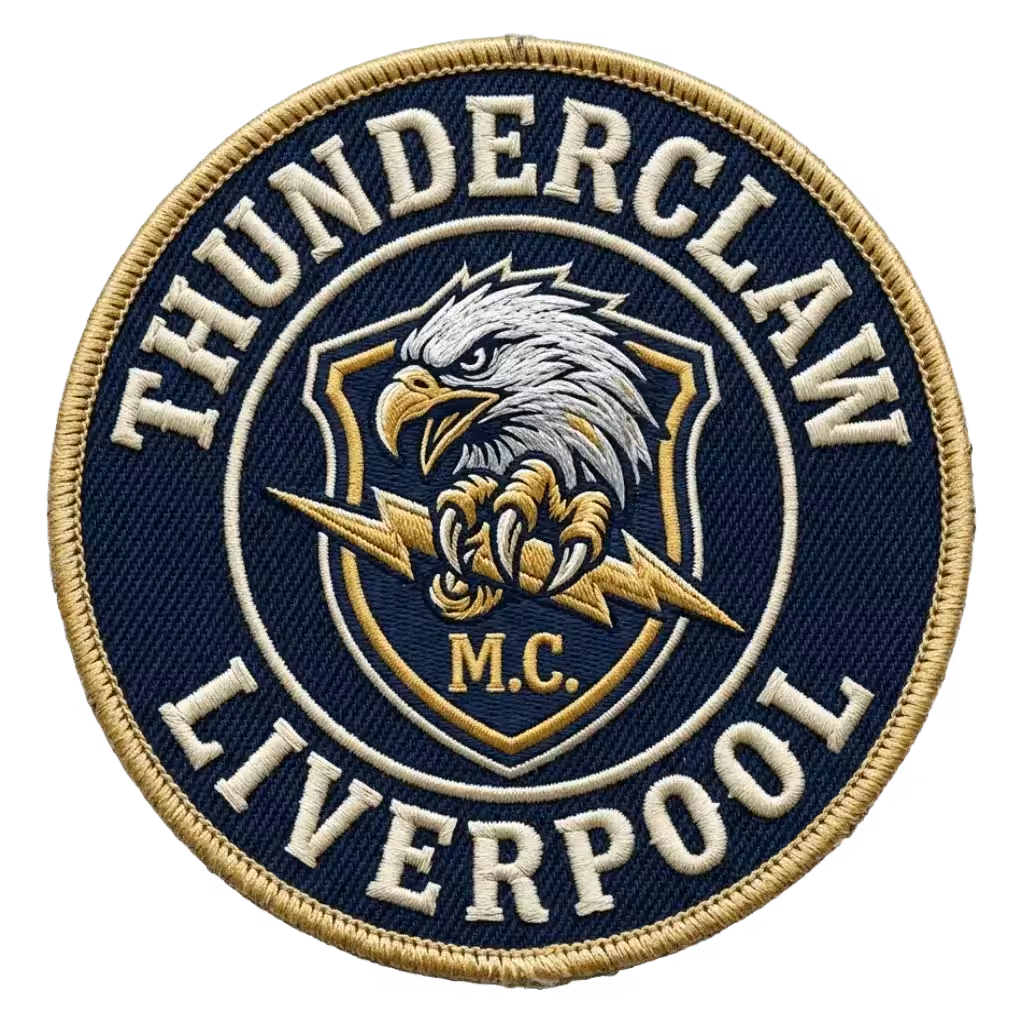
UK motorcycle clubs, riding groups, and individual riders order custom iron-on patches for jackets, vests, and saddlebags. Large back patches, smaller chest patches, and rocker patches all use iron-on backing as the standard. Heavy-duty embroidered patches with merrow borders survive long mileage, weather exposure, and frequent washing.
How to Order Custom Iron-On Patches
Ordering custom iron-on patches from our UK production team takes five steps. The full process, from quote to delivery, runs in 7-14 working days as standard, with express options available for urgent deadlines.
-
Submit Your Artwork
Upload your logo, design, photograph, or rough sketch via our quote form. We accept JPG, PNG, PDF, AI, EPS, and SVG. Hand-drawn sketches and written descriptions also work.
-
Receive Your Free Proof
Within 24 hours our designers prepare a full-colour mock-up showing thread colours, dimensions, border finish, and backing type, annotated by email.
-
Approve or Revise
Unlimited revisions are included. Adjust colours, resize the patch, change the border, or refine the design until the proof matches your brief exactly.
-
UK Production
Standard production takes 5-10 working days. Embroidered and woven patches run on the shorter end, PVC and chenille require longer due to moulding and finishing.
-
Tracked UK Delivery
Royal Mail Tracked 24 and Tracked 48 cover all standard UK orders. Bulk orders ship via courier with full tracking. International delivery available on request.
No minimum quantity
Order from a single patch across every type, embroidered, woven, chenille, printed and PVC. Our only requirement is a £120 minimum order value. Single-patch sample orders available on request.
7-14 working days
Standard turnaround from proof approval to UK delivery. Express compresses production to 3-5 working days for an additional fee. Rush orders accommodated where capacity allows.
Tracked Royal Mail / DPD
Standard tracked delivery arrives within 1-2 working days of dispatch. Next-day available on orders before 12:00 GMT. Free UK delivery on orders over £120.
Free & itemised
Every quote is free and itemised. Free artwork, free digitising, and free design revisions included in every order, no hidden fees, no setup charges.
Custom Iron On Patches Pricing
Custom iron-on patch pricing depends on five factors: patch type, patch size, order quantity, colour count, and backing finish. Larger orders reduce the per-unit price, smaller patches cost less than larger ones, and fewer thread colours produce a lower price point. We list every cost upfront, no setup fees, no digitising charges, no hidden extras. See our full custom iron on patches pricing page for worked price bands and volume examples.
What Affects the Price
-
Patch Type
Embroidered & woven share a similar price band. Printed patches cost slightly less. PVC and chenille cost more due to additional tooling.
-
Patch Size
Price scales linearly with size. A 50mm patch costs less than 75mm, which costs less than 100mm. Most UK orders fall in 50-100mm.
-
Quantity
The largest saving driver. Per-unit cost drops sharply between 50 and 250 patches, and again at 500 and 1,000.
-
Colour Count
Affects embroidered and chenille only. Up to 9 thread colours included. Designs above 9 need approval at quote stage.
-
Backing Finish
Iron-on backing carries no upcharge, included in the base price. Velcro and adhesive backings add a small per-unit fee.
Iron-On vs Sew-On vs Velcro Patches
Iron-on patches, sew-on patches, and Velcro patches share the same surface design, embroidered, woven, printed, PVC, or chenille, but use different backings to attach to the garment. The backing decides how the patch goes on, how long it stays on, and whether you can remove it later.
| Attribute | Iron-On | Sew-On | Velcro |
|---|---|---|---|
| Application method | Heat and pressure | Needle and thread | Hook-and-loop fastening |
| Application time | 30 seconds | 10-20 minutes | Instant |
| Skill required | None | Basic sewing | None |
| Permanence | Permanent (with care) | Most permanent | Removable |
| Wash tolerance | 30°C, 50+ cycles | Industrial wash | 30°C, gentle |
| Best fabrics | Cotton, denim, twill, canvas | All fabrics | All fabrics |
| Cost | Standard | Standard | Small upcharge |
| Best use case | Casual wear, branding | Workwear, military | Tactical, swappable |
| Removability | Difficult | Difficult | Instant |
We produce all three backings in-house. If you are unsure which to order, our team recommends the right option based on your fabric and use case. For a deeper breakdown, read our guides on iron-on vs sew-on patches, Velcro vs iron-on patches, and patch backing types.
Durability, Care & Washing
Custom iron-on patches last for years when applied correctly and washed gently. The adhesive bond, the thread quality, and the backing fabric all hold up to repeated use, but specific care extends the lifespan from dozens of washes to hundreds. See our full guide on how long iron-on patches last for wash-cycle data by patch type.
Washing Iron-On Patches
Wash garments at 30°C on a gentle cycle. Turn the garment inside out before washing, this protects the patch surface from abrasion against the drum. Use a mild detergent without bleach or fabric softener. Avoid hot washes above 40°C until the patch has been on the garment for at least 48 hours and through one full wash cycle.
Drying Iron-On Patches
Air-dry garments where possible. Tumble-drying on a low heat setting is acceptable, but high heat reactivates the adhesive and weakens the bond. Hang the garment to dry away from direct sunlight to prevent thread fade.
Ironing Over an Applied Patch
Iron the garment around the patch rather than directly over it. If you need to iron over the patch, place a pressing cloth between the iron and the patch surface. Direct iron contact at high temperature scorches embroidery thread and can re-soften the adhesive.
Expected Lifespan
Iron-on patches last 25-50 wash cycles on cotton garments under standard care. Embroidered and woven patches typically outlast printed patches due to thread durability. PVC patches last longest of all, PVC resists wash, weather, and abrasion for the lifetime of the garment.
Adding a Stitch Border for Heavy Use
For uniforms, workwear, and any garment that goes through frequent hot washes, we recommend reinforcing the iron-on patch with a stitch border. Sew a single line of thread around the patch perimeter using a sewing machine or by hand. The stitch line prevents the edges from lifting under industrial laundry conditions and extends the patch lifespan to match the life of the garment. Reinforcement stitching takes around five minutes per patch and works on every patch type we produce.
Why Choose Us for Custom Iron-On Patches in the UK
We are a UK-based custom patch manufacturer producing iron-on patches for businesses, schools, clubs, fashion brands, and individuals across England, Scotland, Wales, and Northern Ireland. Our production team designs, digitises, stitches, and dispatches every order from a single UK facility, which keeps lead times short and quality control direct.
Designed & Dispatched in the UK
Every patch is produced in our UK workshop and shipped via Royal Mail or DPD with full tracking. No overseas drop-shipping.
Free Unlimited Revisions
We adjust your design until you are 100% satisfied with the proof. No revision fees, no proof charges, no limit on changes.
Pantone Colour Matching
Supply your brand colours as Pantone references and we match thread shades exactly, which protects brand consistency across every order.
No Minimum on Samples
Order a single patch as a sample before committing to a larger run. Sample fees are credited against any subsequent bulk order.
No Minimum Order Quantity
Order as few as a single patch on any type. Our only requirement is a £120 minimum order value, no unit minimums, no bulk commitment.
Free UK Delivery Over £120
Tracked Royal Mail delivery included as standard, with next-day options available before 12:00 GMT.
5-Star UK Reviews
UK businesses, schools, and clubs return for repeat orders because we deliver consistent quality on time, every time.
Direct Production Contact
Speak to the people making your patches. No call centres, no outsourced support, our UK team answers questions on artwork, fabric, and application directly.
What UK Customers Say About Our Custom Iron-On Patches
UK businesses, schools, sports clubs, and fashion brands rate our custom iron-on patches on Trustpilot. Every review below comes from a verified order placed with our UK production team.
Frequently Asked Questions
Get a Free Quote for Your Custom Iron-On Patches
Order custom iron-on patches from a UK manufacturer with free design, no minimum order quantity, and tracked delivery across the UK. Submit your artwork or brief through the quote form, our design team replies with a digital proof and itemised price within 24 hours. No setup fees, no hidden charges, no commitment until you approve the proof.
Order today and join thousands of UK customers who trust us with their branding