Patch Backing Types – Iron-On, Sew-On, Velcro & More
A patch backing is the attachment layer fixed to the rear of a custom patch that bonds the patch to a garment.
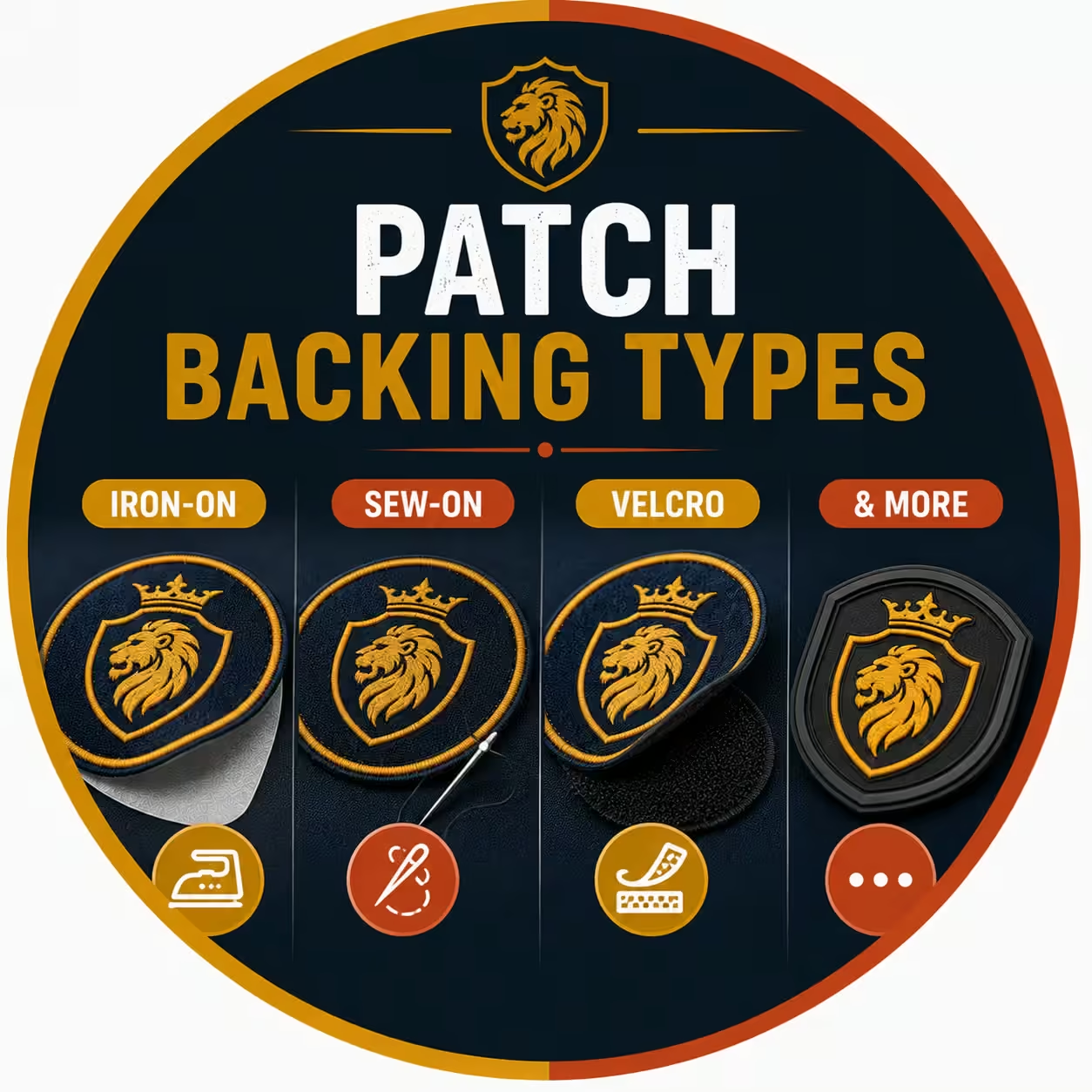
Patch backing types determine how a patch attaches, how long the bond lasts, and which fabrics the patch suits. This guide compares every patch backing, iron-on, sew-on, hook-and-loop (Velcro), adhesive, and more, so you select the correct backing before you order custom patches in the UK.
- UK Made & Dispatched
- Every Backing In-House
- Low Minimums
TypesMade in the UK
What Is a Patch Backing?
A patch backing is the rear finish of a patch that controls attachment to fabric. The backing sits behind the embroidered or woven face and never alters the front design. Each backing type uses a different mechanism: heat-activated adhesive, thread, a hook-and-loop fastener, or a peel-and-stick layer.
The backing decides three things. The backing decides permanence, durability, and the fabrics the patch bonds to. A sew-on backing creates a permanent attachment. An iron-on backing creates a semi-permanent bond. A Velcro backing creates a removable, swappable attachment.
The backing differs from the patch type. The patch type, embroidered, woven, PVC, printed, or chenille, describes the construction of the patch face. The backing describes the attachment method on the rear. A single embroidered patch accepts any backing, so the two choices stay independent. We explain this distinction fully in Part 2.
Types of Patch Backing
Custom patches use eight main backing types. Each backing serves a distinct purpose, from rapid home application to heavy-duty permanence. The list below defines every backing, states how it works, and names the use cases it suits.
Iron-On Backing (Heat-Seal)
Iron-on backing contains a heat-activated adhesive film bonded to the rear of the patch. A domestic iron melts the adhesive, and the adhesive fuses the patch to the fabric as it cools. Our iron-on patches include this heat-seal backing as standard.
Iron-on backing suits cotton, polyester blends, and denim. The backing produces a clean, flat finish with no visible stitching on the front. Iron-on backing creates a semi-permanent bond that withstands roughly 20–30 wash cycles before the edges begin to lift. The backing does not suit nylon, leather, or waterproof fabrics, because heat damages those materials.
Sew-On Backing (Plain / No Backing)
Sew-on backing leaves the patch rear plain, with no adhesive layer. A needle and thread, or a sewing machine, stitch the patch directly to the garment around the perimeter. Sew-on backing creates the strongest, most durable attachment of any backing type.
Sew-on patches bond to every fabric, including heat-sensitive materials that an iron damages. The backing withstands repeated commercial laundering and lasts the lifetime of the garment. Sew-on backing requires sewing skill and more time to apply, so it suits dress uniforms, leather jackets, heavy bags, and any item that endures hard wear. Our sew-on patches carry this plain backing for permanent attachment.
Hook-and-Loop (Velcro) Backing
Hook-and-loop backing, also called Velcro backing, attaches a hook layer to the patch rear. The hook layer grips a loop panel fixed to the garment, so the patch attaches and detaches in seconds. The backing leaves the patch face undamaged through unlimited swaps.
Velcro backing suits tactical gear, plate carriers, operator caps, and uniforms that change role. The backing allows a wearer to remove a patch instantly and replace it with another. Our hook-and-loop Velcro patches supply both the hook side on the patch and the matching loop panel for the garment.
Adhesive (Peel-and-Stick) Backing
Adhesive backing covers the patch rear with a sticky layer and a peel-away paper. The wearer peels the paper and presses the patch onto a surface. Adhesive backing functions like a heavy-duty sticker for instant, temporary use.
Adhesive backing suits one-off events, conventions, name tags, and short-term branding. The backing applies in seconds and requires no heat or thread. Adhesive backing does not survive washing, so the bond stays temporary by design.
Heat-Seal & Heat-Transfer Backing
Heat-seal backing uses a commercial heat press rather than a domestic iron. The press applies controlled temperature and pressure, so the adhesive bonds evenly across the patch. Heat-transfer backing produces a consistent, professional result on large uniform runs.
Heat-seal backing suits workwear, sports kits, and bulk orders where every patch needs identical placement and a reliable bond. The backing reduces application time across many garments. Our heat-press patch backing supports commercial application for high-volume UK orders.
Plastic Backing (Stiffener)
Plastic backing adds a thin, rigid layer behind the patch face. The stiffener keeps the patch flat and prevents the embroidery from puckering or curling. Plastic backing supports the patch structure rather than the attachment method.
Plastic backing suits larger patches and detailed embroidery that needs to hold its shape. Manufacturers combine plastic backing with an iron-on, sew-on, or Velcro layer, so the patch keeps both structure and an attachment method.
Magnetic Backing
Magnetic backing fixes a magnet to the patch rear and a second magnet inside the garment. The two magnets clamp the fabric between them, so the patch attaches with no pins and no holes. Magnetic backing protects delicate fabrics from puncture damage.
Magnetic backing suits name badges, blazers, and corporate wear where pin holes spoil the fabric. The backing removes cleanly and repositions without a trace. Magnetic backing does not suit fabrics near electronic devices that magnets disturb.
Button-Loop & Pin Backing
Button-loop backing adds a fabric loop to the patch rear that hangs the patch from a button. Pin backing attaches a safety pin or a brooch fixing instead of an adhesive. Both backings attach a patch without sewing and without heat.
Button-loop and pin backing suit lanyards, festival passes, collectable patches, and temporary display. The wearer moves the patch between garments freely. Neither backing creates a permanent bond, so each suits short-term or removable use.
How to Apply Each Patch Backing
Each patch backing follows a different application method. The steps below cover the three most common backings, iron-on, sew-on, and Velcro, so you attach your custom patches correctly the first time. For detailed fabric settings, see our how to apply iron-on patches guide.
Applying an Iron-On Patch
Set a domestic iron to a high heat with the steam turned off.
Position the patch on the garment and cover it with a thin cotton cloth.
Press the iron firmly onto the cloth for 15–20 seconds without moving it.
Turn the garment inside out and press the rear for a further 10 seconds.
Allow the patch to cool completely before you wear or wash the garment.
The cotton cloth protects the embroidery from scorch marks. Firm, even pressure activates the heat-seal adhesive and bonds the patch flat to the fabric.
Sewing On a Patch
Pin or tack the patch in place to hold its position.
Thread a needle in a colour that matches the patch border.
Stitch around the perimeter with a running stitch or whip stitch.
Keep the stitches close to the edge to secure the patch fully.
Knot the thread on the rear of the garment to finish.
A sewn perimeter creates the strongest, most permanent attachment. The stitch line holds the patch through repeated commercial laundering.
Attaching a Velcro Patch
Sew or supply the loop panel onto the garment if no panel exists.
Align the hook side of the patch over the loop panel.
Press the patch firmly onto the panel until the fastener grips.
Peel the patch away whenever you need to swap or remove it.
The hook-and-loop fastener attaches and detaches in seconds. The patch face stays undamaged through unlimited swaps, so a single garment displays different patches over time.
Patch Backing Types Compared
The table below compares every patch backing across the factors that decide a purchase: removability, durability, wash resistance, application difficulty, and the use cases each backing suits.
| Backing Type | How It Works | Removable | Durability | Wash Resistance | DIY Difficulty | Best For |
|---|---|---|---|---|---|---|
| Iron-On (Heat-Seal) | Heat-activated adhesive melts and bonds to fabric | No | Moderate | Fair (20–30 washes) | Easiest | Cotton garments, hats, jackets, casual wear |
| Sew-On (Plain) | Thread stitches the patch directly to the garment | No | Very high (lifetime) | Excellent | Hard | Dress uniforms, leather, bags, heavy wear |
| Velcro (Hook-and-Loop) | Hook layer grips a loop panel on the garment | Yes (100%) | Very good | Excellent | Very easy | Tactical gear, plate carriers, swappable patches |
| Adhesive (Peel-and-Stick) | Sticky layer presses onto a surface | Yes | Low | None | Very easy | Events, name tags, temporary branding |
| Heat-Seal (Press) | Commercial press bonds adhesive evenly | No | Moderate–high | Good | Professional only | Bulk workwear, sports kits, uniform runs |
| Plastic (Stiffener) | Rigid layer keeps the patch flat | N/A | N/A (structural) | N/A | N/A | Large patches, detailed embroidery |
| Magnetic | Two magnets clamp the fabric | Yes | Good | Good | Very easy | Name badges, blazers, pin-free corporate wear |
| Button-Loop & Pin | Loop hangs from a button; pin fixes through fabric | Yes | Moderate | Low | Very easy | Lanyards, festival passes, collectable patches |
The comparison shows a clear pattern. Sew-on backing wins on durability, Velcro backing wins on flexibility, iron-on backing wins on speed, and adhesive backing wins on instant temporary use.
How to Choose the Right Patch Backing
The correct patch backing depends on two factors: the fabric you attach the patch to, and the use the patch endures. The guidance below matches each backing to its ideal fabric and use case.
Best Backing by Fabric
- Cotton and polyester blends suit iron-on backing, because the fabric tolerates heat and bonds cleanly.
- Denim suits iron-on or sew-on backing, and custom denim iron-on patches hold both methods securely on the thick weave.
- Nylon and waterproof fabrics suit sew-on backing, because heat damages the coating and weakens an iron-on bond.
- Leather suits sew-on backing, because heat scorches the surface and adhesive fails to grip.
- Delicate fabrics suit magnetic backing, because magnets attach the patch without a puncture or a hole.
Best Backing by Use Case
- Workwear and uniforms suit heat-seal backing for bulk runs, or sew-on backing for maximum durability.
- Tactical and military kit suits hook-and-loop Velcro backing, because operators swap patches between roles.
- Hats and caps suit sew-on or heat-seal backing, because both hold the edges flat and prevent lifting. Our iron-on hat patches also carry a heat-seal backing for quick application.
- Events and promotions suit adhesive backing, because the patch applies in seconds and needs no permanence.
- Jackets and casual wear suit iron-on backing, because custom jacket iron-on patches keep the bond clean and the application simple.
You can order one patch design with several backings. Many UK customers order the same patch with iron-on backing for everyday wear, sew-on backing for formal kit, and Velcro backing for tactical use. See how to order custom patches to specify your backing on each order.
Backing Type vs Patch Type – What’s the Difference?
The backing type and the patch type describe two separate features of a patch. The patch type describes the construction of the patch face. The backing type describes the attachment method on the rear.
“Embroidered” refers to a stitched design on the patch face. “Iron-on” refers to a heat-seal backing on the patch rear. A single patch carries both features at once, so an embroidered patch accepts an iron-on, sew-on, or Velcro backing. The two choices stay independent, and you select each one separately when you order.
This distinction prevents a common error. A customer who orders an “iron-on patch” still chooses a patch type, embroidered, PVC, or woven, for the face design. The backing controls attachment, and the patch type controls appearance.
Our Customers’ Reviews
UK customers rate our custom patches on backing accuracy, durability, and turnaround. Our quality guarantee covers backing checks before dispatch, and the reviews below reflect real orders across iron-on, sew-on, and Velcro backings.
“The Velcro backing on our team patches is brilliant – we swap them between vests with no fuss at all.”
“Ordered the same logo with iron-on and sew-on backing. The sew-on ones on our work jackets have survived a year of washing.”
“Fast turnaround and the heat-seal backing pressed perfectly onto our café uniforms. Exactly as described.”
Patch Backing Types – FAQ
Summary
Patch backing types control how a patch attaches, how long the bond lasts, and which fabrics the patch suits. Iron-on backing delivers fast, clean application on cotton and denim. Sew-on backing delivers permanent, fabric-proof durability for hard wear. Velcro backing delivers instant swaps for tactical kit, while adhesive, heat-seal, plastic, magnetic, and button-loop backings each serve a focused purpose. Match the backing to your fabric and your use case, then order your custom iron on patches with the right backing specified for every garment.