Velcro vs Iron-On Patches
Which Backing Is Right for You?
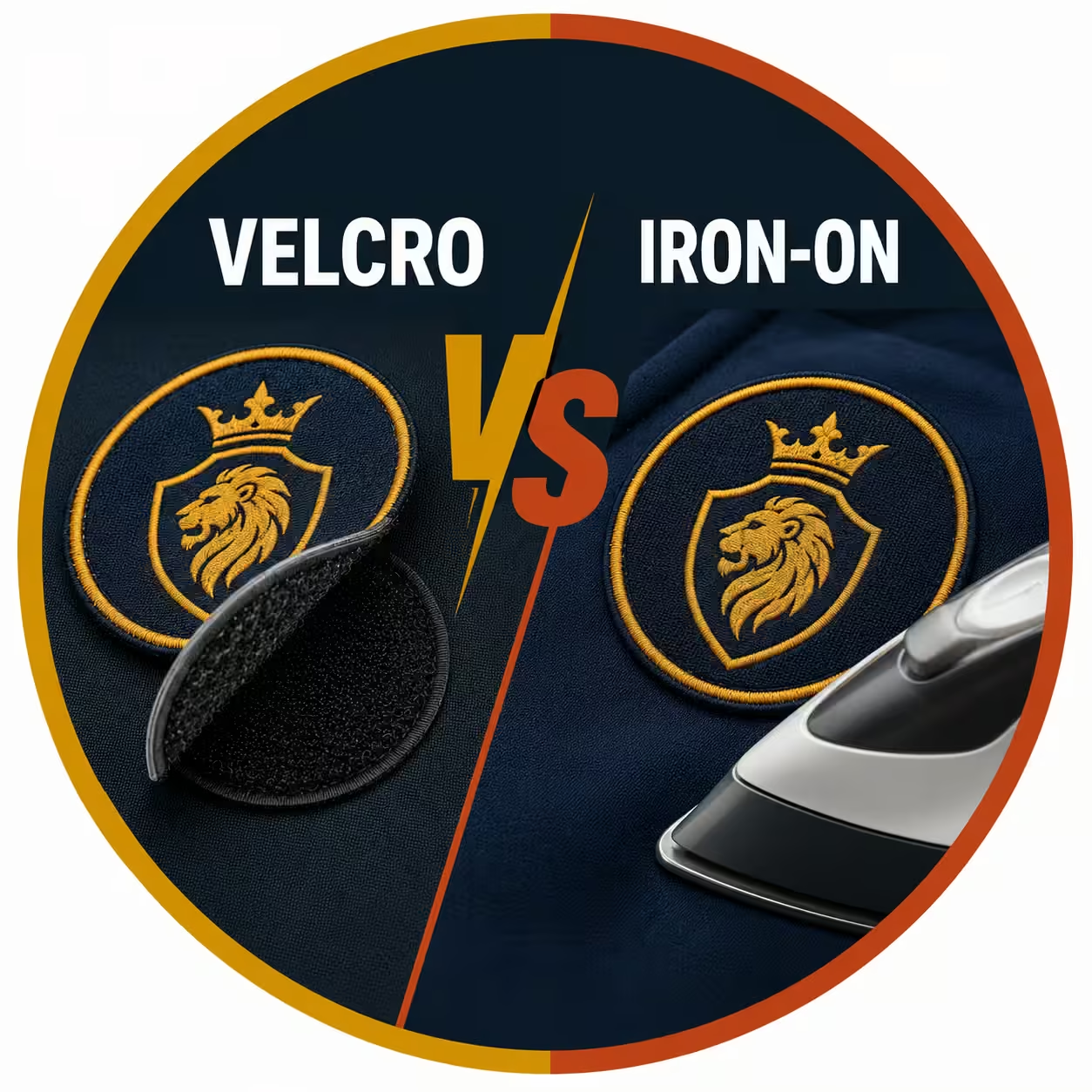
Velcro patches use a two-part hook-and-loop backing that makes them removable, while iron-on patches use a heat-seal adhesive backing that bonds semi-permanently to fabric. The right backing depends on one question: does the patch need to stay fixed in place, or do you need to swap it out? This guide compares both attachment methods across durability, removability, fabric compatibility and use case, so you can choose the correct custom patch backing for your garment.
- Both Backings Made in the UK
- Hook & Loop Supplied
- Free Design & Proof
or FixedYour Call
What Is the Difference Between Velcro and Iron-On Patches?
Velcro patches and iron-on patches differ in how they attach and whether they can be removed. Velcro patches rely on a hook side and a loop side that grip each other, so the patch detaches whenever you pull it off. Iron-on patches rely on a heat-activated adhesive that melts under a household iron and bonds the patch directly to the fabric. This single difference, removable versus fixed, shapes every other comparison on this page, from lifespan to the fabrics each backing suits best.
What Are Velcro (Hook-and-Loop) Patches?
Velcro patches are custom patches finished with a hook-and-loop fastener instead of adhesive or stitching. The term “Velcro” describes a hook-and-loop system; in patch manufacturing, the correct technical name is hook-and-loop backing. A Velcro patch carries the hook side on the back of the patch, while the loop side attaches permanently to the garment. The wearer then presses the patch onto the loop base and removes it as often as needed. This two-part construction makes Velcro patches the standard choice wherever patches must change quickly.
How the Hook-and-Loop System Works
The hook-and-loop system works through thousands of tiny hooks gripping a field of soft loops. Manufacturers sew or weld the loop fabric onto the garment as a permanent base panel. The patch itself receives the hook backing, laminated to the rear of the embroidered or woven design. When the hook side meets the loop side, the two surfaces lock together and hold firmly under normal movement. The bond releases cleanly when you peel the patch away, leaving the loop base ready for the next patch.
Where Velcro Patches Are Used
Velcro patches dominate tactical, military and uniform contexts where interchangeability matters. Armed forces personnel swap rank insignia, name tapes and unit badges on the same jacket using a single loop panel. Security teams, paramedics and emergency responders rotate role identifiers between shifts. Airsoft and outdoor enthusiasts switch morale patches without damaging their gear. Across all these cases, the hook-and-loop backing earns its place by letting one garment carry many different patches. For removable insignia of this kind, our custom Velcro patches are supplied with both hook and loop sides.
What Are Iron-On Patches?
Iron-on patches are custom patches finished with a heat-seal adhesive backing that bonds to fabric under heat and pressure. The backing carries a thin film of thermoplastic glue across the rear of the patch. A household iron or heat press activates this glue, which melts, flows into the fabric weave and then sets as it cools. Iron-on patches attach without sewing, which makes them the most accessible backing for home application. The bond is semi-permanent, holding well through everyday wear yet loosening gradually over repeated washing.
How Heat-Seal Backing Works
Heat-seal backing works by melting a glue layer that fuses the patch to the garment. The applicator places the patch on the fabric, covers it with a cloth and presses a hot iron over it for a fixed time. Heat travels through the patch and softens the adhesive film beneath. Pressure pushes the molten glue into the fibres of the fabric. The adhesive then cools and hardens, locking the patch in position. You can read the full process in our guide on how iron-on patch backing works.
Where Iron-On Patches Are Used
Iron-on patches suit jackets, bags, shirts and everyday garments where the patch stays put. Customers apply branded logo patches to workwear, decorate denim jackets and repair worn knees on jeans. Schools, clubs and small businesses choose iron-on backing for its simple, tool-free application at home. The backing also handles bulk personalisation well, because a heat press fixes dozens of patches quickly. Wherever a patch needs to settle into one position and remain there, iron-on backing delivers a clean, sewing-free result.
Velcro vs Iron-On Patches: Full Comparison Table
The table below compares both backings across the attributes that decide most orders.
| Attribute | Velcro (Hook-and-Loop) | Iron-On (Heat-Seal) |
|---|---|---|
| Attachment method | Hook side grips a sewn loop base | Heat-activated adhesive bonds to fabric |
| Removable / repositionable | Yes, designed for frequent swapping | No, fixed once applied |
| Permanence | Removable, reusable | Semi-permanent |
| Application | Press onto loop base (loop sewn on first) | Household iron or heat press |
| Tools needed | None for the patch; sewing for the loop base | Iron, cloth, flat surface |
| Best fabrics | Heavy, structured fabrics and tactical gear | Cotton, denim, canvas, polyester blends |
| Durability / lifespan | Years, limited mainly by loop wear | Months to years, reduced by hot washing |
| Wash resistance | High, patch removes before washing | Moderate, repeated washing loosens the bond |
| Typical use cases | Military, tactical, uniforms, morale patches | Jackets, bags, workwear, denim, repairs |
| Construction | Two-part (hook + loop) | One-part (adhesive backing) |
| UK lead time | Standard turnaround on bespoke orders | Standard turnaround on bespoke orders |
The comparison shows a clear pattern: Velcro backing trades a small amount of setup for full removability, while iron-on backing trades removability for fast, tool-free attachment. The next sections examine these trade-offs in detail, starting with durability and attachment strength.
Durability and Attachment Strength Compared
Velcro patches and iron-on patches achieve durability through different mechanisms. Velcro patches stay attached through mechanical grip, so their lifespan depends on how well the hooks and loops hold their shape over time. Iron-on patches stay attached through a chemical adhesive bond, so their lifespan depends on how that glue withstands heat, flexing and laundry. Mechanical fasteners and adhesive bonds age in opposite ways, which explains why each backing performs differently across years of use.
How Long Velcro Patches Last
Velcro patches last for years because the hook-and-loop bond does not degrade through normal wear. The hook side resists flattening, and the loop base tolerates thousands of attach-and-release cycles before its grip weakens. The embroidered or woven patch itself outlasts the fastener in most cases. The loop panel is the wear component, and a worn panel is replaced without remaking the patch. This separation between patch and fastener gives hook-and-loop backing its long, repairable service life.
How Long Iron-On Patches Last
Iron-on patches last from several months to several years, depending on care. The heat-seal adhesive holds firmly when the garment stays dry and avoids high-temperature washing. Repeated hot washes soften the glue, and frequent flexing at the patch edges lifts the corners over time. A correctly applied iron-on patch on a stable fabric resists this loosening far longer than a rushed application. For maximum permanence, many customers reinforce iron-on patches with a few stitches around the border, which combines adhesive strength with mechanical hold.
Removability and Repositioning
Velcro patches are removable, whereas iron-on patches are fixed once applied. This contrast defines the practical difference between the two backings. A Velcro patch lifts off its loop base in a second and reattaches in any position, so one garment displays a rotating set of patches. An iron-on patch bonds to a single spot and resists relocation, because reheating the adhesive risks scorching the fabric or distorting the design. If your application demands frequent change, hook-and-loop backing is the only practical option; if your application demands a permanent fix, iron-on backing serves better.
Fabric Compatibility for Each Backing
Velcro patches and iron-on patches suit different fabrics because heat tolerance and structure vary across materials. Iron-on backing depends on heat, so the host fabric must withstand an iron without melting or scorching. Velcro backing depends on a sewn loop base, so the host fabric simply needs to hold stitches. Matching the backing to the fabric prevents failed applications and protects the garment.
Fabrics Suited to Velcro Backing
Velcro backing suits heavy, structured and heat-sensitive fabrics equally well. Tactical nylon, ballistic fabrics, leather and technical outerwear accept a sewn loop panel without difficulty. Delicate or heat-sensitive materials that an iron would damage also accommodate hook-and-loop backing safely, because attaching the loop base uses stitching rather than heat. This makes Velcro the versatile choice for premium gear and specialist garments.
Fabrics Suited to Iron-On Backing
Iron-on backing suits natural and blended fabrics that tolerate heat. Cotton, denim, canvas and many polyester blends bond readily under a household iron. Thin synthetics, waterproof coatings and heat-sensitive technical fabrics resist iron-on backing, because the required temperature can scorch or warp them. Choosing the right fabric for iron-on patches is the single biggest factor in a lasting bond.
Which Backing Should You Choose?
The correct backing follows directly from how the patch will be used. Removable applications call for Velcro, and permanent applications call for iron-on. The two sections below map each backing to its strongest use cases.
Choose Velcro for Tactical, Military and Uniform Patches
Velcro backing wins wherever patches must change on the same garment. Military personnel swap rank, name tapes and unit insignia using one loop panel. Security, medical and emergency teams rotate role identifiers between shifts. Airsoft players and outdoor enthusiasts switch morale designs at will. Each of these uses depends on interchangeability, and hook-and-loop backing delivers it cleanly. Our tactical patches with hook-and-loop backing are built for exactly this kind of rotation.
Choose Iron-On for Jackets, Bags and Everyday Garments
Iron-on backing wins wherever a patch settles into one position. Branded logo patches on workwear, decorative patches on denim jackets and repair patches on jeans all benefit from a fixed, sewing-free bond. Schools, clubs and small businesses favour iron-on backing for its tool-free home application. For a single, lasting placement on a heat-tolerant fabric, iron-on backing is the simpler and faster choice.
Can You Combine Velcro and Iron-On Backing?
Yes, you can combine both systems by ironing the loop base onto the garment instead of sewing it. Some loop panels carry their own iron-on adhesive, which fixes the loop side to a heat-tolerant fabric without a needle. The hook-backed patch then attaches and detaches from that ironed-on loop base as normal. This hybrid approach gives the removability of Velcro with the tool-free setup of iron-on. The method only works on fabrics that tolerate heat, so it suits cotton and denim rather than delicate technical materials. We supply bespoke iron-on patches made in the UK with the backing configuration your project needs.
What UK Customers Say About Both Backings
Feedback from UK clubs, units and businesses that have ordered hook-and-loop and heat-seal patches from our Birmingham workshop.
“We run one loop panel on every plate carrier and swap the unit badges between exercises. The hook backing has taken two years of abuse without lifting.”
“Ordered 120 iron-on club crests for our denim jackets. Thirty seconds each with the press, and none have peeled after a full season.”
“The team talked us out of iron-on for our technical shells and supplied ironed-on loop panels instead. Exactly the advice we needed.”
Frequently Asked Questions
Velcro vs Iron-On Patches: Summary
Choosing between these two backings comes down to a single decision about change. Hook-and-loop backing gives you a removable, reusable patch that swaps in seconds and lasts for years, which is why tactical, military and uniform users rely on it. Heat-seal backing gives you a fixed, sewing-free patch that bonds cleanly to heat-tolerant fabrics such as cotton and denim, which makes it ideal for jackets, bags and everyday repairs. Match the backing to your fabric and your need for interchangeability, and either method delivers a durable, professional finish. When you are ready to order, we manufacture both backing types to your design here in the UK.
Get a Free Quote for Velcro or Iron-On Patches
Tell us how the patch will be worn and our team specifies the backing for you, hook-and-loop, heat-seal, or a hybrid loop panel. Send your artwork or brief through the quote form and you will receive a digital proof and an itemised price within 24 hours. No setup fees, no hidden charges, no commitment until you approve the proof.
Both backings manufactured in the UK and dispatched on tracked delivery