Custom Printed Patches
Full-colour fabric patches made to your artwork, shipped across the UK.
Custom printed patches are full-colour fabric patches produced by dye-sublimation or digital printing onto a polyester base. UK customers order custom printed patches when their design contains gradients, photographs, or more colours than embroidery or weaving can reproduce cleanly. Printed patches reproduce artwork with photographic precision, support unlimited colours, and accept any standard backing, iron-on, sew-on, Velcro, or adhesive. Every patch is bespoke, made to your artwork, and shipped across the UK with tracked delivery.
- Unlimited Colours
- Free Digital Proof
- No Minimum Order
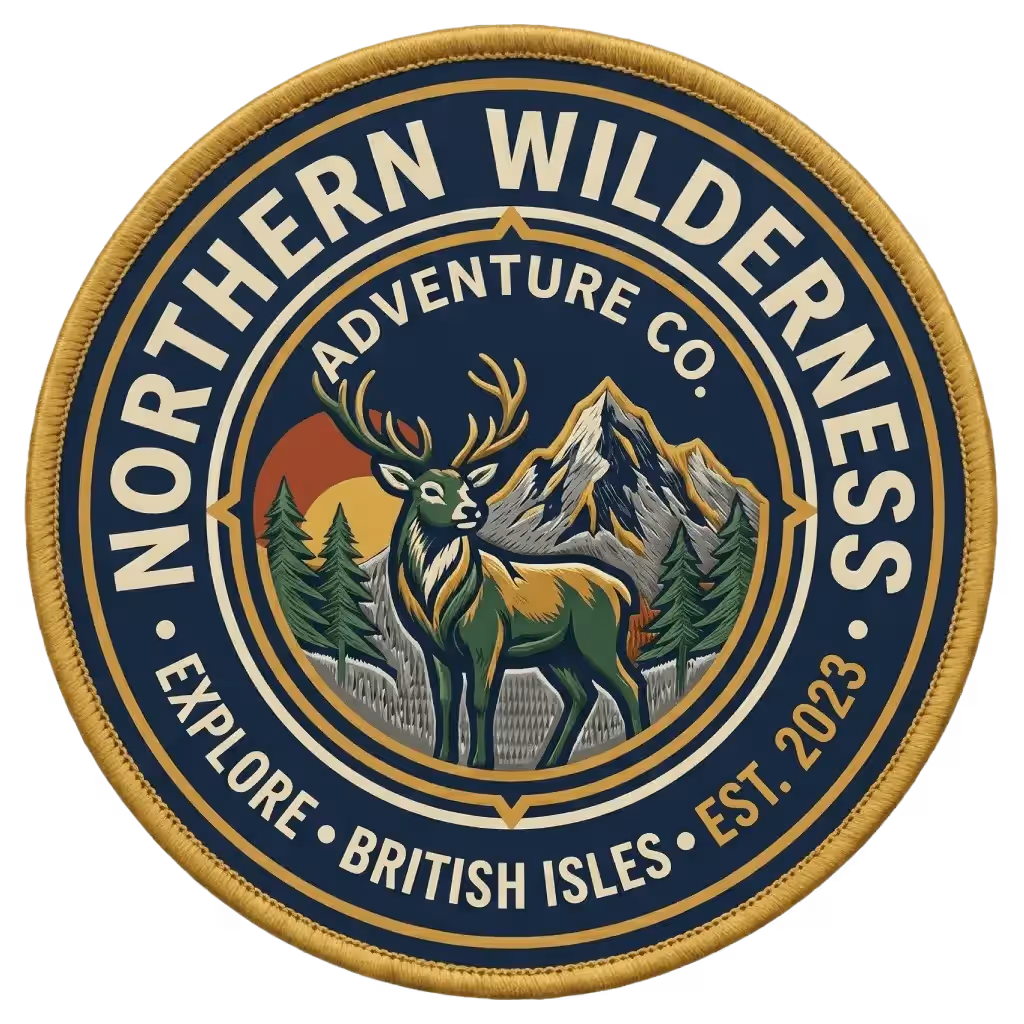
ColoursPhotographic Precision
What Are Custom Printed Patches?
Custom printed patches are bespoke patches that carry a printed design instead of stitched thread. The design is printed directly onto a woven polyester fabric using dye-sublimation, a heat-and-pressure process that bonds ink permanently into the fibres. This print method produces a smooth, flat finish with sharp edges, fine detail, and unlimited colour range. Unlike embroidered patches, printed patches have no thread texture; unlike PVC patches, they remain soft and flexible against the garment.
The print method defines the patch, not the backing. A printed patch can carry any backing type, including iron-on adhesive, sew-on, Velcro, or peel-and-stick. This distinction matters because many UK buyers confuse "printed" with "iron-on", yet iron-on is simply one backing option for printed, embroidered, woven, or chenille patches alike.
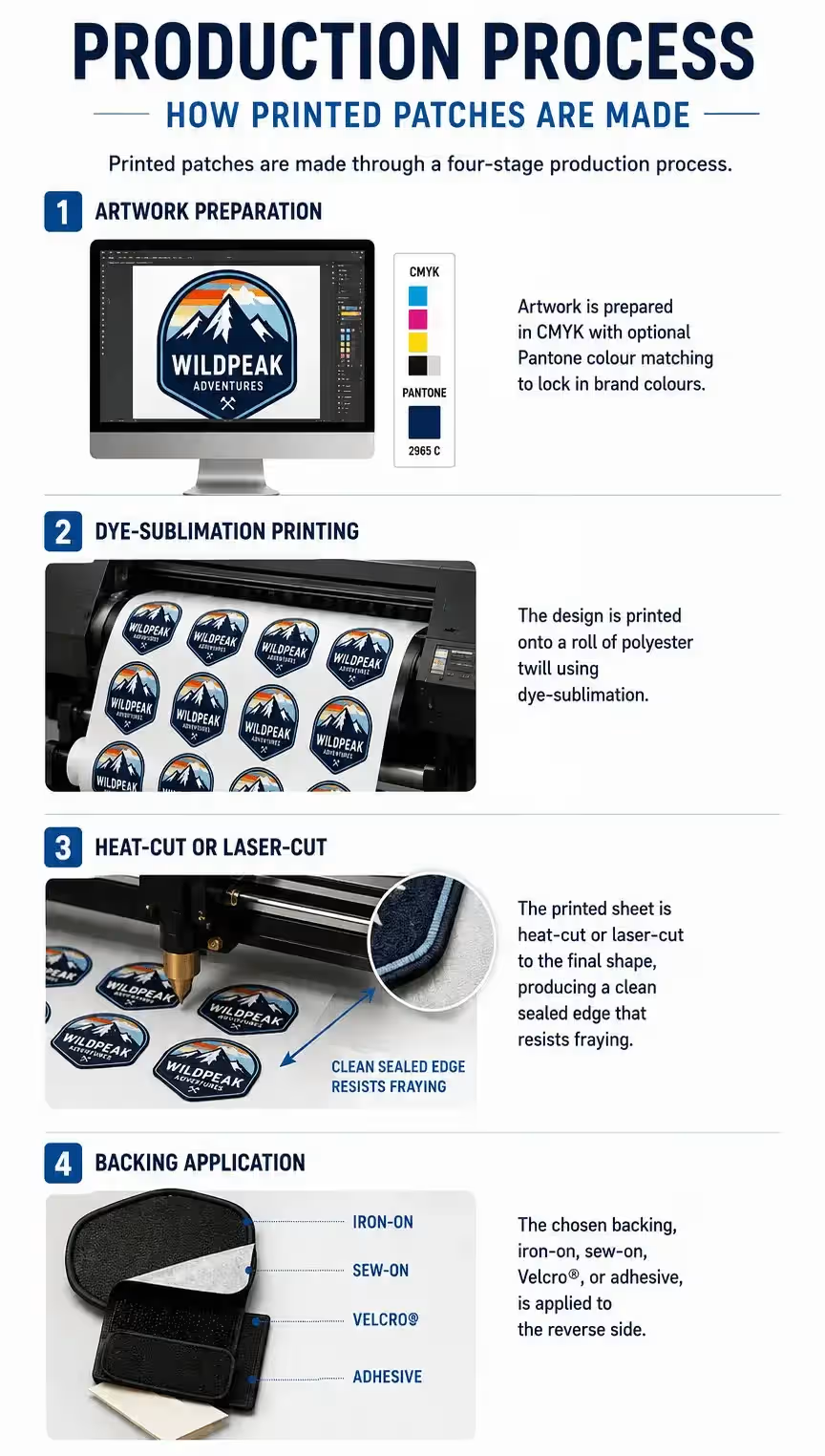
How Printed Patches Are Made
Printed patches are made through a four-stage production process. First, the artwork is prepared in CMYK with optional Pantone colour matching to lock in brand colours. Second, the design is printed onto a roll of polyester twill using dye-sublimation. Third, the printed sheet is heat-cut or laser-cut to the final shape, producing a clean sealed edge that resists fraying. Fourth, the chosen backing, iron-on, sew-on, Velcro, or adhesive, is applied to the reverse side.
This process eliminates the digitising step required for embroidered patches. Printed patches accept any digital file directly, which shortens turnaround time and removes stitch-count limits.
Materials Used in Printed Patches
Printed patches are built from three core materials.
Woven Polyester Twill
The base is woven polyester twill, chosen because dye-sublimation only bonds with polyester fibres. Polyester base fabric gives printed patches three working advantages: colour-fastness during washing, resistance to UV fading, and a lightweight feel that suits thin garments such as t-shirts and event wristbands.
Sublimation Dye
The ink is sublimation dye, which becomes part of the fabric rather than sitting on top of it.
Backing Layer
The backing layer varies by application, heat-seal adhesive for iron-on, plain fabric for sew-on, hook-side Velcro for tactical use, or 3M peel-and-stick for temporary placement.
Types of Custom Printed Patches
Custom printed patches are produced in three core variations, each defined by its print technology and finish. UK customers choose between these types based on artwork complexity, budget, and intended use.
Dye-Sublimated Patches
Dye-sublimated patches use heat and pressure to convert solid dye into gas, which then bonds permanently with polyester fibres. This method produces colour-fast patches that resist fading, washing, and UV exposure. Dye-sublimation suits photographic artwork, gradient designs, and full-colour brand logos where accuracy matters. The finish is smooth, matte, and flexible, ideal for sportswear, event merchandise, and fashion garments.
Digitally Printed Fabric Patches
Digitally printed fabric patches use UV inkjet or pigment printers to apply ink directly onto a fabric base. This method offers faster turnaround for small batches and accepts a wider range of base fabrics, including cotton-blend twills. Digitally printed patches work well for short-run promotional campaigns, festival merchandise, and one-off commissions. The colour vibrancy is high, though slightly less wash-resistant than dye-sublimation over the long term.
Printed Patches with Embroidered Borders (Hybrid)
Hybrid printed patches combine a printed centre with an embroidered merrow border. The merrow border adds a raised, finished edge that mimics traditional embroidered patches while preserving the photographic detail of the printed face. UK clubs, schools, and military units often order hybrid patches when a heritage finish is required without losing colour fidelity. The result is a premium-looking patch that satisfies both modern and traditional aesthetics.
Custom Printed Patches vs Embroidered, Woven and PVC Patches
Each patch type serves a different design need. The table below compares custom printed patches against the three other dominant patch formats sold in the UK.
| Feature | Printed Patches | Embroidered Patches | Woven Patches | PVC Patches |
|---|---|---|---|---|
| Colour range | Unlimited (CMYK + Pantone) | Limited by thread colours | Limited by thread colours | Limited by mould colours |
| Photographic detail | Yes | No | Partial | No |
| Texture | Smooth, flat | Raised, textured | Flat, fine | 3D mouldable |
| Base material | Polyester twill | Cotton or polyester twill | Polyester thread | PVC rubber |
| Best for | Gradients, photos, complex artwork | Logos, text, bold designs | Fine logos, small text | Outdoor and tactical gear |
| Typical UK MOQ | 25-50 pieces | 10-25 pieces | 25-50 pieces | 50-100 pieces |
| Backing options | All standard | All standard | All standard | All standard |
| Weight on garment | Lightweight | Medium | Light | Heavy |
| Wash durability | High (40°C) | Very high | High | Very high |
Printed patches win on colour range and detail. Embroidered patches win on texture and heritage feel. Woven patches win on fine line work for small logos. PVC patches win on outdoor durability. The right choice depends on the artwork and the application, not on backing, since every type accepts iron-on, sew-on, or Velcro backing.
Backing Options for Printed Patches
Backing is the layer fixed to the reverse of a printed patch that determines how it attaches to the garment. Printed patches accept every standard backing type sold in the UK, which means the print method and the attachment method are independent choices. Buyers select the backing based on the garment, the wear conditions, and whether the patch needs to be removable. The four backing options below cover almost every UK use case.
Common Uses for Custom Printed Patches in the UK
Custom printed patches serve five dominant markets across the UK. Each market values printed patches for the same reason: full-colour reproduction at scale, with no thread limit or mould constraint. The use cases below reflect actual order patterns from UK businesses, clubs, schools, and individuals.
Event and Festival Patches
Event and festival patches commemorate a single date, location, or experience. Printed patches handle event-style artwork well because they reproduce photographic backgrounds, sponsor logos, and multi-colour graphics on one surface. UK festivals, charity runs, music gigs, and conference giveaways order printed patches in batches of 100-500 units for attendees, volunteers, and staff. Adhesive or iron-on backing is the standard choice for event use because attendees apply patches without tools.
Sports Team and Club Patches
Sports clubs use printed patches for kit branding, sponsor logos, and squad identification. Football, rugby, hockey, and cricket clubs across the UK favour printed patches when sponsor artwork includes gradients, photographic mascots, or more than six colours. Printed patches sit lightweight on jerseys and resist fading after repeated washing at 40°C. Sew-on backing is the standard choice for sports kit because it survives industrial team laundering.
Promotional and Corporate Branding
Corporate buyers order printed patches for workwear, uniform, conference packs, and customer giveaways. Printed patches reproduce brand logos in exact Pantone-matched colour, which protects brand consistency across uniforms and merchandise. UK businesses use printed patches on polo shirts, hi-vis vests, baseball caps, and tote bags. Iron-on or sew-on backing suits this market depending on whether the garment is owned by the employee or supplied by the employer.
Fashion, Streetwear and Band Merchandise
Fashion brands, streetwear labels, and music acts use printed patches as decorative statements. The artwork often involves photographic imagery, illustrated characters, or layered colour palettes that embroidery cannot reproduce. Printed patches sit flat on denim jackets, hoodies, and tote bags without adding bulk, which suits modern streetwear silhouettes. UK independent fashion brands order printed patches with no minimum order to test designs before scaling production.
Schools, Scouts and Youth Groups
Schools, scout troops, and guide units order printed patches for uniforms, achievement badges, and event commemoratives. Printed patches handle full-colour crests, photographic backgrounds, and detailed illustrations that thread-based methods cannot reproduce at small sizes. UK schools commonly choose iron-on backing for blazer crests because parents apply patches at home, while scout units favour sew-on backing for permanence on sashes.
How to Order Custom Printed Patches
Ordering custom printed patches in the UK follows a five-step process from artwork submission to tracked delivery. The steps below outline the standard workflow for any custom order, regardless of quantity or backing type.
-
Submit your artwork
Send your design as a vector file (AI, EPS, SVG, or PDF) or as a high-resolution PNG above 300 DPI. Hand-drawn sketches and rough mock-ups are also accepted, the design team converts them into print-ready artwork at no extra cost.
-
Receive a free digital proof
A digital proof is sent within 24 hours showing the final patch at actual size, with confirmed colours, dimensions, border style, and backing type. Pantone codes are matched at this stage.
-
Approve the design
Review the proof, request unlimited revisions, and confirm size, shape, quantity, and backing. Production does not start until written approval is given.
-
Production begins
The approved artwork is dye-sublimated or digitally printed onto polyester twill, heat-cut or laser-cut to shape, and finished with the chosen backing. Standard UK turnaround is 7-14 working days; express turnaround of 5-7 working days is available on request.
-
Tracked UK delivery
Finished patches are packed, quality-checked, and despatched via Royal Mail Tracked or courier. Delivery covers all UK postcodes including Northern Ireland, the Highlands, and the Channel Islands.
Pricing, No Minimum Order and UK Delivery
Custom printed patches are priced on three variables: quantity, size, and backing type. Larger quantities reduce the unit cost because setup costs spread across more pieces, while larger sizes use more polyester base material and more ink. The pricing structure below reflects standard UK market rates for bespoke orders.
-
No Minimum Order
There is no minimum order quantity for custom printed patches. Single pieces suit small businesses, independent fashion brands, scout troops, and one-off events that do not need bulk volume. Larger orders of 100, 500, or 1,000 pieces unlock progressive discounts on unit price. There is no maximum order, production scales to match commercial volume for corporate workwear, sports kit, and merchandise runs.
-
Turnaround Time
Standard turnaround for custom printed patches is 7-14 working days from artwork approval. Express turnaround of 5-7 working days is available for urgent orders, including event deadlines and last-minute kit launches. Turnaround starts the day the digital proof is approved, not the day the order is placed. UK delivery time is added on top, which adds 1-3 working days depending on the courier service.
-
Free Artwork and Digital Proof
Every order includes free artwork preparation and a free digital proof. The design team prepares vector files from rough sketches, photographs, or written briefs at no extra cost. Unlimited revisions are offered until the proof matches the customer's vision. There is no setup fee, no digitising fee, and no hidden charge, the quoted price is the final price.
-
UK Delivery Coverage
UK delivery is included on every order above standard MOQ. Tracked Royal Mail or courier despatch covers all UK postcodes, including mainland England, Wales, Scotland, Northern Ireland, the Scottish Highlands, the Isle of Wight, and the Channel Islands. Tracking numbers are issued at despatch, and delivery is signed for on arrival.
Frequently Asked Questions
Summary
Custom printed patches deliver photographic-quality artwork on a flexible polyester base, which makes them the strongest option for designs with gradients, multiple colours, or fine illustrative detail. The print method, dye-sublimation or digital printing, is independent of the backing, so any printed patch can carry iron-on, sew-on, Velcro, or adhesive backing depending on the garment and use case. UK customers across events, sports, corporate workwear, fashion, and education choose printed patches because the format reproduces brand artwork accurately with no minimum order, with free design support and tracked nationwide delivery. The result is a bespoke patch that looks sharp, lasts through repeated wear, and represents the brief without colour compromise.
Send your artwork today for a free digital proof and a no-obligation quote on custom printed patches made in the UK.
Free design · No Minimum Order · Tracked UK delivery · No setup fees