Custom Sew On Patches
Custom sew-on patches are bespoke embroidered or woven badges with a plain fabric backing, attached permanently to a garment using needle and thread. Across the UK, sew-on patches are the chosen attachment method for workwear, uniforms, sports clubs and jackets that need a patch to last for years of repeated washing.
Our UK-made custom sew-on patches are stitched in your exact colours, sizes and shapes, with free design, no minimum order and fast turnaround.
- UK Made
- Free Design
- No Minimum Order
- Fast Turnaround
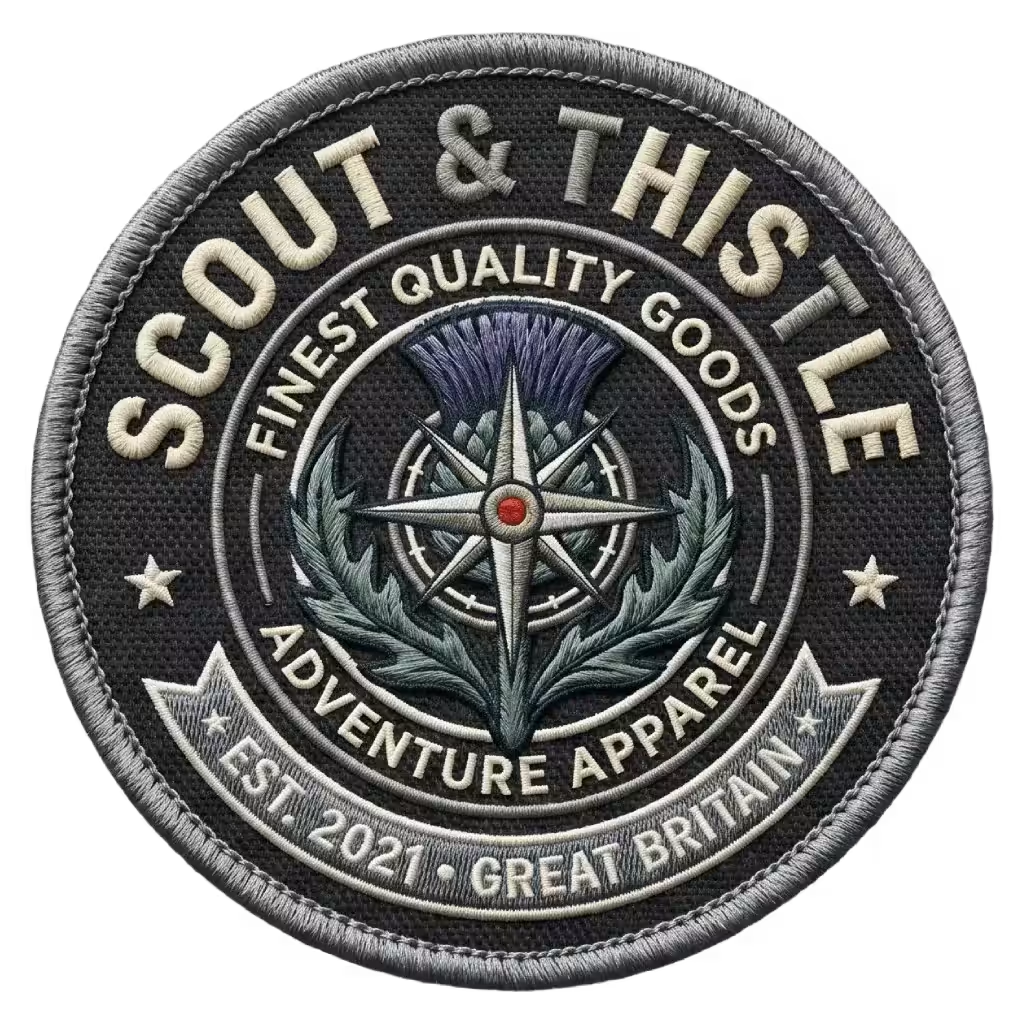
AttachmentSew On Patches
What Are Custom Sew On Patches?
Custom sew-on patches are fabric badges produced from embroidered, woven or printed materials with a plain fabric backing instead of an adhesive layer. The backing carries no glue, no heat-seal film and no hook-and-loop fastener, only the same twill or polyester base used on the front of the patch. Sew-on patches attach to clothing through stitching, which makes them the most permanent patch type available in the UK custom patches market.
Every sew-on patch contains three core layers. The base layer is a woven twill fabric. The middle layer holds the embroidered or woven design, built from polyester or rayon thread at a minimum density of around 1,000 stitches. The top edge is finished with either a merrow border or a laser-cut border, which seals the patch and prevents fraying.
The phrase "sew-on" describes the backing, not the patch type itself. An embroidered patch can be sewn on. A woven patch can be sewn on. A chenille patch can be sewn on. The backing simply tells the buyer how the patch will attach to the fabric. Because sew-on backing requires no heat or adhesive, the patch keeps every fabric option open, including leather, nylon, waxed cotton and performance materials that iron-on adhesive cannot bond to safely.
Types of Custom Sew On Patches We Make
Custom sew-on patches come in five main types, each defined by its construction method, surface texture and ideal use case. Every type listed below ships with a plain sew-on backing as standard, and each can be ordered with a custom size, custom shape and Pantone-matched thread or ink.
Embroidered Sew-On Patches
Embroidered sew-on patches are the most popular sew-on patch type in the UK. Each patch is stitched with polyester or rayon thread onto a twill base, producing a raised, textured surface with a clear three-dimensional feel. Embroidered patches suit bold logos, club crests, military insignia and uniform badges where durability matters more than fine photographic detail.
Woven Sew-On Patches
Woven sew-on patches use a tighter thread density than embroidered patches, which allows for finer text and more intricate detail. The weave creates a flatter, smoother surface and a thinner overall profile. Brands choose woven patches when their logo contains small lettering, gradient lines or detailed shapes that embroidery cannot reproduce cleanly.
Chenille Sew-On Patches
Chenille sew-on patches feature raised yarn loops that create a soft, fuzzy texture. The chenille technique is the traditional method for varsity letter patches, university society badges and sports club emblems. Because chenille patches are bulky, sew-on backing is the standard attachment, iron-on adhesive cannot hold the weight reliably.
PVC / Rubber Sew-On Patches
PVC sew-on patches are moulded from soft polyvinyl chloride into 2D or 3D shapes. The material is waterproof, UV-resistant and colour-fast, which makes PVC patches ideal for outdoor gear, tactical kit and military equipment. Sew-on backing on a PVC patch comes as a stitched fabric border that runs around the edge, giving the needle a clear path through the patch.
Printed (Sublimation) Sew-On Patches
Printed sew-on patches use dye-sublimation to fix full-colour artwork onto a polyester base. The print captures photographic detail, gradients and unlimited colours that embroidery and weaving cannot match. Sublimation patches suit event merchandise, festival kit and brand campaigns where the design is colour-heavy rather than logo-led.
How Custom Sew On Patches Are Made
Custom sew-on patches are produced through a five-stage process that turns artwork into a finished, stitched patch ready for delivery in the UK. Every stage runs in sequence, and the quality of each stage determines the final result on your garment.
Artwork submission and free design proof.
You upload your logo, crest or design. Our UK design team converts the file, advises on colour and size, and returns a digital proof within 12 hours.
Embroidery digitising.
The approved artwork is converted into a stitch file (DST or EMB format). Digitising tells the embroidery machine exactly which stitch type, density and direction to use for every part of the design.
Embroidery or weaving.
Industrial embroidery machines stitch the design onto a twill base using polyester thread. Woven patches follow the same step on a Jacquard loom. Stitch counts begin at 1,000 stitches and rise with patch size and complexity.
Border finishing.
The patch edge is sealed with either a merrow border (an overlocked stitched edge, ideal for simple shapes) or a laser-cut border (a heat-sealed precision cut, ideal for complex shapes). The border prevents fraying over time.
Sew-on backing application.
A plain fabric backing is fitted to the rear of the patch. No heat-seal film, no adhesive, no Velcro, only matching fabric that gives your needle and thread a clean surface to pass through. The patches are then quality-checked, packed and dispatched by Royal Mail or DPD anywhere in the UK.
Standard production runs in 3-7 working days. Express UK turnaround is available in 1-2 working days for urgent club, school or corporate orders.
Sew-On vs Iron-On Patches - Which Should You Choose?
Sew-on patches and iron-on patches differ in one core attribute: the attachment method. Sew-on patches use thread to bond the patch to the garment. Iron-on patches use a heat-activated adhesive film. That single difference shapes durability, fabric compatibility, application time and long-term cost, and it decides which backing is right for your project.
The table below compares both backings across the attributes UK buyers ask about most often.
| Attribute | Sew-On Patch | Iron-On Patch |
|---|---|---|
| Attachment method | Stitched with needle and thread | Heat-activated adhesive film |
| Permanence | Permanent | Semi-permanent (around 25 wash cycles) |
| Application time | 10-20 minutes per patch | 30-60 seconds per patch |
| Skills required | Basic hand or machine sewing | None, household iron only |
| Fabric compatibility | All fabrics, including leather and nylon | Heat-tolerant fabrics only (cotton, denim, twill) |
| Wash durability | Indefinite | Adhesive weakens with repeated washing |
| Heat exposure | Not affected | Loosens in warm or hot water |
| Backing appearance | Plain matching fabric | Cloudy or shiny heat-seal film |
| Best for | Workwear, uniforms, jackets, leather, nylon | Casual wear, decorative use, low-wash items |
When to Choose Sew-On Backing
Sew-on backing is the right choice when the garment will be washed often, worn hard or made from a heat-sensitive fabric. Police uniforms, fire service kit, military jackets, scout uniforms, school blazers and biker leathers all rely on sew-on patches because the stitching survives industrial laundry, heavy rain, friction and decades of use. If the patch carries a logo, rank insignia or club identity that must never come loose, sew-on backing is the only safe option.
When to Choose Iron-On Backing
Iron-on backing suits casual wear, decorative items and short-term applications where speed matters more than permanence. A festival hoodie, a denim jacket worn at weekends, a tote bag or a child's costume all work well with iron-on patches. If you prefer a no-sew application, our custom iron-on patches use a heat-activated backing that bonds in under a minute. For garments that sit between casual and heavy-use, you can iron the patch on first to position it, then sew around the edge for double security.
Where Custom Sew On Patches Are Used in the UK
Custom sew-on patches appear across almost every uniformed sector in the UK, from public services to private clubs. The reason is consistent: institutions need a patch that survives daily wear, repeated washing and decades of service without falling off. Sew-on backing meets that demand. The six use cases below cover the most common UK orders we produce each year.
Workwear & Uniform Patches
Workwear patches identify staff, brand uniforms and meet trade dress standards. Trade businesses, hospitality groups, security firms and logistics companies order custom sew-on patches for boiler suits, hi-vis jackets, polo shirts and fleeces. Sew-on backing handles industrial laundry cycles, which iron-on adhesive does not survive. Most UK workwear patches carry the company logo, the employee role or both, stitched onto twill in Pantone-matched thread.
School & College Badge Patches
School badge patches sit on blazers, blazer pockets, sports kit and house ties. UK schools, sixth-form colleges and universities order sew-on patches in batches that match their student intake. The badges are typically embroidered, finished with a merrow border and stitched directly onto the blazer pocket. Because school blazers are worn daily for an entire academic year and laundered weekly, only sew-on backing keeps the crest secure for the full term.
Sports Club & Team Patches
Sports club patches mark team identity on shirts, tracksuits, kit bags and warm-up jackets. Football clubs, rugby teams, cricket clubs, cycling teams and athletics squads across the UK order custom embroidered patches with sew-on backing as the default. The patches survive grass stains, mud, repeated machine washing and the friction of competition kit. Sponsor patches and league badges are often added to the same garment using the same sew-on method.
Military & Cadet Patches
Military patches and cadet patches identify rank, regiment, unit and operational role. The British Army, Royal Navy, Royal Air Force, Royal Marines and the Cadet Forces all use sew-on patches as the standard attachment method for parade uniforms and No. 1 dress. Field uniforms add a hook-and-loop option for rapid swap-out, but parade kit relies on stitched, sew-on patches that hold their position permanently. Most military patches use a merrow border, a high stitch count and subdued or full-colour thread depending on the role.
Motorcycle Club & Biker Patches
Motorcycle club patches, including back patches, side rockers and chest patches, are sewn directly onto leather and waxed cotton. Iron-on adhesive cannot bond to leather safely, which makes sew-on backing the only practical option. Biker patches are typically large, heavily embroidered and finished with a thick merrow border. The stitching survives weather, road grime, leather treatments and the heat of a motorcycle exhaust.
Jacket & Fashion Patches
Fashion patches turn a plain jacket, denim shirt or canvas tote into a personal statement. Independent fashion brands, vintage retailers and individual customers order custom sew-on patches in low quantities to decorate denim jackets, varsity coats, bomber jackets and backpacks. The plain fabric backing sits flush against the garment with no shine and no glue line, which keeps the look clean and tailored.
How to Sew On a Custom Patch
Sewing on a custom patch takes basic hand-stitching skill and a few minutes per patch. The six steps below cover the standard method used for embroidered, woven and chenille sew-on patches across cotton, denim, twill, polyester and leather garments.
Wash and dry the garment first.
New fabric shrinks slightly in its first wash. Sewing the patch on after the first wash prevents the patch from puckering or pulling once the garment is laundered.
Position the patch and pin it in place.
Lay the garment flat. Place the patch in the exact position you want, then pin it down with two or three sewing pins. For thick patches, use small pieces of double-sided fabric tape instead of pins.
Choose your thread.
Pick a polyester thread that matches the patch border for an invisible finish, or pick a contrasting thread if you want the stitching to show. Use a single thread for thin fabrics and a doubled thread for denim, leather or canvas.
Select your stitch type.
A running stitch is the fastest and works well on simple shapes. A whip stitch (also called an overhand stitch) wraps over the patch edge and creates a stronger bond. A blanket stitch produces a decorative finish that matches the merrow border on most embroidered patches.
Stitch around the full perimeter.
Start the needle from the inside of the garment so the knot stays hidden. Stitch close to the patch edge, keeping each stitch even at around 3-4 mm. Continue all the way around the patch until you return to the starting point.
Secure and finish.
Tie a double knot on the inside of the garment and trim the thread close to the knot. Press the area lightly with a cool iron to settle the stitching. The patch is now permanently attached and ready for daily wear and washing.
For machine sewing, set the machine to a straight stitch or a tight zigzag, lower the needle through the patch edge, and run the seam at a slow speed around the perimeter. A walking foot helps when the patch sits on thick or layered fabric.
Customisation Options Available
Every custom sew-on patch we produce is built to your specification across four key attributes: size and shape, border style, thread type with Pantone matching, and order quantity. The combinations are flexible, which means a single design can be ordered as a small uniform badge, a full back patch, a tightly woven logo or a chenille letter, all with the same sew-on backing.
Size & Shape
Patch size starts at around 25 mm for small lapel badges and scales up to 300 mm or more for full-back jacket patches. The most common UK sizes sit between 50 mm and 100 mm, which suits chest patches, sleeve patches, blazer crests and club badges. Patch shape is fully custom, circles, squares, shields, rectangles, ovals and bespoke die-cut shapes are all standard options. Complex shapes such as animals, lettering and detailed crests are produced with a laser-cut border to keep the outline clean.
Borders (Merrow vs Laser-Cut)
Border style decides how the patch edge is sealed and how the patch looks once it is stitched onto the garment. A merrow border is an overlocked stitched edge that wraps the perimeter in a thick, raised thread line, the traditional finish on military and club patches. A laser-cut border is a heat-sealed precision cut that follows complex outlines without bulk, producing a flat, modern edge. Merrow borders suit simple shapes such as circles, shields and rectangles. Laser-cut borders suit lettering, mascots and irregular custom shapes.
Thread Type & Pantone Colour Matching
Thread type controls the surface finish, sheen and durability of the patch. Polyester thread is the standard choice for sew-on patches because it resists fading, washing and UV exposure. Rayon thread produces a softer sheen and richer colour, ideal for fashion patches and decorative work. Metallic and glow-in-the-dark threads are available for accent work on club, military and event patches. Every colour is matched to a Pantone (PMS) code, which means the patch reproduces your brand colour accurately across every order, every batch and every reorder.
No Minimum Order & UK Turnaround
There is no minimum order quantity for custom sew-on patches, which suits small clubs, sole traders, school departments and independent fashion brands. Bulk pricing applies from 100 pieces upwards, with further discounts at 250, 500 and 1,000 piece tiers. Standard UK turnaround runs 7-10 working days from artwork approval. Express turnaround runs 5-7 working days for urgent orders. All UK deliveries ship via Royal Mail or DPD with tracked despatch.
Frequently Asked Questions
Order Your Custom Sew On Patches Today
Custom sew-on patches give your uniform, jacket or kit a permanent, professional badge that survives every wash and every season. The plain fabric backing keeps every fabric option open, the stitched attachment outlasts every other backing type, and the bespoke design service produces a patch that matches your exact colour, size and shape requirements. From workwear and school blazers to biker leathers, sports kit and military uniforms, sew-on backing remains the most reliable patch attachment method available in the UK.
Send us your design, your quantity and your deadline. Our UK design team returns a free digital proof within 12 hours and ships your finished sew-on patches in 7-10 working days. Request a free quote for custom sew-on patches today.