Custom Sports Iron-On Patches UK
Custom sports iron-on patches are fabric badges with a heat-activated adhesive backing that bonds to sports kit under the pressure of a household iron or heat press. Sports clubs, team managers and coaches order these patches to add a club crest, sponsor logo, player name or squad number to training tops, tracksuits and kit bags.
Every patch is made to a custom design in the UK, with embroidery, woven thread or printed detail chosen to suit the garment. This page explains the patch types, the backing, the application method and the ordering process for bespoke sports patches.
- UK Made
- Heat-Activated Backing
- Durable Twill Base
ReadyCustom Badges
What Are Custom Sports Iron-On Patches?
Custom sports iron-on patches are personalised cloth emblems that attach to sportswear through heat rather than stitching. The patch carries a heat-seal adhesive layer on the reverse, and this layer melts at roughly 150°C and grips the fabric as it cools. A coach presses the patch onto a shirt, holds firm pressure for 10 to 15 seconds, and the badge fuses to the garment. The result is a club identity that looks professionally applied without a sewing machine.
The "sports" specification changes the build of the patch. Sports kit endures frequent washing, stretching and friction, so a sports patch needs a durable twill base, a dense thread count and a strong heat-seal backing that survives repeated wash cycles. A patch made for a one-off fashion jacket does not face the same stress as a badge stitched onto a football academy's match shirts. Our production team selects the fabric, thread and adhesive to match the demands of active wear, which is the distinction between a generic patch and a purpose-built sports patch.
How Iron-On Backing Works on Sports Kit
The iron-on backing is a thermoplastic adhesive film bonded to the rear of the patch during manufacture. Heat softens the film, pressure pushes it into the weave of the garment, and cooling sets the bond. Cotton and polycotton training tops accept this bond readily, because their fibres hold heat well and create a deep mechanical grip. Performance polyester and technical sports fabrics need a lower temperature and a pressing cloth, since high heat glazes synthetic fibres. Our team advises the correct heat setting for each fabric once you confirm the garment, which protects both the patch and the kit.
Why Sports Teams Choose Iron-On Over Sew-On
Sports teams choose iron-on patches because the application is fast, repeatable and requires no needlework. A kit manager applying badges to thirty shirts completes the job in under an hour with a single iron. Unlike sew-on patches, which demand a sewing machine and skilled hands, iron-on patches apply with heat and pressure alone. This speed matters when a club receives a new kit delivery days before a fixture and needs the squad numbered quickly. For permanent, high-wear placements, a team can reinforce the patch with a stitch border, combining the speed of iron-on with the security of sew-on. We also offer iron-on patches for jackets for club-branded leisurewear and training outerwear.
Types of Sports Patches Available with Iron-On Backing
Custom sports iron-on patches come in four main types, and each type suits a different design, budget and garment. The choice depends on the level of detail in the artwork, the texture you want, and how the patch will be worn. Embroidered patches give a classic raised finish, woven patches capture fine detail, printed and sublimation patches reproduce full-colour artwork, and PVC patches deliver waterproof durability. The list below defines each type and its best use on sports kit.
Embroidered Sports Patches
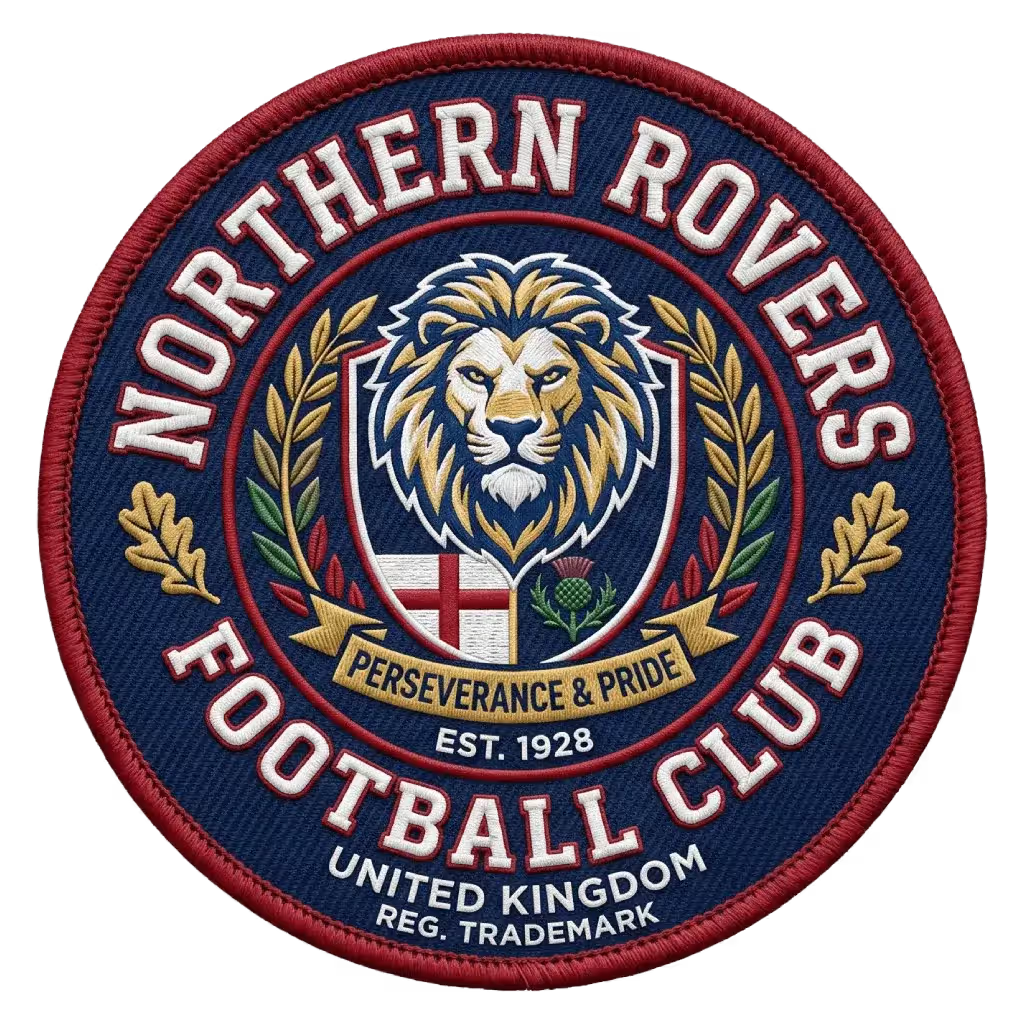
Embroidered sports patches are stitched from coloured thread onto a twill base fabric, with a minimum thread count of around 1,500 stitches for a crisp finish. The embroidery creates a raised, textured surface that gives a club crest a traditional, premium look. A merrow border wraps the edge to seal the threads and prevent fraying through repeated washing. Embroidered patches suit football badges, rugby crests and team logos that use bold shapes and a limited colour palette. The thread holds its colour through heavy wear, which makes embroidery the most popular choice for match-day kit.
Woven Sports Patches
Woven sports patches are produced on a loom using fine thread, which captures small text and intricate detail that embroidery cannot reproduce. The thinner profile sits flat against the garment, so a woven patch feels smooth rather than raised. This fine resolution makes woven patches ideal for sponsor logos, small lettering and detailed club emblems with thin lines. Woven patches carry the same heat-seal backing as embroidered patches, so they apply to sports kit in exactly the same way. Clubs choose woven patches when the design has more detail than thread embroidery can hold.
Printed & Sublimation Sports Patches
Printed and sublimation sports patches reproduce full-colour artwork, gradients and photographic detail with no limit on the number of colours. Dye-sublimation bonds the ink into the fabric of the patch, which produces a vivid, smooth surface that resists fading. These patches suit complex designs, multi-colour kits and any logo that includes shading or a photograph. A lightweight printed patch adds minimal weight to a running vest or cycling jersey, which keeps the kit feeling unrestricted. For artwork that embroidery and weaving cannot capture, printed and sublimation patches reproduce the design exactly.
PVC / Rubber Sports Patches
PVC sports patches are moulded from flexible rubber, which makes them fully waterproof and extremely hard-wearing. The moulding process creates either a flat 2D patch or a raised 3D relief, and the colour is fixed into the material so it never fades. PVC patches resist mud, rain and repeated washing, which suits outdoor sports, matchday training and tactical fitness gear. The rubber surface wipes clean, an advantage for sports played in wet or muddy conditions such as rugby and cross-country. For clubs that need a patch to survive the harshest conditions, PVC delivers the longest service life. See the full specification for our custom PVC patches.
Iron-On Patches vs Sew-On Patches for Sportswear
Iron-on patches and sew-on patches attach to sports kit by two different methods, and the right choice depends on the garment, the wear it faces and the time available. Iron-on patches bond with heat and pressure in under a minute, while sew-on patches fix with thread for a permanent hold. A kit manager weighs application speed against long-term durability before deciding which backing suits the team. The table below compares both methods across the attributes that matter most for sportswear.
| Attribute | Iron-On Patches | Sew-On Patches |
|---|---|---|
| Application method | Heat and pressure from a household iron or heat press | Hand-sewn or machine-stitched with thread |
| Application time | 10–15 seconds per patch, no skill required | Several minutes per patch, sewing skill needed |
| Durability through washing | 25–50 wash cycles; longer with a stitch border | Lasts the full life of the garment |
| Suitability for performance fabric | Bonds best to cotton and polycotton; needs care on polyester | Sews onto any fabric, including technical sportswear |
| Removability | Re-heat and peel; minor residue may remain | Unpick the stitches to remove cleanly |
| Best use | Fast bulk numbering, training tops, kit bags | High-wash match shirts, permanent club crests |
For most sports clubs, iron-on patches deliver the practical balance of speed and durability. A team that washes its kit at industrial temperatures, or one that wants a crest to outlast many seasons, gains extra security from a stitched edge. Many clubs apply the patch with an iron first, then add a stitch border for permanence, which combines both methods on a single garment.
Best Sports & Use Cases for Custom Iron-On Patches
Custom iron-on patches serve a wide range of sports, clubs and squad needs across the UK. The patch carries a club's identity onto kit, kit bags and training wear, and the design adapts to any sport. Football clubs add crests, athletics squads number their vests, and martial arts academies mark rank and affiliation. The use cases below show how each sport applies bespoke patches to its kit.
Football, Rugby & Team Sports Kit
Football clubs and rugby teams use custom iron-on patches to display the club crest, sponsor logo and player number on match shirts and training tops. A grassroots football academy orders embroidered crests for its junior squads, and a Sunday league side adds a sponsor's logo to the chest of every shirt. Rugby clubs choose hard-wearing patches because the sport involves heavy contact, mud and frequent washing. The heat-seal backing applies the badge to polycotton kit quickly, which lets a kit manager prepare a full squad before a fixture. For team sports that demand a consistent, professional look, iron-on patches deliver matching kit at scale.
Athletics, Cycling & Endurance Clubs
Athletics clubs, cycling teams and running groups use lightweight iron-on patches that add club identity without weighing down technical kit. A printed or woven patch sits flat against a running vest or cycling jersey, so the badge does not restrict movement or trap heat. Endurance athletes value a patch that stays put through sweat, rain and repeated washing across a long training season. The patch reproduces a club logo, an event name or a sponsor mark in full colour on performance fabric. For sports where every gram counts, a thin, securely bonded patch carries the club identity without compromise.
Martial Arts, Boxing & Combat Sports
Martial arts academies, boxing gyms and combat sports clubs use custom patches to mark rank, affiliation and team membership on gis, rashguards and gym wear. A Brazilian jiu-jitsu academy applies its logo to gi jackets and trousers, and a boxing gym brands its training tops with a club emblem. These patches endure grappling, friction and frequent washing, so a dense embroidered or woven patch holds up best. The iron-on backing fixes the patch to cotton gis and polyester rashguards with the correct heat setting. For combat sports that test kit to its limit, a robust patch keeps the academy's identity intact.
School PE Kit & University Sports Societies
Schools and university sports societies use custom iron-on patches to brand PE kit, sports hoodies and society leavers' garments. A school adds its crest to PE tops in bulk, and a university hockey society numbers its squad's training wear ahead of a varsity match. The fast iron-on application suits a parent or kit secretary who needs to badge many garments at home without a sewing machine. Patches reproduce a school crest, a society logo or a team name in the institution's exact colours. For education settings that order in volume, iron-on patches keep the cost low and the application simple. For staff and club uniforms, explore our custom uniform iron-on patches.
Sponsor Logos, Team Numbers & Player Names
Sponsor logos, team numbers and player names are the three most common custom patch requests from UK sports clubs. A sponsor logo patch displays a local business that funds the team, which strengthens the club's relationship with its backers. Number patches identify each player on the pitch, and name patches personalise training tops and kit bags for the squad. Each patch matches the design, font and colours specified in the club's brief, with Pantone matching for accurate brand colour. For clubs balancing identity, sponsorship and squad organisation, custom patches handle all three on a single kit.
How to Apply Iron-On Sports Patches (Step-by-Step)
Iron-on sports patches apply in seven steps with a household iron and a pressing cloth. The process takes under two minutes per patch and needs no sewing skill. Correct heat, firm pressure and full cooling create the strongest bond, so follow each step in order. The instructions below produce a secure, professional finish on cotton and polycotton sports kit.
Set the iron heat for the fabric.
Set a household iron to the cotton setting, around 150°C, and switch off the steam function. Moisture weakens the adhesive, so the garment and iron must stay dry. For polyester or performance fabric, reduce the heat and always use a pressing cloth.
Position the patch on the garment.
Press the garment flat first to remove any creases. Place the patch face-up on the chosen spot, such as the chest, sleeve or back, and check the alignment before applying heat.
Cover the patch with a pressing cloth.
Lay a thin cotton cloth, tea towel or baking paper over the patch. The pressing cloth protects the thread surface from direct iron contact, which prevents scorching and adhesive overflow.
Press firmly for 10 to 15 seconds.
Apply steady downward pressure with both hands and hold the iron in position. Do not slide the iron, because movement shifts the patch and weakens the bond. The heat must penetrate the adhesive evenly.
Press the reverse for extra bonding.
Turn the garment inside out and press the back of the patch area for a further 10 seconds. Pressing from beneath activates the adhesive from the reverse and seals the patch edges.
Let the patch cool completely.
Allow the patch to cool for five to ten minutes before touching it. The adhesive sets as it cools, so an undisturbed cool creates the firmest hold.
Reinforce high-wear patches with a stitch border.
For match shirts, gym wear and kit washed at high temperatures, sew a simple stitch around the patch edge. This stitch border extends the patch life to match the life of the garment.
Designing Your Custom Sports Patch
Designing a custom sports patch begins with your artwork and ends with a production-ready proof. You supply a club crest, sponsor logo, sketch or written brief, and our design team converts it into a patch specification. The design stage sets the thread colours, the patch size and the placement on the kit, so each decision shapes the finished badge. The three stages below take a club's idea from artwork to an approved sports patch.
Ordering Custom Sports Iron-On Patches in the UK
Ordering custom sports iron-on patches in the UK follows a simple route from brief to delivery. For a full walkthrough, see our how to order guide. You submit your design, approve a free proof, and we produce and dispatch the patches from our UK facility. The order covers the quantity, the turnaround and the price, and each factor depends on the specification you choose. The sections below explain our no-minimum order policy, the delivery timescale and the pricing for a sports patch order.
No Minimum Order & Bulk Discounts
There is no minimum order quantity for custom sports iron-on patches, for embroidered, woven and chenille types, printed patches, or PVC patches, even though each production method carries a different setup. Bulk orders reduce the price per patch, so a club that orders a full squad's kit pays less per badge than a club ordering ten. Price breaks apply at set quantities, which rewards teams, schools and academies that order in volume. For clubs equipping an entire squad, the per-patch cost falls as the order size rises. Larger organisations and resellers can submit bulk trade enquiries for volume pricing.
Turnaround Time & UK Delivery
Standard turnaround for custom sports patches takes 7 to 10 working days from proof approval, which covers production and dispatch. The timescale includes embroidery digitising, manufacture and Royal Mail Tracked delivery across the UK. An express service produces and delivers the order in 3 to 5 working days for clubs working to a tight fixture deadline. We dispatch from a UK production facility, so domestic orders avoid the customs delays of overseas suppliers. For a club that needs kit ready before a match, the express option meets short deadlines reliably. Read the full delivery information for lead times and shipping options.
Pricing Factors
The price of a custom sports patch depends on five factors: patch type, size, number of colours, quantity and backing. A larger patch uses more material and stitching, so size raises the unit cost. A design with many colours or fine detail takes longer to produce than a simple two-colour crest. Quantity works in the club's favour, because a higher order quantity lowers the price per patch. Each quote itemises these factors clearly, so a club sees exactly what shapes the final price before approving the order. For a full breakdown by patch type, visit our pricing guide.
Our Customers Reviews
UK sports clubs, schools and academies order custom iron-on patches from us for their kit, and their feedback reflects the quality and service they receive. The reviews below come from team managers, kit secretaries and club organisers across the country.
Read more customer reviews from UK clubs, schools and academies.
Frequently Asked Questions
Summary
Custom sports iron-on patches give UK clubs a fast, durable way to badge kit with a crest, sponsor logo, number or name. Heat and pressure bond the patch to training tops, match shirts and kit bags in seconds, with no sewing machine required. Embroidered, woven, printed and PVC types each suit a different design and sport, from football crests to lightweight cycling badges and waterproof rugby patches. A free proof, no minimum order, and UK production with tracked delivery make the order straightforward for teams, schools and academies. Every order is backed by our quality guarantee. Submit your design for a free quote, and our team returns a digital proof and itemised price within 24 hours.