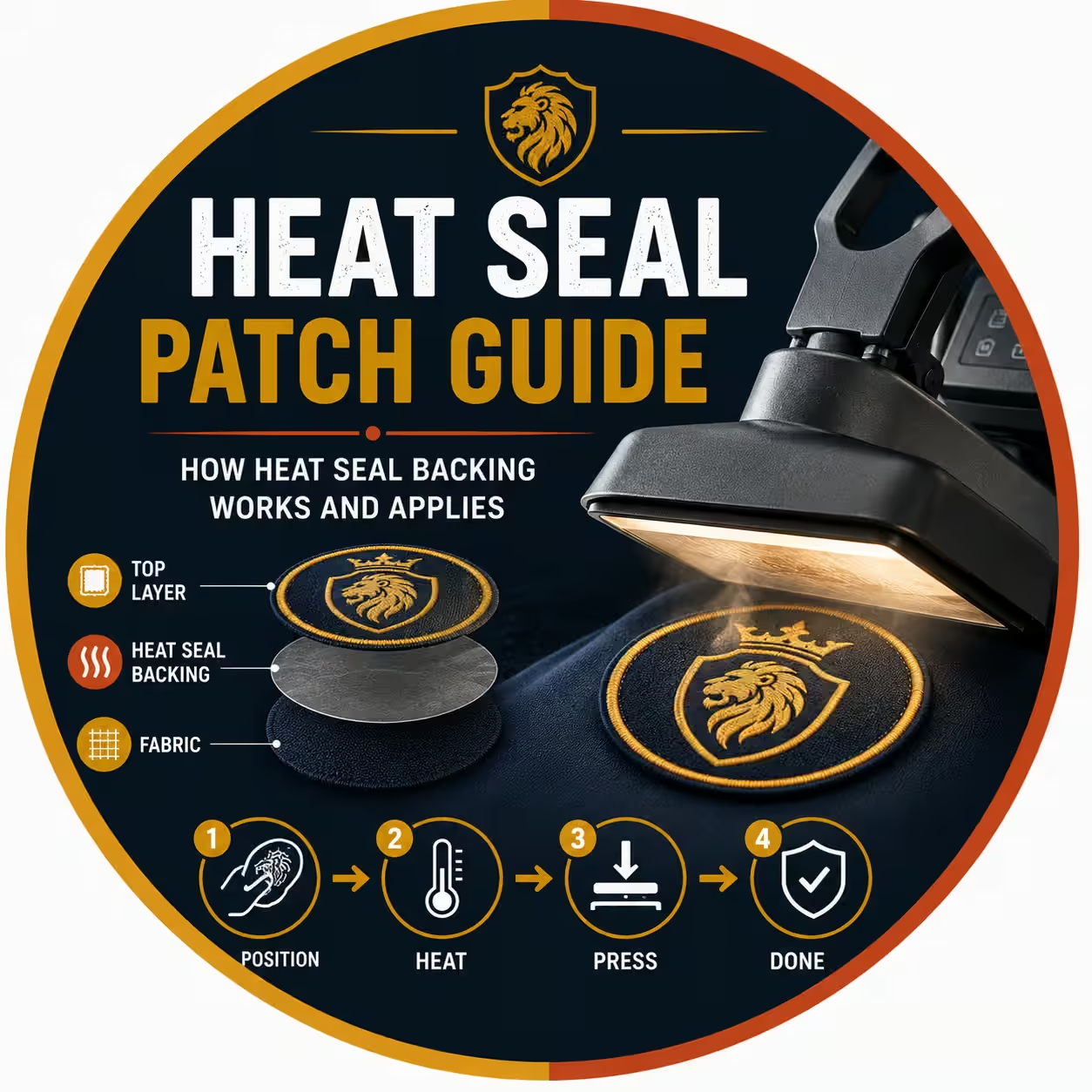
Heat Seal Patch Guide: How Heat Seal Backing Works and Applies
A heat seal patch carries a heat-activated adhesive backing on its reverse that bonds to fabric at roughly 150–170°C. This guide explains how heat seal backing works, how to apply heat seal patches with both a heat press and a household iron, and which settings produce a clean, lasting bond. Heat seal backing is the manufacturing term for the iron-on adhesive layer found on most modern custom patches in the UK.
- Commercial-Grade Backing
- 24-Hour Proof
- UK Made & Dispatched
BondMelt · Penetrate · Set
What Is a Heat Seal Patch?
A heat seal patch is a custom patch finished with a thermoplastic adhesive film on the back. The adhesive stays solid at room temperature and turns tacky under heat. Heat activates the glue, the glue penetrates the fabric weave, and pressure locks the patch in place as it cools. This three-stage bond, melt, penetrate, set, defines every heat seal application.
Heat seal backing appears on embroidered patches, woven patches, and printed patches alike. The patch face determines the look; the backing determines how the patch attaches. A heat seal layer therefore acts as a delivery method rather than a patch type, which is why the same embroidered design ships with several backing options.
How Heat Seal Backing Works
Heat seal backing works by converting solid adhesive into a flowing bond under controlled heat and pressure. The backing film sits between the patch base and the garment. Heat raises the film above its melting point, the molten adhesive flows into the fibres of the fabric, and cooling re-solidifies the film into a mechanical anchor. The bond strengthens as the patch returns to room temperature.
The Heat-Activated Adhesive Layer
The adhesive layer consists of a thermoplastic polymer coated onto the twill or fabric base of the patch. Thermoplastics soften when heated and harden when cooled, and they repeat this cycle without losing their chemistry. This property lets the adhesive flow into a garment once and grip permanently after curing.
The polymer film also defines the activation window. Below its melting point, the adhesive stays inert and the patch will not stick. Above it, the adhesive flows freely and bonds. Hitting that window precisely produces a flush, durable patch, and missing it produces a lifting edge. The reverse mechanics are covered further in our guide on how iron-on patch backing works.
The Three Bonding Variables – Heat, Pressure, Time
Heat, pressure, and time control every heat seal bond, and the three variables work together. Heat melts the adhesive. Pressure pushes the molten film into the fabric weave. Time holds the patch in contact long enough for the adhesive to penetrate fully. Reduce any one variable and the bond weakens; balance all three and the patch sets cleanly.
A heat press governs all three variables at once, which is why it produces the most reliable result. A household iron governs heat and pressure but relies on the user to manage time and even contact. This distinction shapes the two application methods below.
How to Apply Heat Seal Patches (Step by Step)
Heat seal patches apply through a heat press or a household iron, and both methods follow the same principle of controlled heat under steady pressure. The method changes the equipment, not the chemistry.
Applying With a Heat Press
A heat press delivers the strongest, most even bond. Follow these steps for a flush finish:
Set the platen temperature to the figure for your fabric (see the table below).
Position the patch on the garment and cover it with a thin Teflon or baking sheet.
Close the press with medium-firm pressure for ten to fifteen seconds.
Lift the press and let the garment cool flat for thirty seconds.
Press again for five seconds if any edge lifts after cooling.
Applying With a Household Iron
A household iron applies heat seal patches successfully on suitable fabrics. The iron lacks the platen’s even pressure, so the technique compensates with longer dwell time:
Heat the iron to the cotton setting and switch the steam off.
Place the patch on the garment and cover it with a thin cotton pressing cloth.
Press down firmly without moving the iron for thirty to forty-five seconds.
Apply weight to the edges and corners, which cool first and lift first.
Turn the garment inside out and press the reverse for fifteen seconds to set the bond.
Recommended Heat Seal Settings
Heat seal settings change with the garment fabric, because each fibre tolerates a different temperature. The table below lists tested starting points for the most common UK garment materials.
Always test one patch on a hidden seam or an offcut before pressing a full batch. A test press confirms the temperature suits the fabric and protects the garment from scorching.
| Fabric | Temperature | Press time | Pressure |
|---|---|---|---|
| Cotton | 165–170°C | 12–15 sec | Medium-firm |
| Cotton-poly blend | 155–160°C | 12–15 sec | Medium |
| Polyester | 145–150°C | 15–20 sec | Light-medium |
| Denim | 165–170°C | 15 sec | Firm |
| Canvas / workwear | 170°C | 15 sec | Firm |
Which Fabrics Suit Heat Seal Patches
Heat seal patches suit any fabric that tolerates the activation temperature without scorching or melting. The fabric must withstand around 150–170°C and hold a flat surface under pressure. Natural fibres and tight weaves bond best, while delicate or heat-sensitive materials need a lower setting or a sewn alternative. Fabric choice therefore decides whether heat seal backing succeeds or fails.
Best Fabrics for Heat Seal Backing
The strongest heat seal bonds form on dense, heat-tolerant fabrics. These materials absorb the molten adhesive deep into the weave and hold the patch flush:
- Cotton – bonds at high temperature and grips firmly; the ideal heat seal surface.
- Denim – thick and heat-stable, denim anchors heat seal patches permanently.
- Canvas and workwear twill – rugged weaves that hold heavy adhesive well.
- Cotton-rich blends – perform almost as well as pure cotton when pressed correctly.
- Wool felt – accepts heat seal backing at moderate heat for badges and crests.
Each of these fabrics shares one trait: a stable weave that survives the press. We expand the full ranking in our guide to the best fabric for iron-on patches.
Fabrics to Avoid or Sew Instead
Some fabrics resist heat seal backing because heat damages the fibres before the adhesive cures. Sew these patches on instead:
- Nylon – melts at low temperature and warps under a press.
- Waterproof and coated fabrics – the coating blocks adhesion and blisters under heat.
- Leather and faux leather – heat scorches the surface; sewing protects the finish.
- Loose knits and stretch fabrics – flex and pull the adhesive away from the weave.
- Technical sportswear – many performance fabrics carry low heat tolerances.
Polyester sits between these groups. Heat seal backing bonds to polyester at a reduced temperature with extended press time, so it works with care rather than failing outright. We cover the technique in detail in do iron-on patches work on polyester.
Heat Seal vs Sew-On Backing
Heat seal backing and sew-on backing solve the same problem with opposite methods. Heat seal bonds through adhesive; sew-on fixes through thread. The choice depends on the garment, the wash frequency, and how permanent the attachment needs to be. The table below sets the two methods side by side.
| Attribute | Heat Seal Backing | Sew-On Backing |
|---|---|---|
| Attachment | Heat-activated adhesive | Stitched thread |
| Application | Heat press or iron | Hand or machine sewing |
| Speed | 10–15 seconds | Several minutes per patch |
| Permanence | Semi-permanent | Fully permanent |
| Best for | Uniforms, bags, jackets | Workwear, heavy laundering |
| Skill required | Low | Moderate |
Durability and Care of Heat Seal Patches
Heat seal patches last for years when applied correctly and washed gently. The adhesive cures within twenty-four hours of pressing and reaches full strength once cool. Correct aftercare protects that bond and keeps the patch flush through repeated laundering. Care habits, more than the adhesive itself, determine how long a heat seal patch survives.
Washing and Longevity
Heat seal patches tolerate machine washing once the adhesive has fully cured. Wash the garment inside out on a cool cycle below 40°C, and the bond holds. Hot water and tumble drying soften the adhesive and shorten the patch’s life, so air drying preserves the bond. A well-applied heat seal patch survives dozens of wash cycles without lifting. We detail the limits in how long do iron-on patches last.
How to Reinforce a Heat Seal Patch
Reinforcing a heat seal patch combines adhesive with thread for maximum hold. Press the patch first, let it cure, then add a running stitch around the merrow border. The adhesive keeps the patch flat while the stitches carry the strain of washing and wear. This hybrid method gives heavy-use garments the speed of heat seal and the permanence of sew-on at once.
Our Customers Reviews
Customers across the UK rate our heat seal patches for finish, durability, and fast turnaround. A Birmingham sports club ordered embroidered crests with heat seal backing and reported a flush bond that survived a full season of kit washes. A workwear supplier praised the even adhesive coverage that let their team press hundreds of garments without a single lifting edge.
Buyers consistently note three things: the heavy-grade heat seal backing that holds firm, the accurate Pantone-matched colours, and the 24-hour proof turnaround. These reviews reflect the standard we hold across every custom patch order, whatever the backing type.
Heat Seal Patch FAQs
Order Custom Heat Seal Patches in the UK
Custom Iron On Patches manufactures heat seal patches in the UK with commercial-grade adhesive backing as standard. Every order includes a free design proof within 24 hours, Pantone colour matching, and no minimum unit quantity above our £120 minimum order value. Choose embroidered, woven, or printed patches and we apply the heat seal backing tested for your fabric.
Order custom heat press patches for bulk uniforms and branded kit, or explore our full range of custom iron on patches for everyday garments. Request a free quote today and receive your proof within one working day.